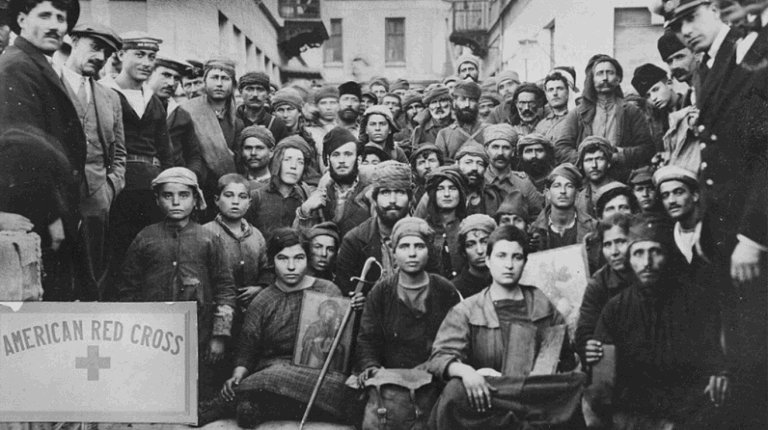
In recent articles, we have referred to crimes committed by the Turks against Greek prisoners, officers, and soldiers in Asia Minor.
Today, however, we will also look at horrific crimes against Greek civilians in Asia Minor, committed after the retreat of the Greek Army, as presented by the French journalist and author René Puaux in his book “The Last Days of Smyrna.”
The Regions Where Turkish Atrocities Took Place
Puaux, after mentioning the crimes committed by the Turks not only in Smyrna and Vourla—a nearly entirely Greek town whose Christian population was exterminated—also discusses what happened in other cities of Asia Minor: Alatsata, Aivali (Ayvalık), Moschonisia, Aksari, Magnesia, Kasaba, Mudania, Kyzikos, Dardanelles, and more.
Some claimed that Smyrna and Vourla were “unfortunate exceptions,” yet the truth is entirely different.
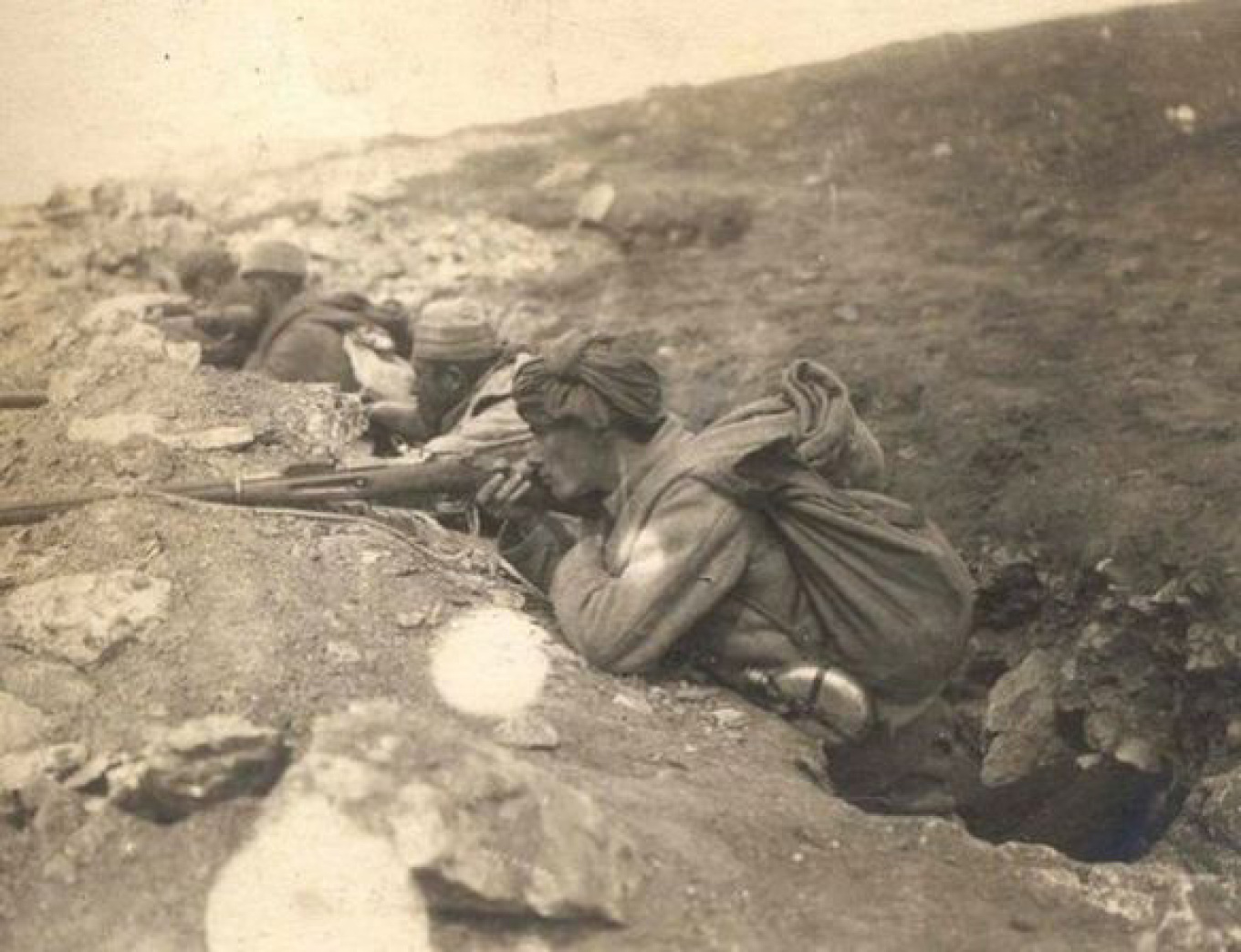
Turkish soldiers fighting against the Greeks, August 1922
Balikesir lies 200 km north of Smyrna (51 km east of Adramyttion) on the Smyrna–Bandirma railway line, as does Balia–Maden, 51 km east of Adramyttion. Many might wonder: what exactly were Greeks doing there?
Yet, according to Pantelis Kontogiannis, in his book “Geography of Asia Minor,” 1st Edition, 1921, Balikesir had 36,000 inhabitants, of whom 2,000 were Greeks and 2,000 Armenians. Of the 8,000 inhabitants of Balia–Maden, 6,000 were Greeks and the remaining 2,000 were Turks, Laz, and Kurds. Since 135 BC, the copper mines of the area had been exploited by the kings of Pergamon.
The medieval history of the city is unknown. From 1840, mining activity resumed, expanding further by 1880 when the mines were acquired by the same company that owned the Lavrion Mines.
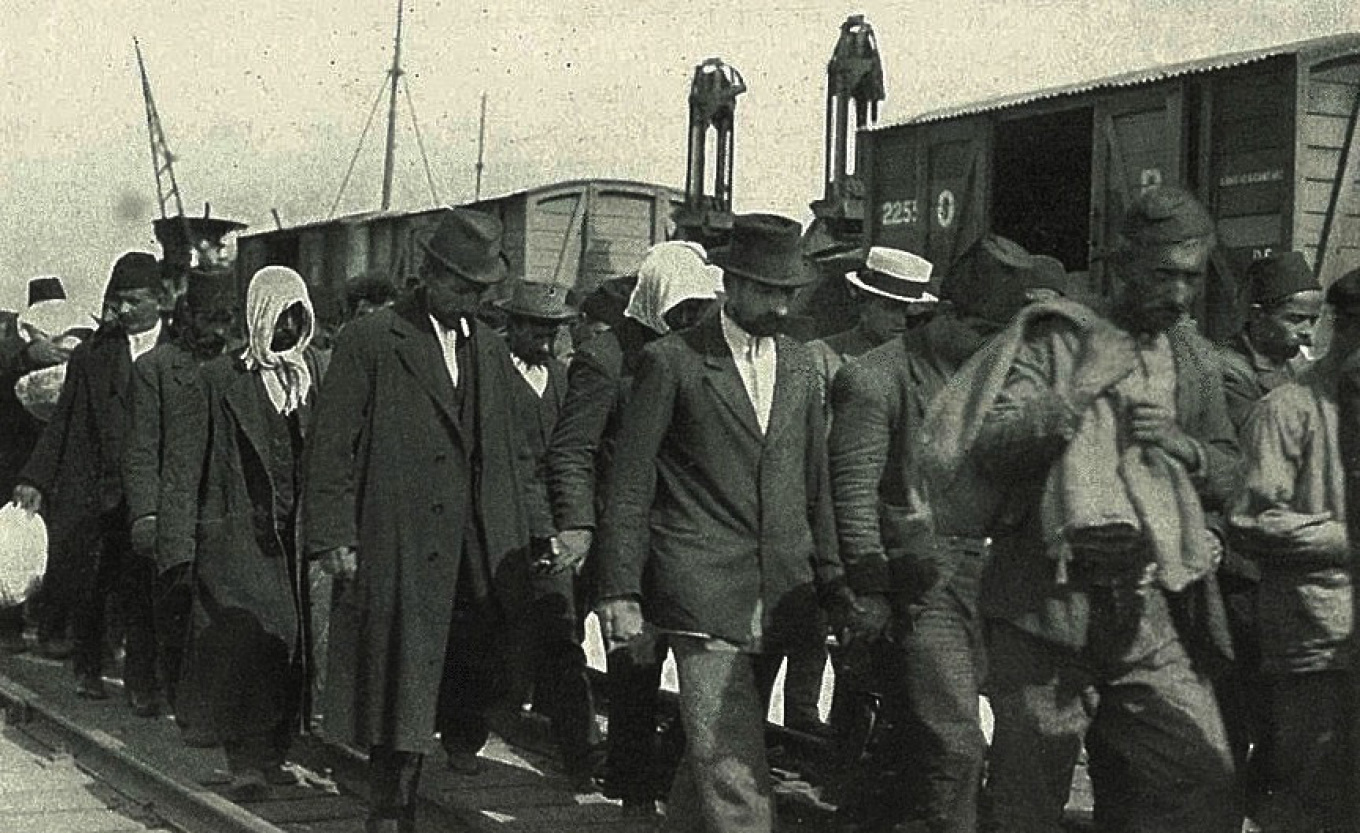
Greeks on a death march after the Asia Minor Catastrophe
By 1893, the mines passed into the hands of a French company based in Constantinople. Near Balia–Maden was the Turkish village Karaidin (ancient Argyreia) and, about 15 minutes away (by 1920 standards), another village of the same name, Karaidin, which was Christian and settled by people from Mytilene.
The ancient name Argyreia indicates the existence of mines there — indeed, the Lavrion Company exploited those mines. As for Kydonies (Aivali/Ayvalık), its population was almost entirely Greek.
The Massacres Begin
From September 3, 1922, when the Greek Army withdrew, the Turkish irregulars (τσέτες) seized Balikesir and Balia–Maden. Initially, apart from looting, no violent acts were committed against the Christian population.
However, on September 18, a division of the Turkish army led by Kiarim Bey arrived. They gathered the non-Muslim inhabitants and sent them in groups toward Ankara.
They never arrived — they were massacred along the Balikesir–Karagatsli embankment.
No one was spared: men, women, and children were all killed. The victims numbered in the thousands. They were thrown into wells or ditches dug by the Turks, and then their bodies were burned.
An Account (with Caution)
We will mention one incident with caution, as the testimonies come from Kurd Hussein Tsaous and other Muslims, but have not been otherwise verified.
On September 21, 304 wealthy Greeks from Aivali (Ayvalık) were taken to Balikesir and imprisoned. Later, they were released — and then slaughtered in the outskirts of the city.
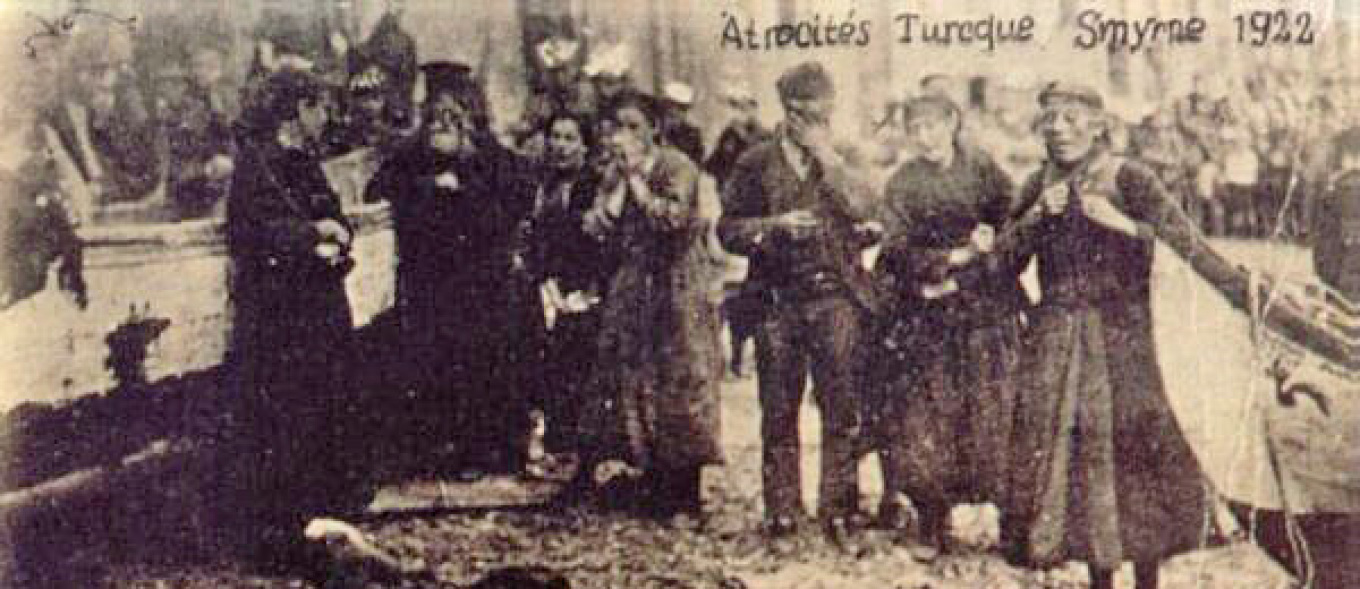
The Events in Kydonies (Ayvalik)
The τσέτες (Turkish irregulars) were the first to enter Ayvalik on August 29, led by Karchiman Efendi, and a few days later, on September 6, the 2nd Division of the Turkish Cavalry entered the city. A week later, this division departed together with many Armenians who had sought refuge there in order to cross over to Lesbos.
On September 21, 1922, the 14th Turkish Division was stationed in Ayvalik. Its commander announced that all Christian inhabitants of the city, men aged 18–45, would be gathered and sent to camps in the interior until the signing of peace.
The roundup began immediately that same night. A few days later, the Italian consul in Lesbos, Fideli, arrived with a warship and evacuated Italian citizens and those under Italian protection from Ayvalik.
On September 28, an American destroyer anchored at the entrance of Ayvalik’s harbor. The commander sent a steam-powered launch carrying a few officers and non-commissioned officers ashore. After some obstacles posed by the Turks, they landed and found two American citizens of Greek origin, who described to them the situation.
Apart from those identified as liable for military service, many prominent Greeks were arrested and sent north. Among them were the doctors G. Karteros, M. Tzougas, D. Simos, N. Ismyrlis, A. and E. Yalandellis, and the lawyer N. Anastasiadis.
According to reports received by the Ecumenical Patriarchate, many of these Greek notables were murdered by the Turks, who threw their bodies into the ravines of old quarries between Palamatia and Freneli (Furk-Chavran).
The 14th Division was later replaced by the 4th Division, under Sambri Pasha. According to the testimony of Metropolitan Iakovos Kleombrotos, the men of the 14th Division referred to their successors of the 4th as “hasap asker” — meaning “army of butchers.”
On September 14, the 4th Division moved to the Moschonisia Islands (also called Ekatonnesia — “Hundred Islands”), a cluster of about 40 islands lying just off Ayvalik.
The main islands were Daskalio, Krommydonisi, and Moschonisi (the ancient Nasos). Around 6,000 Greeks lived on these islands.
They were deported on the night of September 14, together with their bishop, Metropolitan Ambrosios Pleianthidis, and taken inland toward the southern coast of the Gulf of Adramyttion, where they met a tragic death. Only 500 inhabitants of Moschonisia managed to flee before the arrival of the massacre troops.
Those who were spared and released unharmed included Charles Kokkini, an Italian citizen, and an American doctor.
On September 30 and October 1, the inhabitants of the surrounding area of Ayvalik were ordered to assemble at Georgalas’ Inn, on the northern edge of the city — about 950 people in total. The next day, they were forced to march away.
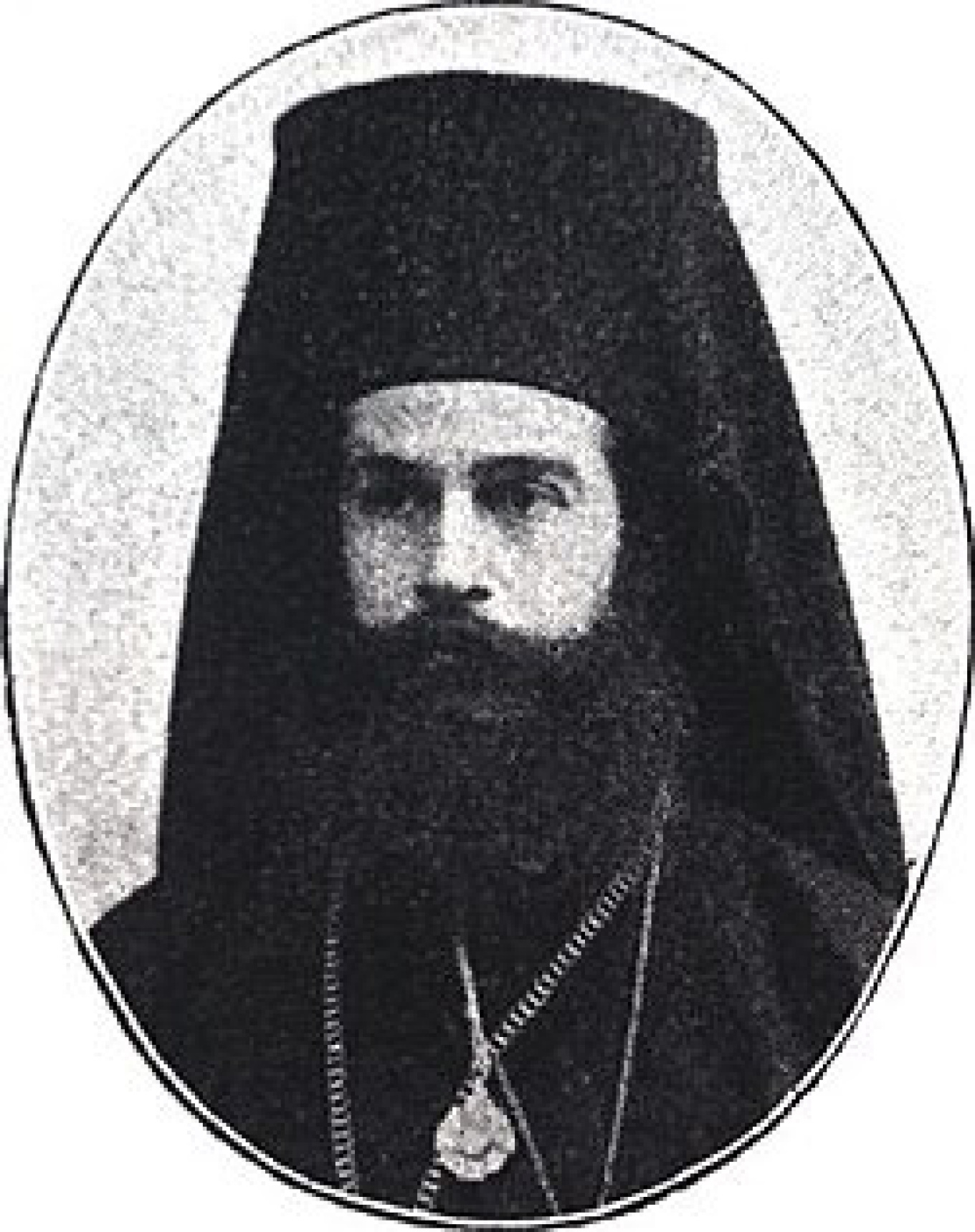
Metropolitan Ambrosios of Moschonisia, who was buried alive by the Turks
The fate of the 950 people and of the villages of Kemeri (10 km southwest of the Gulf of Adramyttion, 42 km northeast of Kydonies, and 130 km north of Smyrna), with 3,079 Greeks and 8,624 Turks, as well as that of the Ida mountain region, which included many Greek villages, remains unknown.
It is almost certain that all were exterminated.
On October 3, an American steam launch flying the U.S. flag, leading a convoy of American ships, arrived at the Katsakoulis soap factory compound, on the Ayvalik pier.
Before the refugees were allowed to board, they were subjected to brutal searches and extortionate taxation. At the house of Stylianos (?) Englezopoulos, which served as the migrant inspection office, outright robbery took place in full view of the city’s Deputy Governor (a Colonel) and the Chief of Gendarmerie, Tewfik Efendi.
Tewfik Efendi insulted Metropolitan Gregory Orologas of Kydonies (who a few days later met a martyr’s death) and, trembling with rage, shouted in the presence of a witness (M.C.D.S., according to Puaux):
“Those who remain here will be Turks.
Those who are not pure Turks can go to hell!”
Ask me anything
Explore related questions