





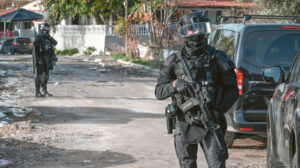
New plan “ENTOS” focuses on Roma settlements with high crime rates — 300 officers deployed
Greek police have begun entering identified high-crime areas since early November, focusing on Roma camps and settlements across the country where criminal activity remains persistently high.
The plan, codenamed “ENTOS” (“Inside”), was designed by the Hellenic Police (EL.AS.) to strengthen ongoing patrols and operations that have intensified over the past year. Its goal is to establish a permanent police presence in these areas to combat organized and everyday crime more effectively.
The first phase of the program includes over 300 officers—100 in Attica and the rest in selected regions nationwide—deployed based on detailed crime mapping and consultations between the Ministry of Citizen Protection and local authorities.
Mediators to Build Trust with Roma Communities
Once the teams are stationed in settlements, the police force will be reinforced with 50 mediators — sociologists and psychologists — who will act as liaisons between Roma communities and the authorities. They will be hired through a public competition as specialized staff.
Their mission: to build bridges with law-abiding Roma residents, foster cooperation, and provide valuable intelligence on criminal groups and organized activity. Thirty of the 100 officers in Attica will come from the Hellenic Police’s organized crime unit, often called the “Greek FBI.”
Areas Under Focus
1. West Attica – 100 officers
Operations will focus on known hotspots such as Acharnes (Avliza and Agia Sotira), Ano Liosia, Zefyri, Aspropyrgos (Nea Zoi and Neoktista), and Vlycho in Megara.
Units will also be present in Gerakas and Koupi, Koropi, where fraud involving staged car accidents has been a growing issue.
2. Corinthia – 50 officers
New teams will be stationed in Examilia and Zeugolatio, with enhanced patrols and upgraded investigative capabilities.
3. Argolida – 30 officers
The focus will be on Nea Kios, an area plagued by reckless driving incidents involving Roma residents. A special task unit will monitor road safety and crime prevention.
4. Laconia
Operations will concentrate on the settlement of Evrotas.
5. Achaia
Teams will target the municipality of Western Achaia, where Roma groups are reportedly involved in trafficking counterfeit goods.
6. Messinia
New police units will be established in Kalamata, Messini, and Filiatra, focusing on Roma settlements.
7. Boeotia
One team will operate in Pyri near Thebes, an area with frequent robberies and road incidents, while another will cover Haravgi, Chalkida.
8. Imathia – 25 officers
Police presence will be strengthened in Alexandria and Potismeno, complementing existing forces in Dendropotamos (Thessaloniki), Drosero (Xanthi), and Sofades (Karditsa).
A second phase will extend to areas with lower but still significant crime levels, such as Heraklia (Serres), Tyrnavos, and Farsala.
Focus on West Attica
West Attica remains the top priority. According to ministry officials, Roma communities there have long operated under conditions of lawlessness, with entire settlements functioning as bases and safe havens for criminal networks.
Family ties within these groups are strong, and even children are often involved in trafficking or theft to evade harsher penalties. Officials describe cases in Acharnes, where minors are used as couriers in drug distribution, with dealers hiding narcotics in fields and advertising them through coded messages.
Organized Crime Data
Between October 2024 and October 2025, EL.AS. Conducted 65 major investigations into serious and organized crime involving Roma suspects:
- 279 individuals charged, 227 arrested, and 84 detained.
- Crimes included drug and arms trafficking, grand theft, forgery, and fraud.
- 29 suspects were members of organized groups impersonating civil servants or repair workers to commit scams.
A Strategy of Dialogue and Cooperation
Officials stress that the permanent police presence is not intended as a repressive measure, but as a means to ensure safety while promoting dialogue and cooperation with law-abiding Roma.
To this end, communication committees will be formed, including representatives from local authorities and community leaders, to build trust and transparency.
Officers assigned to the program will receive special training on Roma culture and community engagement, all patrol actions will be recorded via body cameras, and efforts will be made to maintain a visible but non-militarized presence.
Ask me anything
Explore related questions




