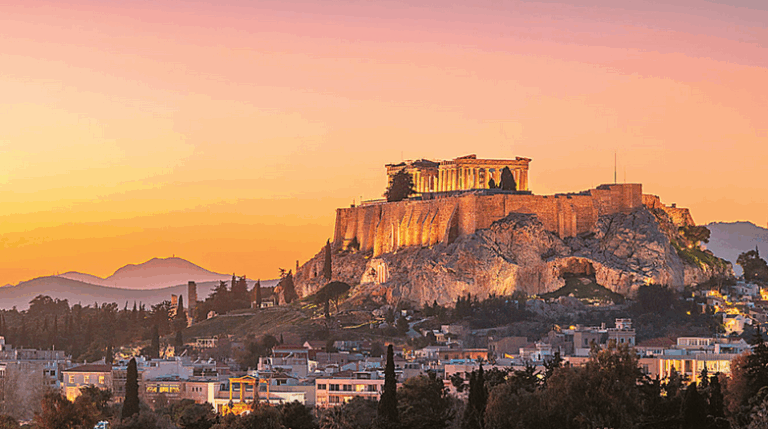
It’s not just that it never truly sleeps. The capital wakes up differently. The streets are not empty at dawn. On the contrary, they hide a mosaic of lives moving in parallel. The metro, which is not merely a means of transportation but a connecting link in a constantly pulsating city, has begun operating 24 hours on Saturdays, confirming the trend. From night owls returning from Gazi, bakers preparing bread and cheese pies, and those heading to the morning shift daily, to fans of the 5 am club, Athens at dawn has faces and stories.
For a week, we were in various parts of the city — from the port of Piraeus to Kolonaki. Each neighborhood had its own sunrise, its own atmosphere. Athens wakes up earlier, more consciously. It is no longer only a city of the night — it is also a city of new beginnings.
Morning Walk on Philopappou Hill
It’s not only those going to work who move about at dawn. Some people from other countries, who have bought homes in Athens in recent years, take advantage of the Attican weather to go out, winter and summer alike, for morning exercise. Among the first to appear at 6 a.m. on the streets around Thiseio heading toward the Acropolis are scattered middle-aged residents, some of whom originally come from China.
Just before the top of Philopappou Hill, we meet a group of women engaged in conversation before warming up. One of them introduces herself as Sofia — a Hellenized version, she explains, because “my Chinese name is difficult. I’ve lived in this area for a few years, and I go out in the morning for walking and exercise,” she says, while her fellow exercisers start stretching.

(Time: 7:30 a.m.)
Rush Hour on Public Transport
If the city were an organism, its awakening would be reflected in its arteries and veins, that is, not only its streets but also its public transport — especially the metro. Who moves around at dawn has a regularity absent from the “randomness” of the following hours, which becomes especially evident at the nerve center of Syntagma station.
At 6 a.m., the arriving trains are already almost full, but transfers between lines create a sort of “sorting”: the contrast is most noticeable on the red line heading southeast. On the carriages leaving for Elliniko, passengers belong to specific professional groups. Work uniforms and heavy-duty boots, marked with paint and plaster, indicate that these commuters will get off at stations near Elliniko for construction sites. A little later, office workers will reach the city center by public transport.
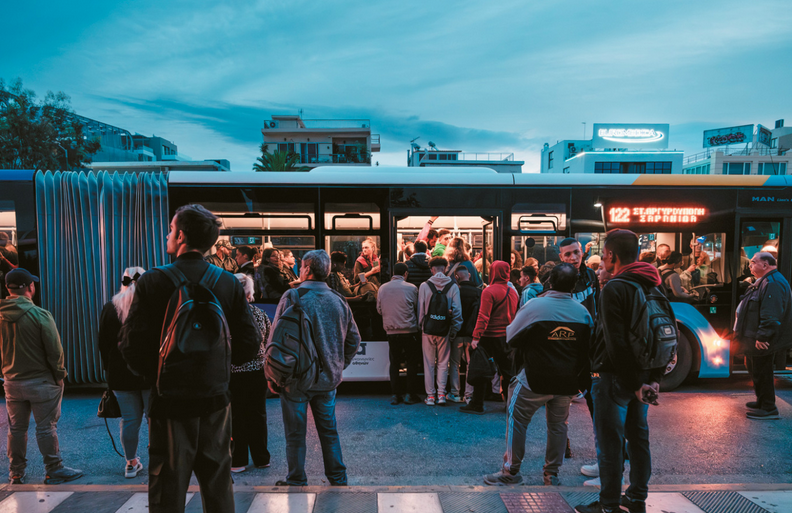
(Time: 6:30 a.m.)
Fishing in Faliro
The mornings become more traditional as you approach the sea. The coastal front, starting from Plateia Nerou in Faliro and extending to Alimos, hosts not only locals jogging but also several early arrivals fishing recreationally. Some have plenty of time: “I retired in the previous decade, I come to fish because the sea air is good for my health,” says Mr. Giannis, who is not from the area but rides his motorbike from Patissia.
Others have less relaxed schedules, but that doesn’t stop them: Ilir comes fishing whenever weather and mood allow, but must pack up early to get to work. He also doesn’t live nearby (we meet him in Floisvos while he lives in Pagkrati), unlike most early-morning swimmers of every season who come on foot. But whether fishermen or swimmers, in winter only rain or strong winds will stop them — not the cold, which won’t deter the die-hards (regardless of age) even in January, they tell us.
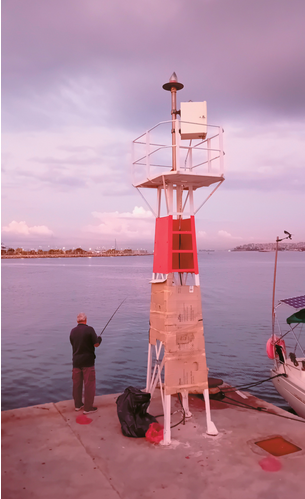
(Time: 6:00 a.m.)
Croissants Coming Out of the Oven
Before sunrise, hundreds of bakeries across the city have already started operating. At Kora Bakery in Kolonaki, “the production team arrives around 2 a.m. and bakes until 6 a.m.,” says Yiannis Nine, customer service manager. In addition to the 250 kilograms of bread sold daily, “we produce a total of 150–200 viennoiserie items, such as butter croissants and cinnamon rolls,” he adds. Coffee is also important. “In the morning, even 7 out of 10 buy coffee. They mostly prefer freddo espresso, cappuccino, and latte,” he says. Angeliki Basdari, arranging the display, explains that the morning shift starts quietly, but traffic rises quickly: “Before you know it, there’s a queue outside the shop.”
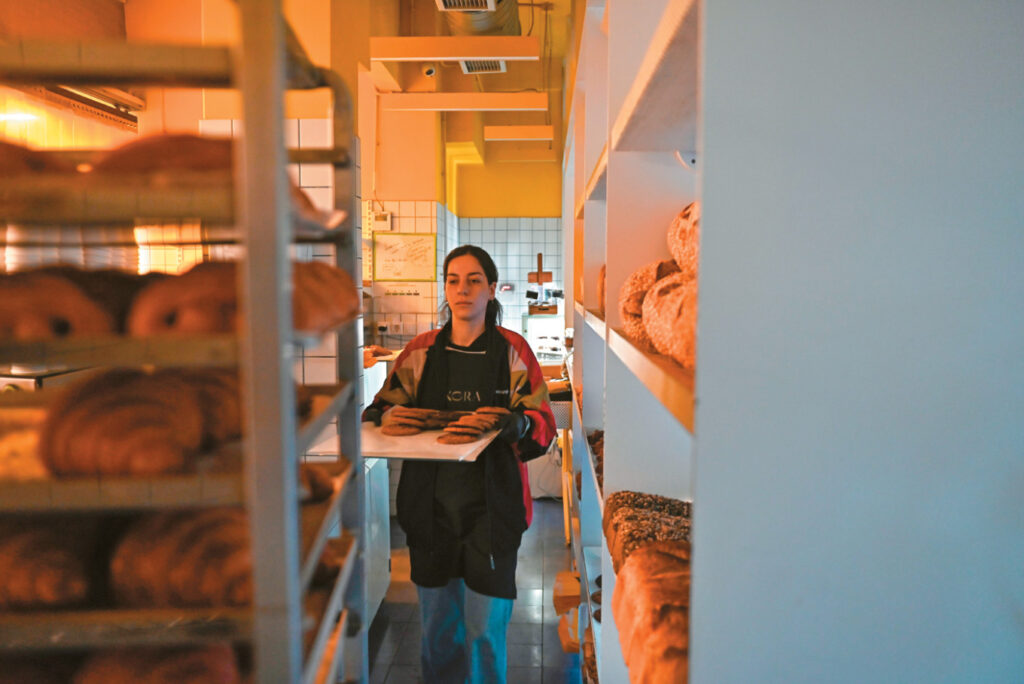
(Time: 6:00 a.m.)
The Day’s First News
The first radio “good morning” carries a tone of current events, as confirmed by the decision of the new director of ERTnews Radio 105.8, Vasilis Adamopoulos, to use 5:00–6:00 a.m. for news for the first time. “Morning news is the most demanding. Despite the explosion of TV shows, there’s an audience that cannot go without radio; they consider it part of their life. This audience is more demanding, more selective,” he tells us. Alongside Maria Georgiou, he has been behind the microphones for years with “Morning Routes” in the 8:00–10:00 a.m. slot. He wakes up at dawn, walks his dog, then heads to the Radio Building. Maria gets up at 5:15: “It’s nice on the streets at that time, quiet, you see the bakeries opening, I get my coffee and sesame ring. It’s a beautiful start to the day.”

(Time: 5:00 a.m.)
Last Order
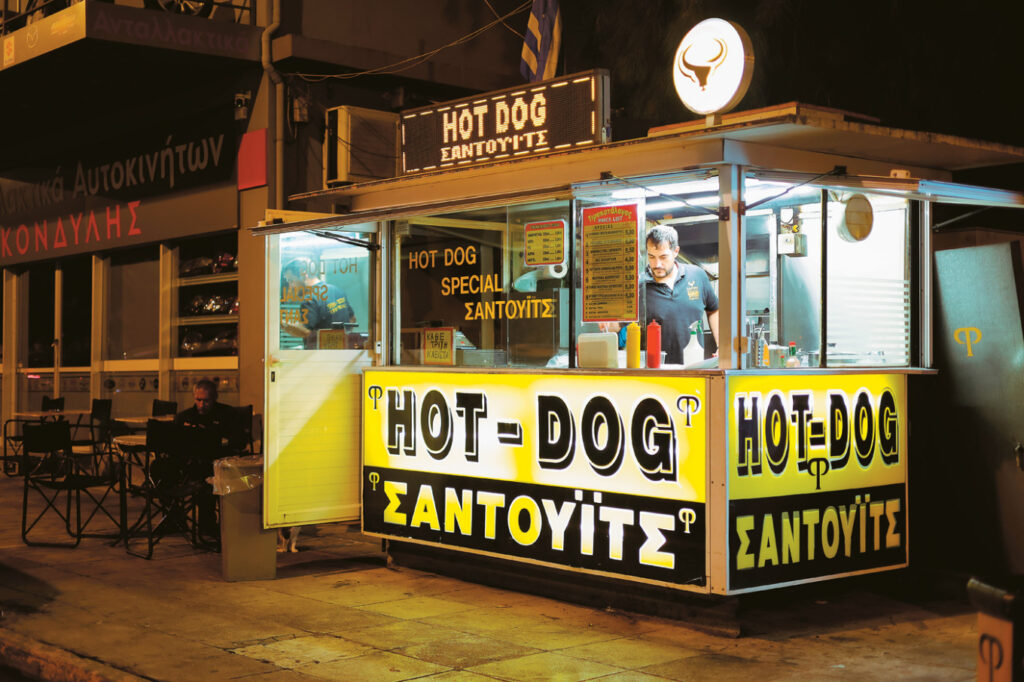
Once, the “dirty” (late-night snack) was a lifesaver after staying out late; now, food trucks close when the bakeries open, and customers may no longer be returning from bars and nightclubs. “The boiled hot dog, ready in twelve seconds, is the most popular. On weekdays, about 50 are sold, not counting all the others; on weekends, the numbers multiply,” says the owner of the “Vasilis” food truck in Chamonsterna. It has been operating uninterrupted for 33 years and is a meeting point for those returning home after a night out or heading to work before dawn. “I almost know who will come and at what time. At dawn, it’s the usual: taxi drivers, drivers, night guards, morning shift workers,” he says.
(Time: 4:00 a.m.)
Deliveries at the Wholesale Market
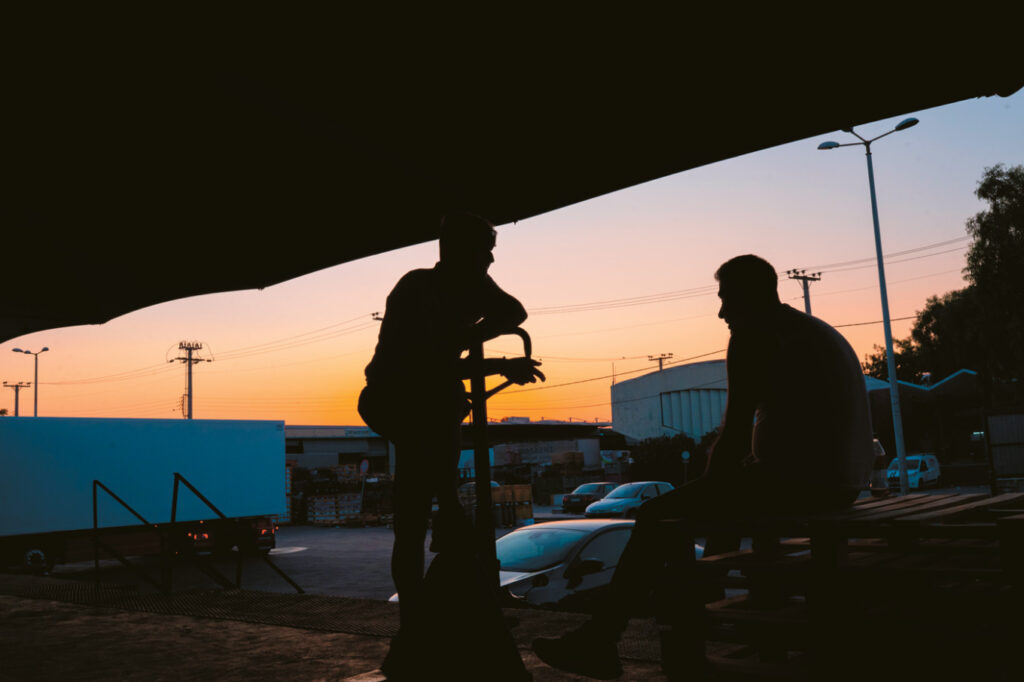
The first shutters to open in the city are at the Rentis Wholesale Market. At 5:00 a.m., the first trucks arrive loaded with vegetables and fruits from across the country to unload at the ramps of the 300 shops housed there. Mr. Kostas works here as a loader for the union. He is one of the longest-serving: “We work in shifts 5:00–13:00 and 13:00–21:00. Our job is to unload the pallets, weigh them, and count to make sure everything is correct. The volume of goods is huge. One store may bring 30 tons a day, another eighty.”
All these quantities move quickly. Greengrocers from shops and markets rush to collect fresh products to prepare their stalls for shoppers in every neighborhood of Athens.
(Time: 5:30 a.m.)
First Stop at the Kiosk
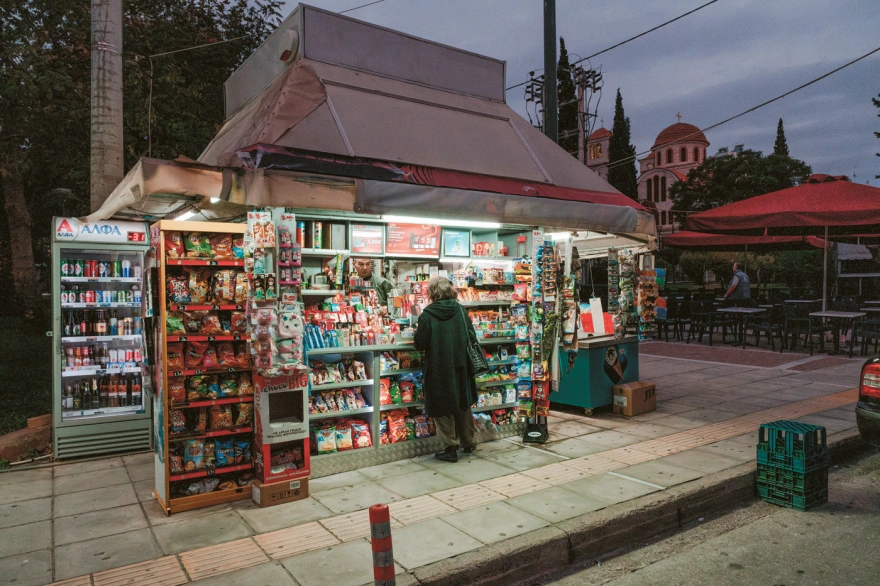
In Athens, the tradition of the kiosk remains alive. Mr. Giannis Molonis, a kiosk tenant for 32 years, opens every morning at 7:00 in a square in Peristeri. His first customers are usually workers passing by for cigarettes, the consistently best-selling item. Younger customers prefer energy drinks, strategically placed in a front fridge for quick sales. “One customer early in the morning asked me to make him a sweet freddo espresso just to realize a little later that he was at a kiosk and not a café.” Despite the changes in the city, he says nostalgically, Athens in the morning remains calm and familiar, like the neighborhood hosting his kiosk.
(Time: 7:00 a.m.)
Garbage Collection
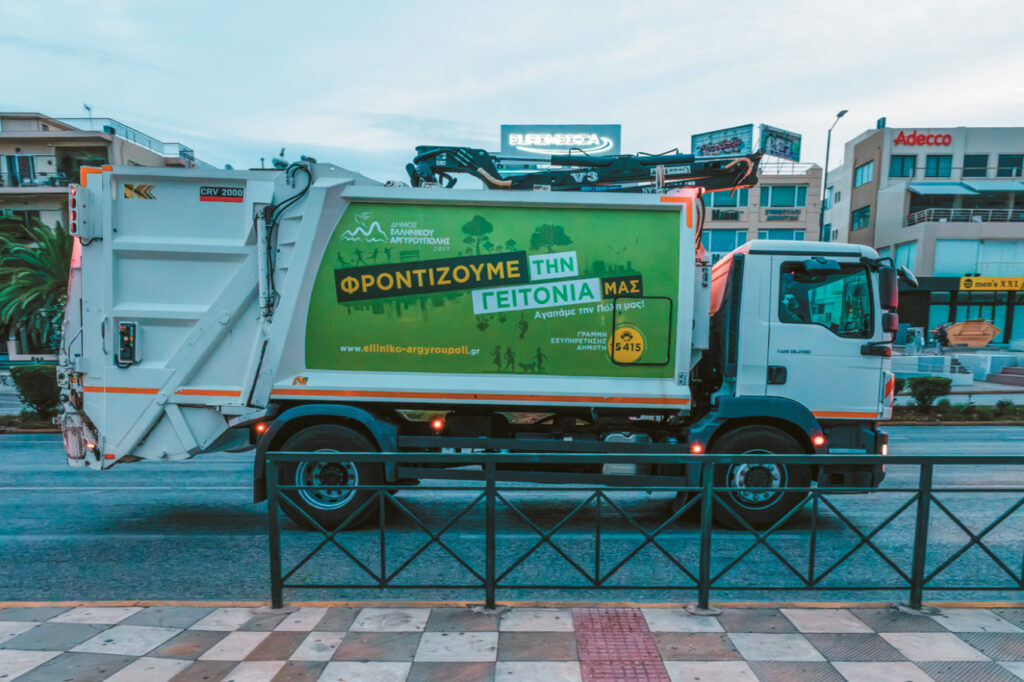
Dawn has its own distinct routine. Walking through the city in semi-darkness, we see workers heading to their jobs and, simultaneously, one of the city’s most characteristic sights: municipal sanitation workers. People moving almost silently through the streets, taking care of a city that is still asleep. Garbage trucks start their routes at 4 a.m., adding a sound and rhythm that reminds everyone the city is waking. Before sunrise, street cleaning vehicles have swept the roads, while sanitation workers take over the sidewalks later with brooms, some with headphones in. When people begin moving on the streets and the sun’s rays illuminate them, the city will look renewed.
(Time: 6:30 a.m.)
Ask me anything
Explore related questions