
A photographer captured on October 22 in the mountain ranges of the southern city of Jaén in southern Spain for the first time in history a white Iberian lygkas, which is one of the rarest animal species in the world and is described as mythical.
Spanish Angel Indalgo, known for his passion for photographing animals in the wild, managed to document an Iberian lynx with leucism, a genetic condition that causes a partial or total lack of pigmentation in its skin but not in its eyes, as is the case with albino animals.
This genetic anomaly reveals the good progress of the Iberian Lynx (Lynx pardinus) conservation programme plans in the two Iberian Peninsula countries (Portugal and Spain), following the start of releases in 2011, when the species was on the brink of extinction.
The exact location where this rare Iberian lynx species was recorded remains a secret. The Iberian lynx, despite conservation efforts by Spanish and Portuguese authorities, is still classified as “vulnerable” by the International Union for Conservation of Nature.
The photographer’s message about the photo of the white Iberian lynx on Instagram:
“The white ghost of the Mediterranean forest. The story behind this encounter. In a new place where I started looking a few months ago, checking one of my cameras, I noticed something I couldn’t believe…
From that moment on I started to devote all the time I had available, I had to see this miracle with my own eyes. Hours, days, weeks and even months went by with no results, and many times I was ready to give up…
One ugly morning, after a night of rain, I was walking as I had done so many times before, when suddenly I saw in the distance a white shape that seemed to radiate its own light.
When I first saw a “white Iberian lynx” with its snowy winter coat and piercing eyes, I was paralyzed, unable to believe what I was seeing.
I felt very lucky to have witnessed this moment, to be able to see this big lynx in its natural habitat. Meeting this feline was an unforgettable memory for me and made me think about the importance of nature and its protection.
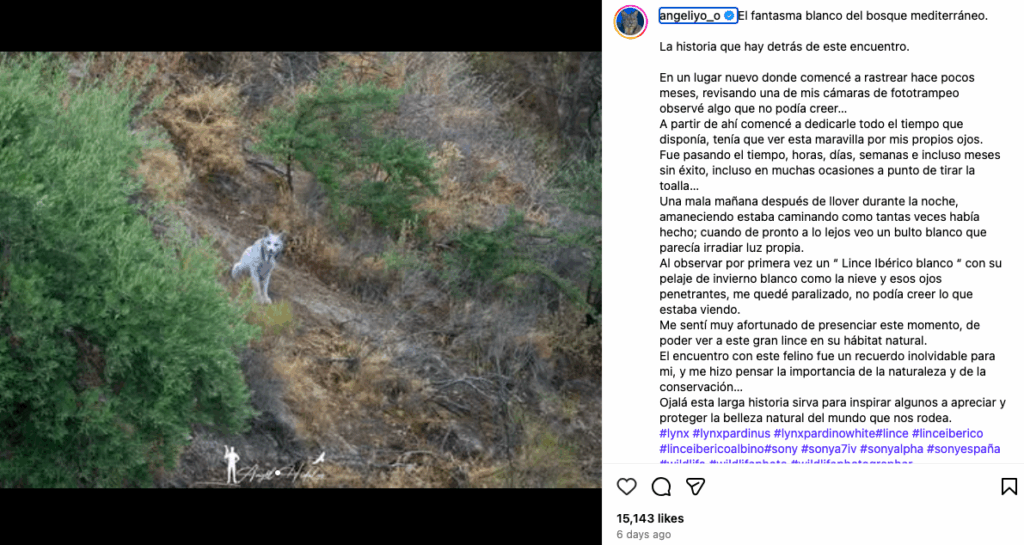
I hope this long story will inspire some to appreciate and protect the natural beauty of the world around us.”
Iberian lynx, an endangered species
One of the rarest felines in the world, the Iberian lynx is still classified as an endangered species.
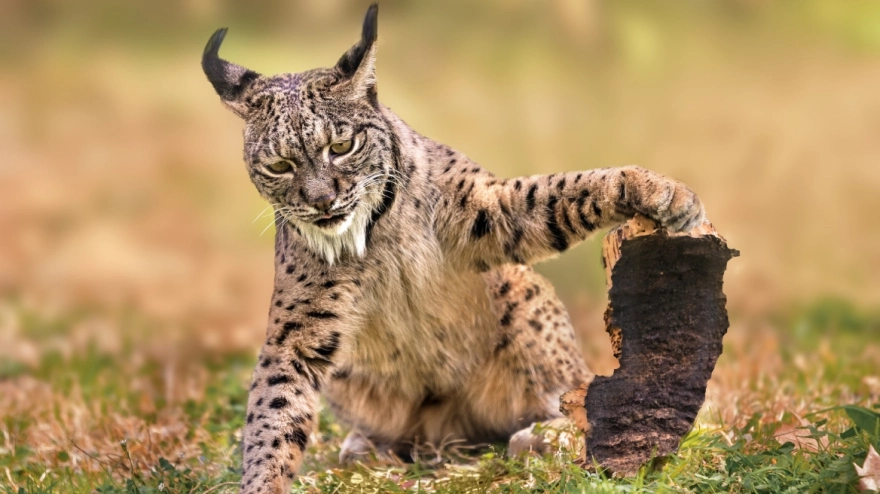
According to the World Wide Fund for Nature (WWF), the Iberian lynx has bright, dark spots and weighs about half as much as the Eurasian species, with long legs and a very short, black-tipped tail.
Its coat is brown with a distinctive “beard” around its face and prominent black tufts on its ears. However, ecologists warn in the case of the white Iberian lynx that although the white coat may look great on camera, it also makes for terrible camouflage in the wild.
The discovery of the white Iberian lynx is due to extensive conservation efforts to protect the Iberian lynx, which was saved from extinction after its population rapidly declined below 100 big cats in 2002.
The Iberian lynx began to decline steadily during the 20th century due to poaching, and by 2002 there were only two breeding populations left in the world, a total of about 100 adults with 25 breeding females.
However, thanks to the extensive joint efforts of Spanish national and regional administrations, various NGOs, and European Union-funded LIFE projects, the species has managed to recover from the brink of extinction.
The 2015 census showed that there were 404 adult lynxes in the world, and according to Spain’s Ministry of Ecological Transition, the population of this species could exceed 2,000 in 2023, distributed in the two countries of the Iberian Peninsula.
However, this progress is in jeopardy as several regional governments in Spain have succumbed to pressure from farmers and hunters to prevent the reintroduction of the species into the wild.
Opponents of the lynx conservation program have claimed that these animals threaten rabbits and partridges, according to a report in The Guardian.
The animals have spread to geographic areas such as the Sierra Morenas, the Montes de Toledo, the Spanish-Portuguese Guadiana basin, and Doniana, as well as other places where they are being reintroduced, which would have been unthinkable until a few years ago, such as the Sierra Palentina.
Endemic only to this region, this big cat is essential to the ecosystems of the Mediterranean landscape and its food chain, as its main source of food is rabbits.
If it became extinct, it would cause overpopulation at the next level of the chain, which would upset the balance of the whole, given the lack of competition between the two species.
Ask me anything
Explore related questions