





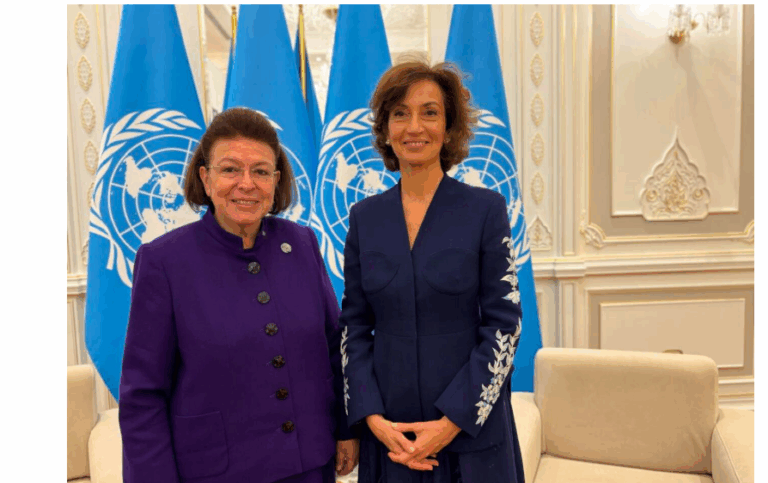
“Our position on the reunification of the Parthenon Sculptures remains steadfast,” Mendoni said. “The Parthenon is a unique monument — a universal symbol of democracy and a masterpiece of artistic achievement. It represents heritage that belongs not only to Greece but to all humanity. We firmly believe that the Parthenon Sculptures must be reunited in their birthplace, Athens, at the Acropolis Museum, as an indivisible artistic whole. The Parthenon, as a symbol of Western civilization, must regain its integrity. We call on all UNESCO member states to support this just and profoundly symbolic cause.”
Mendoni also addressed the ongoing global threat of the illicit trafficking of cultural property, highlighting Greece’s initiatives to combat the issue. “We recently issued the Greek Red List of Cultural Objects, aiming to raise public awareness — a cornerstone of our strategy. We have also contributed to the creation of UNESCO’s Virtual Museum of Stolen Cultural Objects, which leverages digital innovation to illustrate the scale of cultural loss caused by theft and trafficking.”
Referring to Greece’s tenure on the World Heritage Committee, the Minister noted that it coincided with important developments in implementing the UNESCO Convention. “We are proud that the Minoan Palace Centres have been inscribed on the World Heritage List, recognizing the outstanding universal value of six archaeological sites that shed light on one of the most influential prehistoric civilizations of the Mediterranean,” she said. Mendoni also announced Greece’s new nomination — the broader region of Mount Olympus — “a natural and cultural landmark that unites unique biodiversity with the sacred home of the twelve gods of Greek mythology.”
Greece, she added, actively supports UNESCO’s Global Geoparks Programme, hosting nine World Geoparks, and advocates for the inclusion of underrepresented regions in Africa and Latin America.
The Minister emphasized Greece’s contribution to UNESCO’s Education 2030 Agenda, promoting environmental awareness, human rights, and active citizenship. “Our partnership with UNESCO’s Green Education Initiative advances climate awareness and sustainable development in schools. Meanwhile, programs such as Living Heritage – World Cultural Heritage in the Hands of Youth link education and culture, fostering respect for cultural heritage. Equal access to education and culture remains a central policy priority,” Mendoni stressed.
She also announced that UNESCO’s General Conference officially recognized February 9 as World Greek Language Day, expressing gratitude to all countries that supported the initiative. “Celebrating the Greek language is, above all, a celebration of multilingualism,” she noted.
Finally, Mendoni expressed her deep appreciation to outgoing UNESCO Director-General Audrey Azoulay “for her strong leadership and dedication to UNESCO’s mission during a period of profound global challenges and transformation,” while congratulating Khaled El-Enany on his election as the new Director-General, expressing confidence that “his experience and vision will guide UNESCO successfully in the years ahead.”
The Greek delegation to the UNESCO General Conference was led by Minister of Culture Lina Mendoni and included Deputy Foreign Minister Yiannis Loverdos, Deputy Minister of Education, Religion and Sports Nikos Papaiōannou, Secretary General of the Ministry of Foreign Affairs Myra Myrigianni, and Greece’s Permanent Representative to UNESCO, Ambassador Giorgos Koumoutsakos.
Ask me anything
Explore related questions




