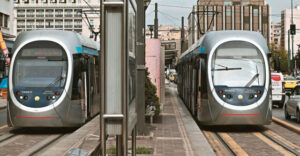
More than twenty years after its return to the streets of the Greek capital, the tram — a transport system that didn’t immediately win the hearts of Athenians — has recently begun to irritate residents in some of the areas it runs through.

Locals in Voula, paraphrasing the nostalgic song, now say: “Walk so we can grease the last tram.” The noise from the tram cars disturbed nearby residents, prompting the operator STASY to install a special lubrication system on the rails to reduce the noise caused by the friction of the wheels.
The “screeching” sounds that could be heard in specific areas provoked complaints and led to the intervention of the Deputy Minister of Transport, Konstantinos Kyranakis, who remained in continuous communication with residents until the problem was resolved.
The most serious issues occurred — especially last summer — in Voula and Glyfada. And, according to some locals, despite the adoption of new technological solutions, the issue hasn’t been entirely eliminated.
The noise problem emerged in early summer of last year, when residents of Voula and Glyfada complained that — particularly at night — the sound of the trams passing by made it impossible for them to sleep.
STASY immediately dispatched crews with decibel meters, confirming the problem (though the readings did not exceed legal limits).
Technicians discovered that the noise became especially disturbing at points where drivers exceeded the local speed limit. To solve the problem quickly, the company issued strict instructions for drivers to stay under 20 km/h in affected zones, especially during nighttime hours — whether the trams were carrying passengers or not.
However, the complaints persisted.
Deputy Minister Kyranakis personally sent specialized inspection teams at different times of day to record the extent of the problem. Then, a new lubrication and wetting system was ordered and installed on a trial basis in Glyfada at the start of summer.
This system sprays a light oil/grease solution onto problem sections of the track as each tram passes — effectively eliminating the noise.
After several months of successful operation in Glyfada, the system was installed in other problem areas, such as Voula, where the “racket” also ceased when trams went by.
Complaints from Nea Smyrni
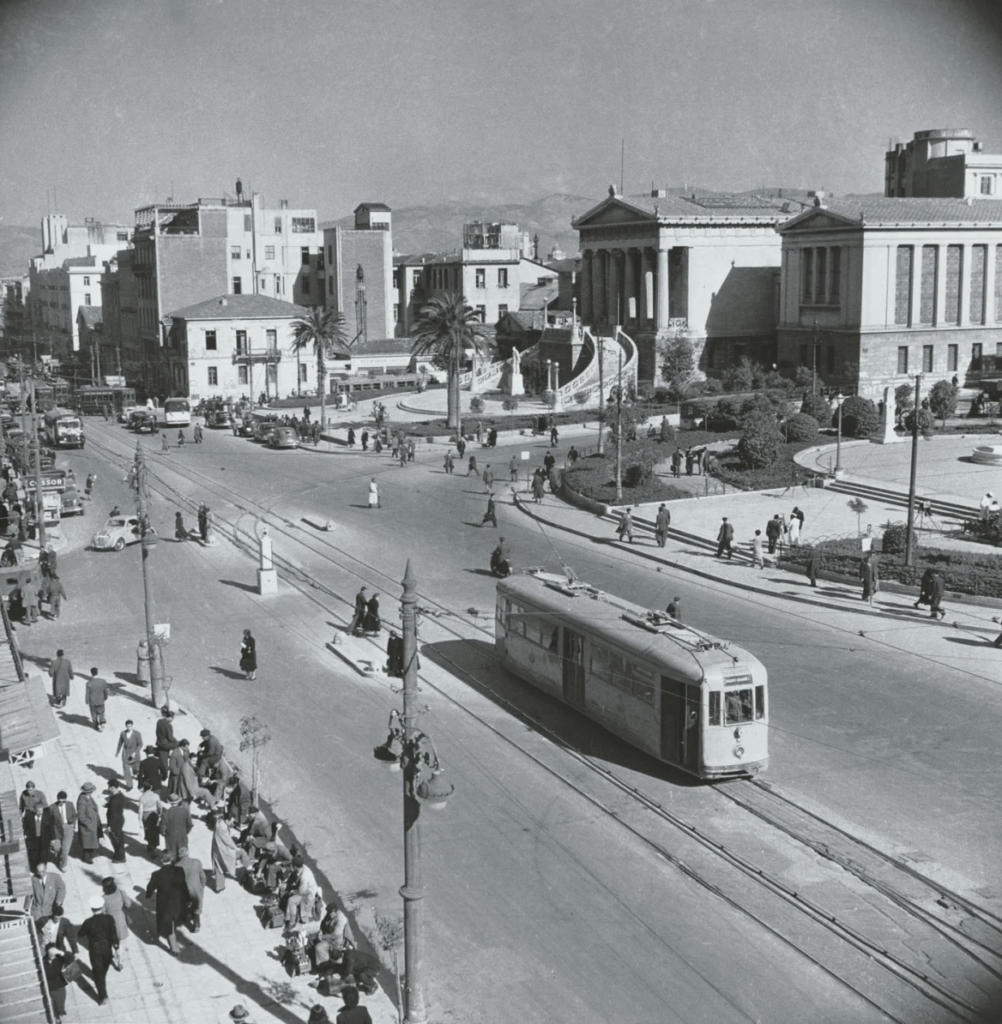
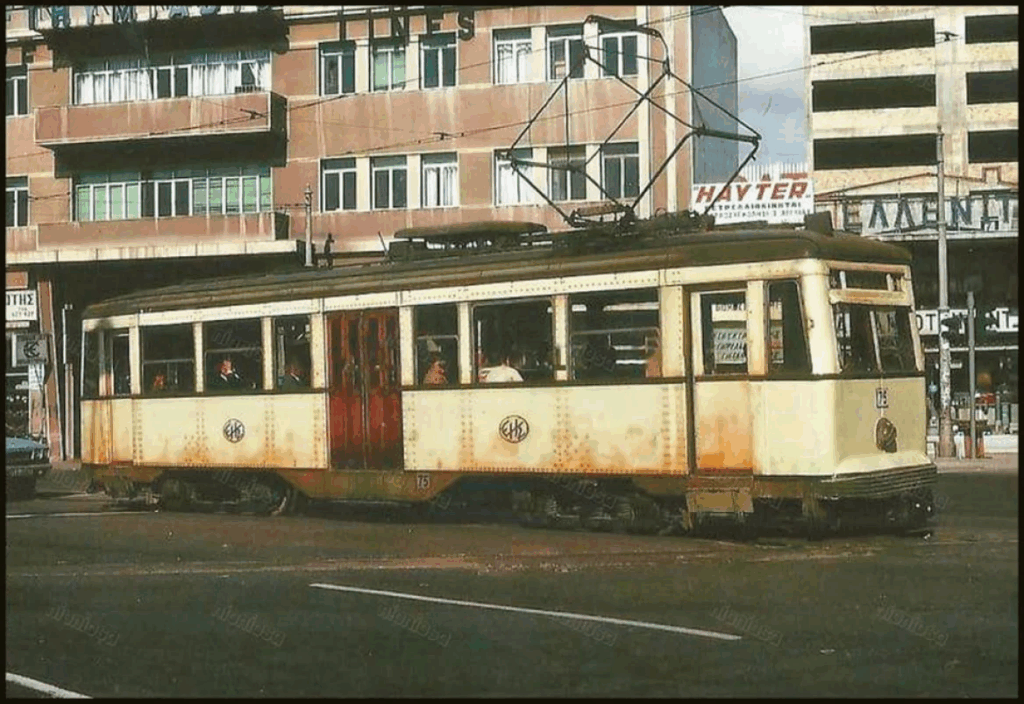
This isn’t the first time the Athens tram has faced such complaints. Beloved in its original era (up until the 1960s), the modern tram’s return before the 2004 Olympic Games brought renewed “grumbling.”
Residents in many districts, such as Nea Smyrni, complained about noise and vibrations — particularly at the Omirou Street crossing, where trams used to “jump,” causing a decade-long disturbance before repairs were made.
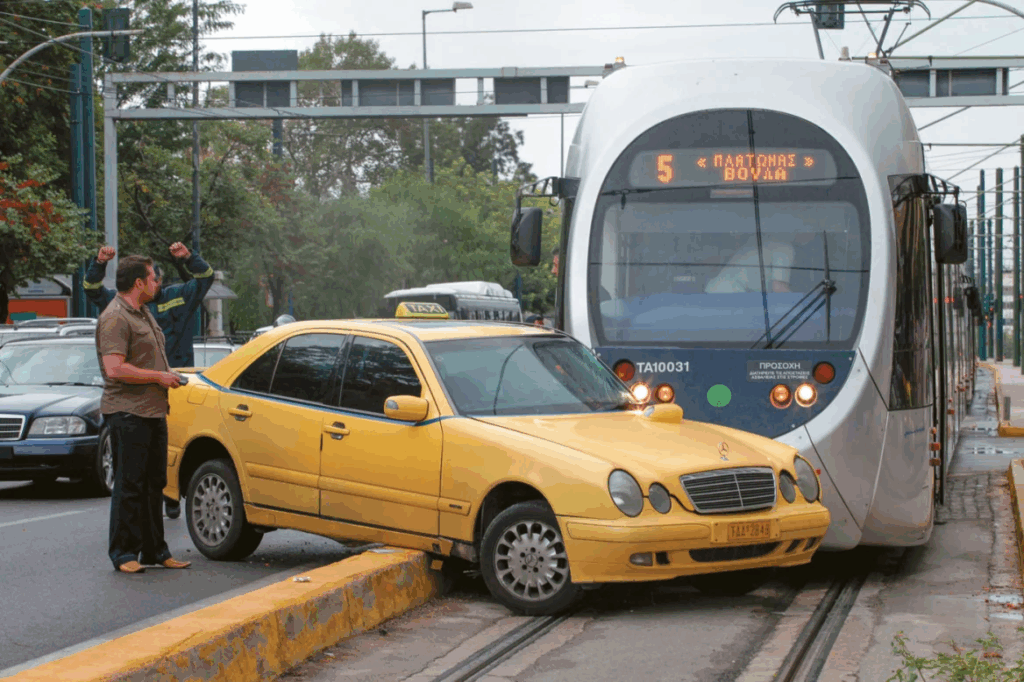
Initially, many Athenians did not welcome the tram’s return. Drivers, already struggling with chaotic traffic conditions, were unaccustomed to sharing roads with a fixed-rail system. This led to minor accidents — collisions with cars or motorcycles and pedestrian mishaps — before the city adapted.
A Costly but Transformative Project
The initial project (including extensions, rolling stock, and redevelopment works) was budgeted at around €346 million (2002 prices). Later expansions — such as the extension to Piraeus (€130 million) and the purchase of 25 new Alstom Citadis trams (€54 million, 2018) — brought the total cost close to €530 million, excluding VAT and maintenance.
Today, the tram serves around 65,000 passengers daily. Its continued success depends on improving frequency, reliability, and expanding into new suburbs.
Olympic Revival
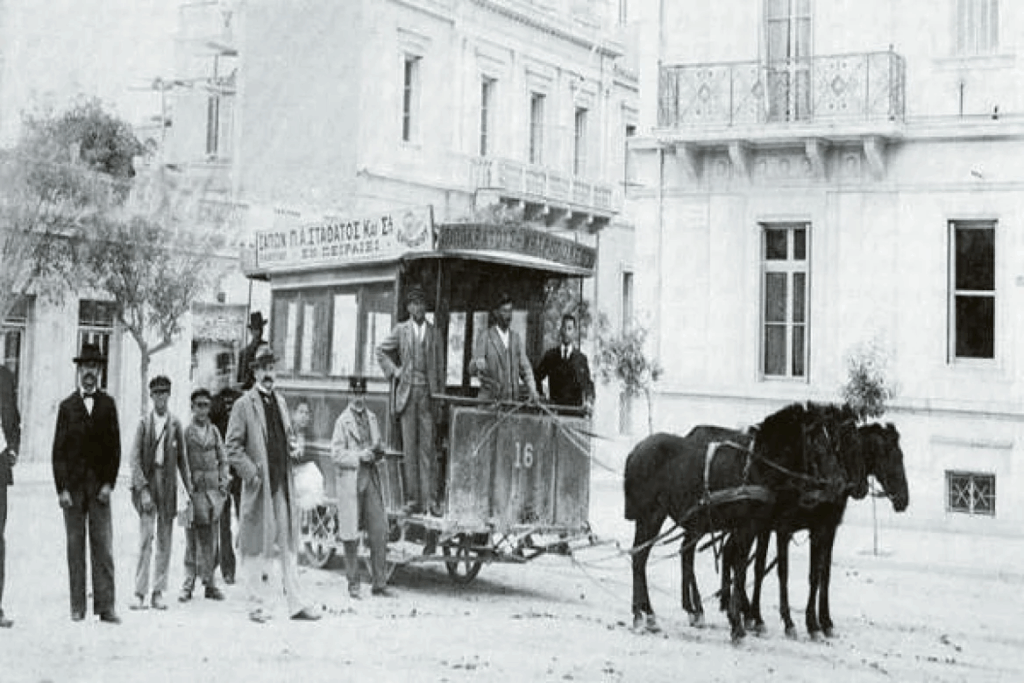
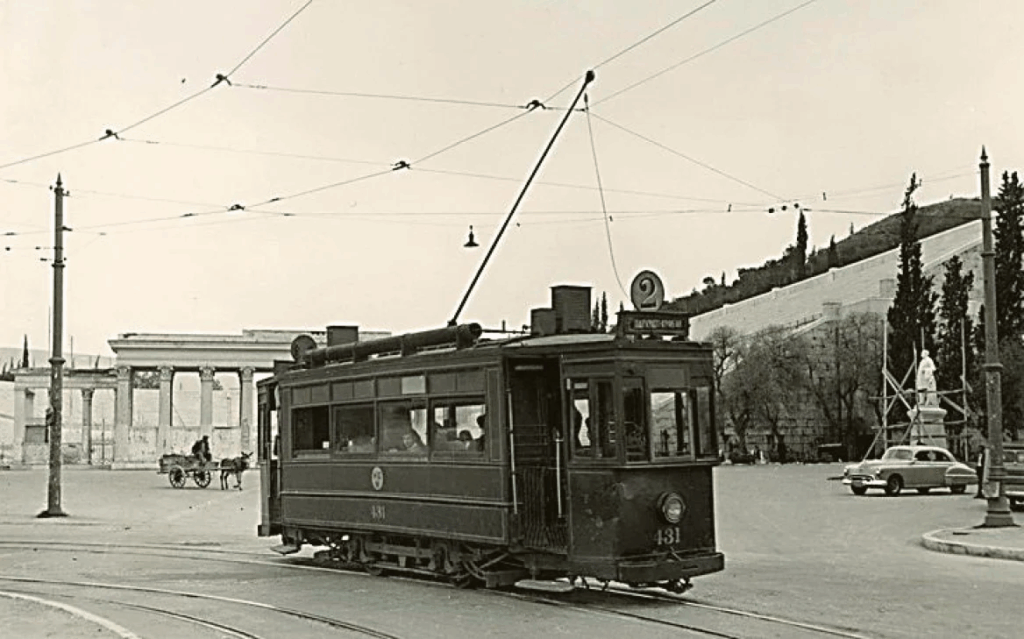
From its horse-drawn beginnings in 1882, to its electric modernization in 1908, shutdown in 1960, and revival for the Athens 2004 Olympics, the tram has mirrored the evolution of the city itself.
The new network, operating since July 19, 2004, connects central Athens with the southern coastal suburbs — Palaio Faliro, Glyfada, and Voula — and has since extended to Piraeus.
Ten Things You Might Not Know About the Athens Tram
- The first trams were horse-drawn.
In 1882, 16 tram cars were pulled by about 800 horses. - The modern tram was built in just two years (2002–2004) — an Olympic record for Greek infrastructure.
- Track gauge widened.
The old tram used a 1,000 mm (metre gauge); the new one uses the standard 1,435 mm gauge. - It once connected Athens to Chalandri and Faliro.
- It has its own traffic light system with special “T”-shaped signals.
- It runs above ancient ruins uncovered during the Piraeus extension.
- Locals initially resisted it in Palaio Faliro and Nea Smyrni.
- Coca-Cola sponsored the first trams in 2004.
- At the “Asklipieio Voula” stop, trams make a full roundabout turn — a rarity in Europe.
- It’s Europe’s most seaside tram, with over 11 km of coastal route from the Stadio Eirinis kai Filias (Peace and Friendship Stadium) to Voula.
Ask me anything
Explore related questions