





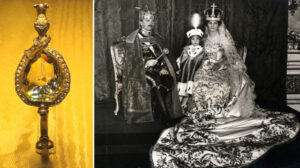
In 1918, as World War I drew to a close, Carolus I — Emperor of Austria-Hungary and a member of the Habsburg dynasty — realized the end of the empire was near.
Charles, nephew of Archduke Franz Ferdinand, whose assassination had sparked the war, foresaw the growing threats from Bolsheviks and anarchists. To protect the Habsburgs’ centuries-old jewels, he transferred them to Switzerland.
Among the collection was a particularly valuable 137-carat, pear-shaped yellow diamond. Before belonging to the Habsburgs, the gem had been owned by the Medici family, rulers of Florence.
The diamond became legendary after Charles and his family were exiled to Switzerland, when it was believed to have disappeared.
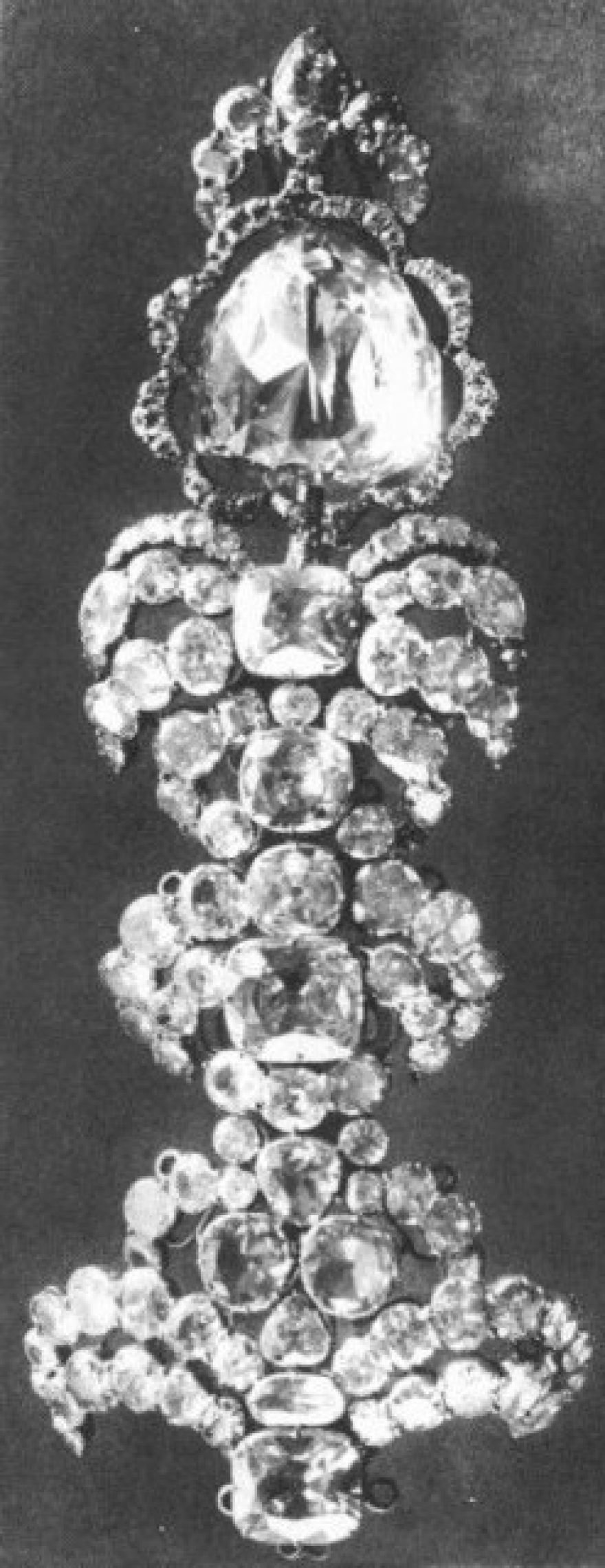
For decades, rumors circulated that it had been stolen or recut. Numerous films and novels, including The Imperfects, drew inspiration from its mysterious disappearance.
However, the true story, revealed for the first time by Charles I’s descendants, is that the diamond was never lost. Since the family fled Austria during World War II, the diamond has been kept in a bank vault in Canada, according to three Habsburg relatives. Last month, they invited New York Times reporters to inspect the diamond and other jewels.
Karl von Habsburg-Lothringen, Charles I’s grandson, said the secret was kept out of respect for Charles’s wife, Empress Zita. She revealed the diamond’s location to only two people — her sons Robert and Rodolfo — and asked them to keep it secret for 100 years after Charles’s death in 1922. Before they passed, they shared the secret with their sons.
In subsequent years, the family remained silent about the diamond to protect its safety. “The less people know about it, the greater the security,” von Habsburg-Lothringen said, adding that he only recently learned of the jewels’ existence from his cousins, Robert’s and Rodolfo’s sons.
For decades, the family jewels of the former Austrian imperial family were thought missing. Now, they have resurfaced.
However, with the promise kept, the family intends to exhibit the diamond and other jewels in Canada as a gesture of gratitude to the country that welcomed Empress Zita and her children.
“It should become part of a trust here in Canada,” von Habsburg-Lothringen said. “It should be displayed occasionally so people can see these pieces.”
At a recent family gathering at the Canadian bank vault where the jewels are stored, von Habsburg-Lothringen carefully unpacked the worn suitcase containing the treasures. He unfolded the yellow paper wrapping the diamond, which still shimmered brightly.
All relatives, living in Europe, saw the diamonds for the first time. The diamond was kept separately from the other pieces.
According to the New York Times, Christoph Kochert — from the family of jewelers to the Austrian imperial court — examined the diamond and confirmed its authenticity. “The cut pattern corresponds almost exactly to depictions in historical sources,” he said.
Jahrzehntelang galt der Familienschmuck der einstigen österreichischen Kaiserfamilie als verschollen. Jetzt ist er wieder aufgetaucht… https://t.co/NLP832HI3p pic.twitter.com/8b5hrFGgym
— Kronen Zeitung (@krone_at) November 6, 2025
The collection includes other jewelry as well.
The diamond once adorned the crown of Francis Stephen at his coronation as Holy Roman Emperor in 1745. From 1440 to 1806, all Holy Roman Emperors, except for a brief period, came from the House of Habsburg.
Richard Bassett, a fellow at Christ’s College, Cambridge, and author of a book on the Habsburgs, said: “The Habsburgs are the greatest dynasty in modern history — the history of Central Europe revolves around them.”
With Charles I’s death from pneumonia in Madeira, the family moved from Switzerland to Spain and then Belgium in 1929. When the Nazis annexed Austria in 1938, her son opposed the regime, offering his services to the Austrian Republic.
The family fled to the United States in 1940, with Zita carrying the jewels in a small suitcase. Eventually, they immigrated to Canada, settling in Quebec.
“My grandmother felt very safe, she could finally breathe,” Karl von Habsburg-Lothringen said. “At that point, the little suitcase was put into a bank safe, and that was it. It has stayed there ever since.”
Ask me anything
Explore related questions




