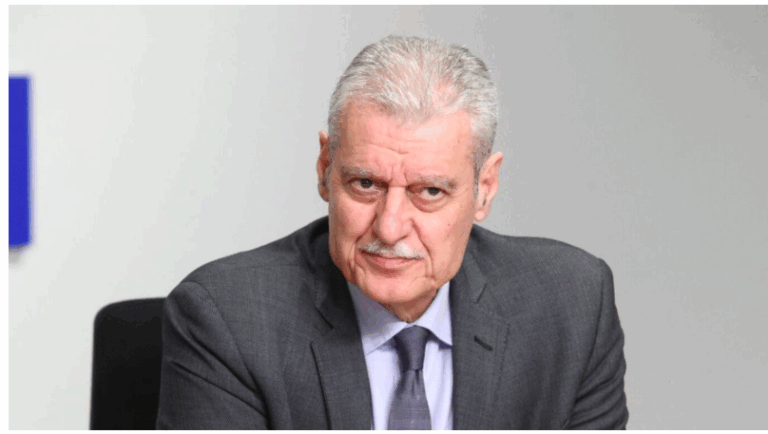
According to reports, Mr. Tournas had informed the Prime Minister during the last cabinet reshuffle that he wished to step down, having completed his mission. However, he was asked to remain in his position until the end of the current wildfire season — which he did.
The position will not be filled following his departure.
Statement by Minister of Climate Crisis and Civil Protection, Giannis Kefalogiannis:
“With deep respect and sincere emotion, I would like to express my warmest thanks to Deputy Minister Evangelos Tournas, a valued colleague, for his outstanding and multifaceted contribution to the Ministry of Climate Crisis and Civil Protection.
Having had a long and distinguished career in the Armed Forces, culminating in his service as Chief of the Hellenic Air Force, Mr. Tournas has served with absolute dedication since 2021 in fulfilling the mission of Civil Protection. He leaves behind a legacy marked by experience, methodical work, and integrity.
Through his deep knowledge, decisiveness, and operational insight, he played a key role in creating a stronger and more modern Fire Service — the main operational arm of our country’s Civil Protection Mechanism.
I warmly thank him for our collaboration, his support, and his friendship, and I wish him every success and personal happiness in the future. His contribution to the Ministry will remain vivid and significant.”
Statement by Evangelos Tournas:
“In September 2021, the Prime Minister honored me by appointing me Deputy Minister for Climate Crisis and Civil Protection, responsible for the Fire Service.
My primary mission and priority were to build a strong mechanism to confront the effects of the climate crisis by creating new forces, strengthening existing ones, introducing new operational planning, and coordinating all agencies involved in responding to natural disasters.
In this effort, we worked closely with other Ministries, the Forest Services, the Armed Forces, the Hellenic Police, the Coast Guard, local authorities, and volunteer organizations — across all stages of disaster management, from prevention and response to recovery.
A central objective was the creation of a new Fire Service — the key operational arm of Civil Protection — with renewed personnel, modern equipment, and a new doctrine adapted to the challenges of the climate crisis.
We established 21 Forest Operations Units nationwide, launched the recruitment of Seven-Year Term Firefighters to reinforce fire stations and renew personnel, nearly doubled the number of cadets admitted to the Fire Academy, and initiated the hiring of specialized staff to help transition the Fire Service into the digital era.
At the same time, we strengthened the Fire Service with essential equipment through the ‘AIGIS’ program, which includes advanced monitoring and early warning systems, operational command and control technologies, and modern land, sea, and air assets, as well as updated personal protective gear.
We redesigned aerial firefighting operations, doubling the number of leased aircraft and introducing water-loaded patrols capable of immediate response. We also deployed drones in key regions and restructured ground forces to ensure faster reaction times to incidents.
Furthermore, we adopted a new operational doctrine focusing on surveillance, early warning, rapid mobilization, and immediate suppression using all available resources.
After four years as Deputy Minister at the Ministry of Climate Crisis and Civil Protection — and with the completion of this year’s wildfire season — a significant chapter of service to the nation’s Civil Protection mission comes to a close for me.
I wish to thank everyone who worked with us to build this new Civil Protection mechanism and modern Fire Service.
Above all, I thank our Prime Minister, Kyriakos Mitsotakis, for the honor and trust he placed in me by assigning this demanding role. He was the first to foresee and speak about the climate crisis and the need for a dedicated Ministry — and under his guidance and support, we built today’s modern Fire Service.”
Ask me anything
Explore related questions