





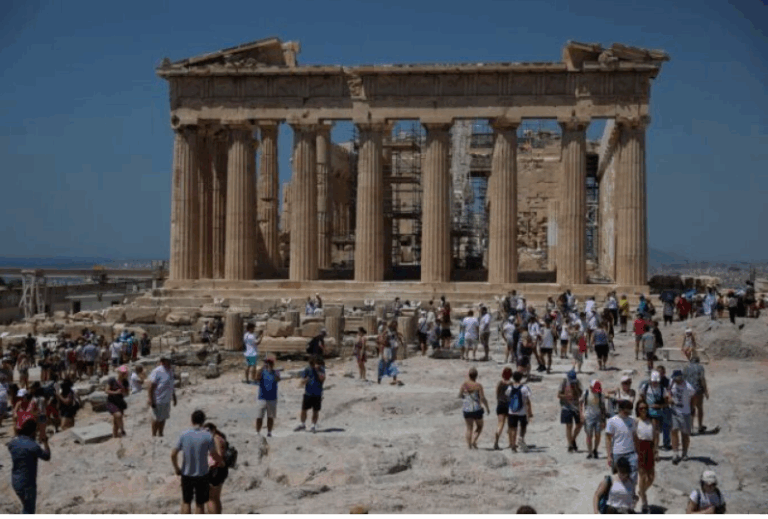
The majority of Greek citizens consider the contribution of archaeological sites, monuments, and museums to be particularly important—both for the country’s economic development and for improving their quality of life. These findings are among the key results of the first nationwide survey on satisfaction levels in the cultural sector, carried out at the initiative of the Ministry of Culture. The goal was to systematically capture visitor experience and record needs and expectations regarding the functioning of cultural sites under its supervision.
During today’s presentation, Giorgos Arapoglou, General Director of PULSE—the company that conducted the survey titled “Upgrading the services provided at archaeological sites and their impact on society”—highlighted:
“The most interesting element is that all indicators, even the most challenging and strict ones, show scores above 50% among regular visitors, who may be the most important group due to the frequency of their visits. These indicators also show noteworthy and verified improvement over time, especially when compared with results from past years.”
Specifically, when asked how important they consider the contribution of archaeological sites, monuments, and museums to the country’s economic development, 73% responded “quite” to “very” important, and 90% from “moderately” to “very” important. Regarding their contribution to quality of life, 54% rated them “quite” to “very” important, while 77% answered from “moderately” to “very.”
In terms of cleanliness, 80% rated it at medium or higher levels. Similarly, 77% gave medium to high scores for staff knowledge and information provided, with 84% characterizing staff behavior as medium to high quality.
On the pressing issue of access costs—particularly after the recent ticket price increases—31% of respondents gave high ratings to the ticket’s value, while 65% rated it medium or higher. Low ratings amounted to 25%.
Additionally, some complaints were recorded regarding accessibility and opening hours, although improvements compared to previous years were also noted.
Minister of Culture Lina Mendoni emphasized:
“The results show positive percentages above 70%, even on the issue of the ticket, which proves that we are taking the right steps. The recent change in ticket pricing already has more than 50% acceptance. Continuous improvement of services, investment in infrastructure, and a technocratic approach to culture demonstrate that our policy enhances the visitor experience, the economy, and the social acceptance of cultural goods. However, there is considerable room for improvement, especially in increasing visitor numbers and improving the experience for both Greek and foreign visitors.”
Offering an overall assessment, Olympia Vikatou, General Director of Antiquities and Cultural Heritage, noted that:
“Visitor evaluations show high satisfaction levels in cleanliness, staff, exhibits, access, and pricing, while also identifying areas for improvement such as information, accessibility, and opening hours.”
From his side, Giannis Mylonas, head of the Ministry’s NSRF Executive Structure, underlined that:
“Through the NSRF and the Recovery and Resilience Fund, the Ministry of Culture has implemented over 800 projects worth a total of €1.2 billion, improving physical and digital accessibility. The integration of Artificial Intelligence into digital applications for museums and archaeological sites is also under consideration.”
Ask me anything
Explore related questions




