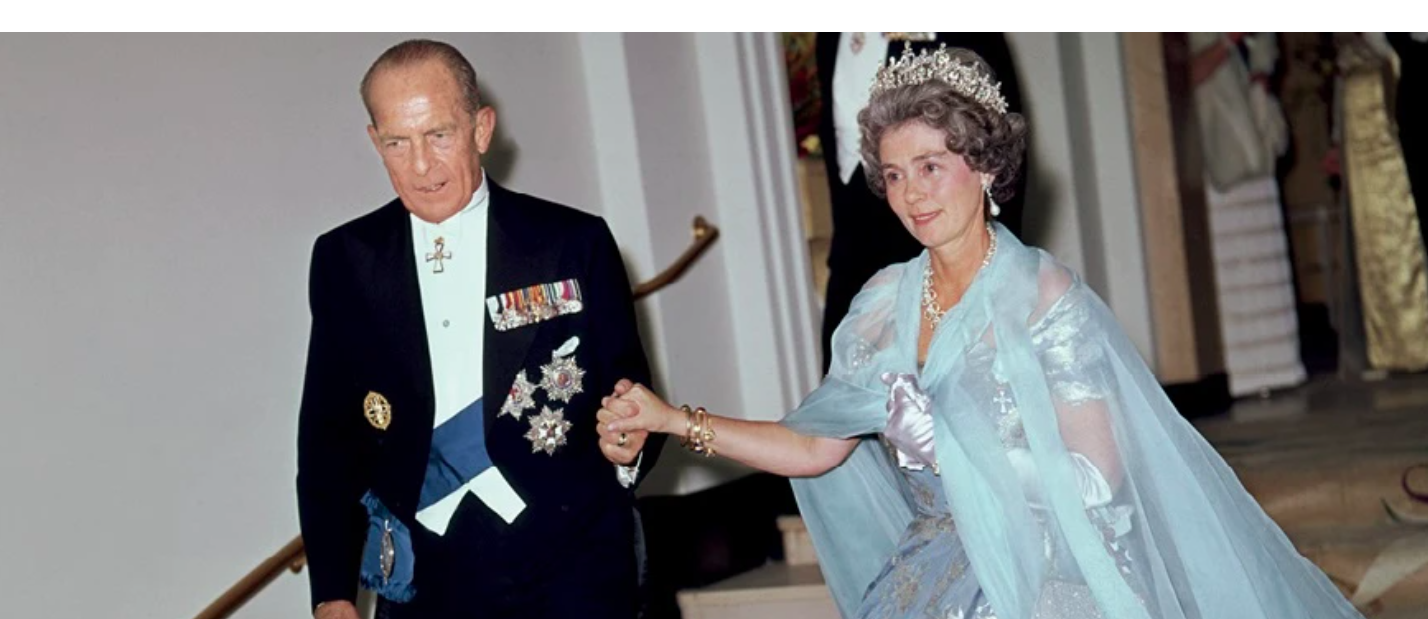
From official evening gowns to wedding dresses, the collection includes stunning pieces like the ivory bridal gown with its long veil worn by Anna-Maria at her 1964 wedding to Constantine II. Or the iconic silk satin cocktail dress embroidered with white flowers by Jean Dessès, which accompanied Sophia to the dances with Juan Carlos during their 1961 engagement. There’s also the black satin dress with velvet straps, paired with a matching bolero, famously worn by Queen Frederica during her historic visits to America’s major nuclear centers at the height of the Cold War. These are just a few of the countless designer garments discovered among the treasures of Tatoi, now appraised and digitized by the Ministry of Culture.
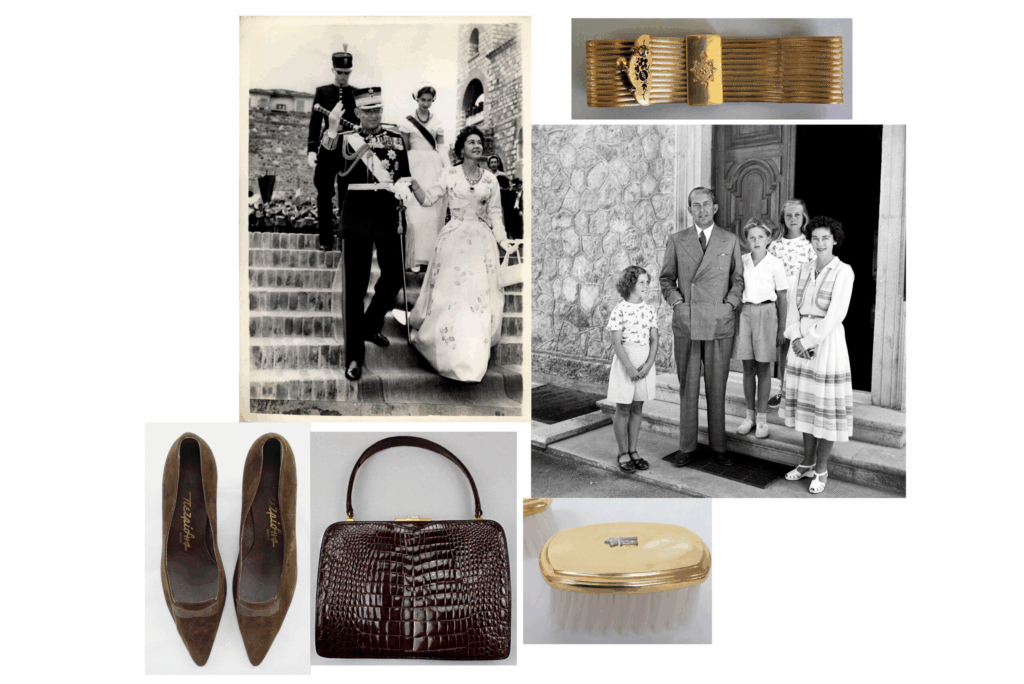
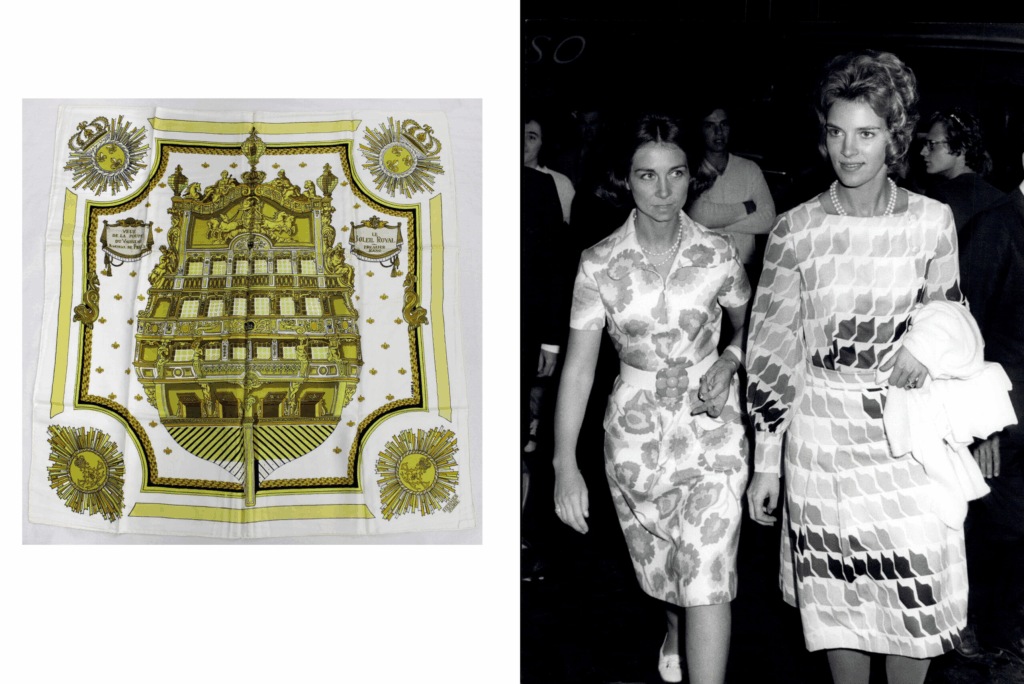
The collection also boasts custom-made formal attire from top fashion houses such as Christian Dior, Pierre Balmain, Coco Chanel, and Hubert de Givenchy. These pieces are not only emblematic of their aesthetic beauty but carry significant symbolic and historical weight, tied to some of the most iconic moments in Greek and international history. Complementing the outfits are luxurious shoes and accessories crafted from exquisite fabrics by renowned houses like Pucci, Hermès, Balmain, and Van Cleef & Arpels, each enhancing the unique style and personal signature of the family members.
Treasures Unveiled
The Greek royal family’s connection to fashion dates back over a century, linked to legendary Parisian ateliers such as the renowned Callot Soeurs, which Marcel Proust praised in In Search of Lost Time as among the era’s finest. Today, their creations can be found in museums like the Metropolitan and the Victoria and Albert Museum. Among the rarest and oldest finds uncovered by the Ministry’s experts is a lace and silk dress once worn by Aspasia Manou, wife of King Alexander, preserved in a steamer trunk alongside other precious items.
Of exceptional historical value is the Delphos dress, inherited by Frederica and Sophia from Aspasia. Created by the Fortuny atelier, it is considered a masterpiece — a true work of art. Mariano Fortuny was a Renaissance man of his time: painter, engraver, photographer, set designer, lighting pioneer, and inventor. His family shaped Spain’s artistic landscape at the turn of the 20th century, with his father and maternal ancestors having led the Prado Museum.
Designed in 1907, the Delphos dress was revolutionary, heralding the end of restrictive corsets and voluminous skirts. Its elegant pleats paid homage to the chiton of the Charioteer of Delphi, made of layers of silk satin and finished with Murano glass beads. Each dress was uniquely dyed using Fortuny’s own pigments and ancient methods, making every piece one of a kind. This particular salmon-pink Delphos dress, specially colored for Aspasia, is not only a garment but a precious artifact of European fashion and art history.
Delphos dresses were favorites of avant-garde aristocrats like Sarah Bernhardt, Isadora Duncan, and Peggy Guggenheim, and famously worn by Elsa Schiaparelli, Coco Chanel’s great rival. The acclaimed costume designer for Downton Abbey even used a unique blue Delphos to perfectly capture the aristocratic taste and 1920s fashion.
The Queen Who Loved Fashion
While Frederica embraced minimalist, ancient Greek-inspired silhouettes, her official evening gowns were more grandiose — such as a beige and pink tulle dress embroidered with silver sequins, or a white tulle gown with black lace and pink rose appliqués worn at a 1954 gala. Her ivory satin evening dress, adorned with beads, rhinestones, and embroidery, was worn during her first official visit to the U.S. with King Paul in 1953.
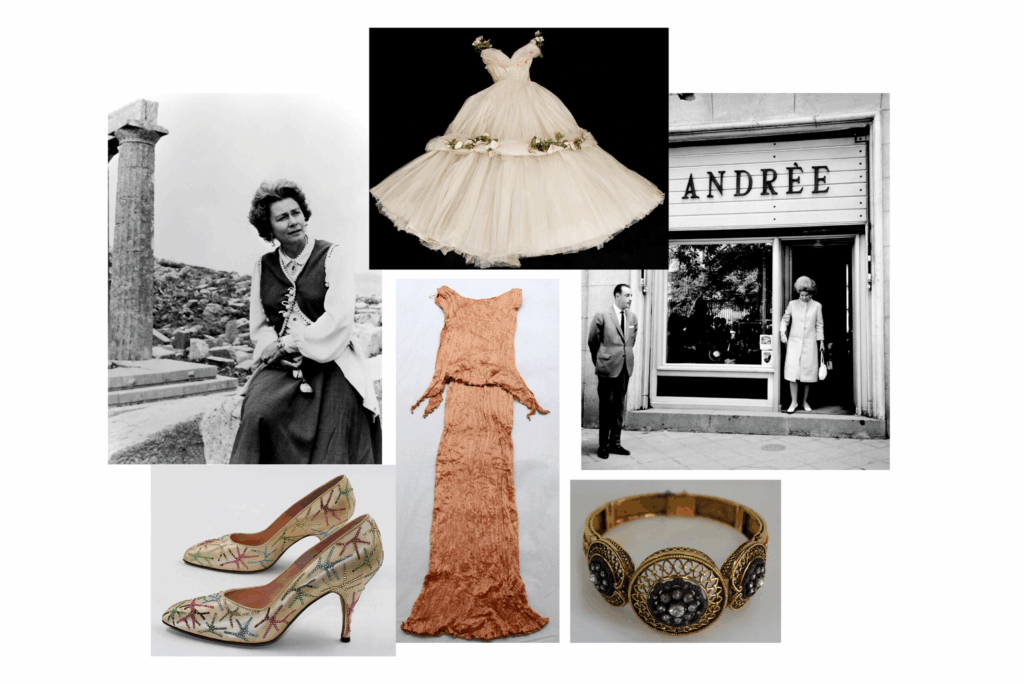
Generally, Frederica preferred simpler lines designed by Jean Dessès, a French designer of Alexandrian origin. As Dessès himself stated, Frederica wanted her wardrobe to reflect Greece’s modest economic conditions and avoid ostentation. Many of her dresses from the ’50s and ’60s were inspired by Greece, proudly showcasing national identity alongside the fashion trends of the era. The popularization of national costumes as formal wear was influenced by publications like the Benaki Museum’s album on traditional dress and the striking presence of photographer Nelly’s at the Delphic Festivals.
The fashion-loving queen often visited top Greek ateliers like Fildisakos, Tsouhlos, Evangelidis, Papayiannou, and Evangelidis-Kourtidis, as well as international designers like Givenchy, who collaborated with Guy Laroche and Greek ateliers like Emma Doxiadu’s for bespoke creations.
Romantic Elegance and Accessories
Sophia, displaying a more romantic flair and fondness for floral motifs, trusted Frederica’s taste and also adored Dessès. His emblematic beige silk organza dress with colorful floral and bird motifs was worn to a 1956 official dinner for French President René Coty in Paris. Seven years later, Sophia donned a blue organza dress embroidered with silver thread and sequins for the centennial celebration of the Greek royal family in Denmark. Dessès also designed the short dresses Sophia wore during her 1961 engagement to Juan Carlos.
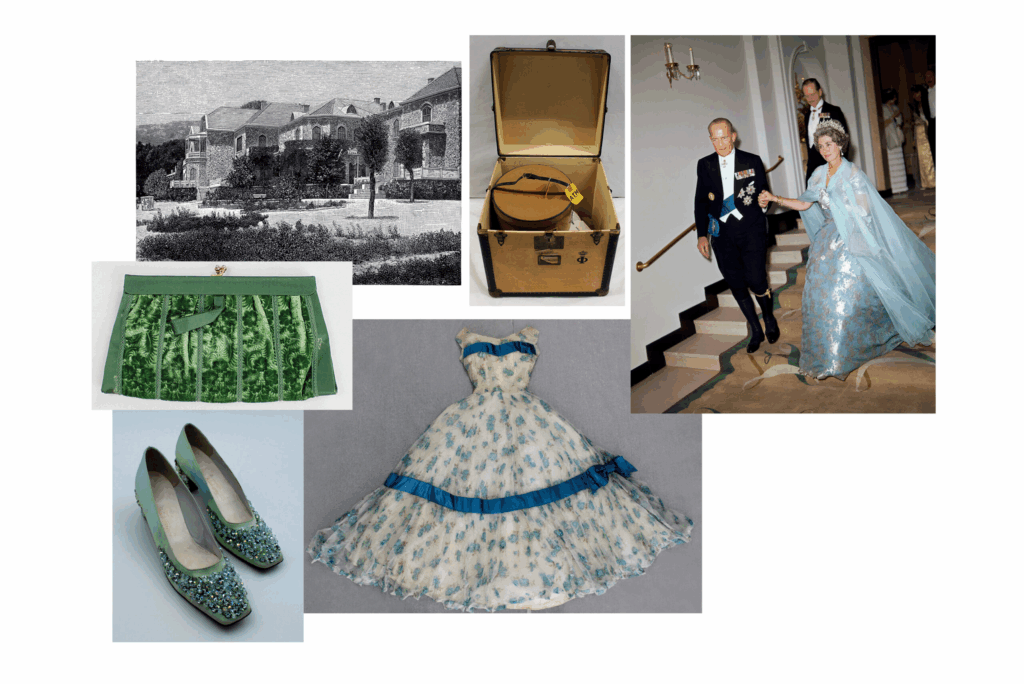
Shoes and accessories played a crucial role in the royal ensembles. Footwear was custom-ordered from Delman and the historic Greek shoemaker Kalogiros (est. 1890), whose history is closely intertwined with the royal family. Shoes were matched with handbags, as each queen and princess had a signature bag and accessory jewelry. Frederica favored vanity bags by Van Cleef & Arpels, while leather travel bags were specially ordered from Gucci.
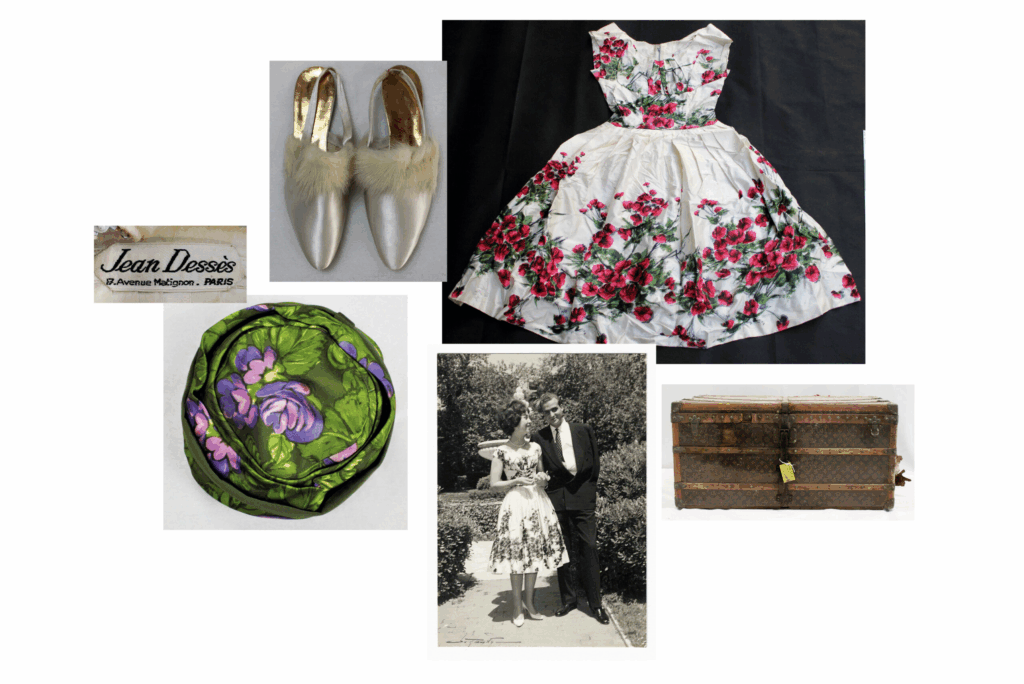
For the royal family, clothing was more than aesthetics and style—it was a statement of status and symbolic influence, shaping a national narrative during a pivotal time. This makes the Tatoi Collections a significant historical reference point. Explore the entire digitized wardrobe and accessories at tatoicollections.culture.gov.gr.
Ask me anything
Explore related questions