The safest countries in the world for 2025, according to the Global Peace Index, continue to be small and stable states such as Iceland and Ireland, while Greece ranks 45th worldwide, having dropped three places compared to last year’s ranking.
The year 2025 is marked by armed conflicts, trade tensions, and intense militarization. According to the Global Peace Index (GPI), the number of state-based conflicts is at its highest level since World War II, with three new conflicts erupting just this year. In this landscape, peace becomes a particularly valuable commodity, with several countries continuing to make it an absolute priority.
The Global Peace Index is compiled by the Institute for Economics and Peace and is based on 23 indicators that assess the level of safety and stability in each country. These criteria include, among others, the public’s sense of safety, crime rates, access to weapons, internal and international conflicts, degree of militarization, and the overall impact of these factors on society and the economy. The lower a country’s GPI score, the safer it is considered.
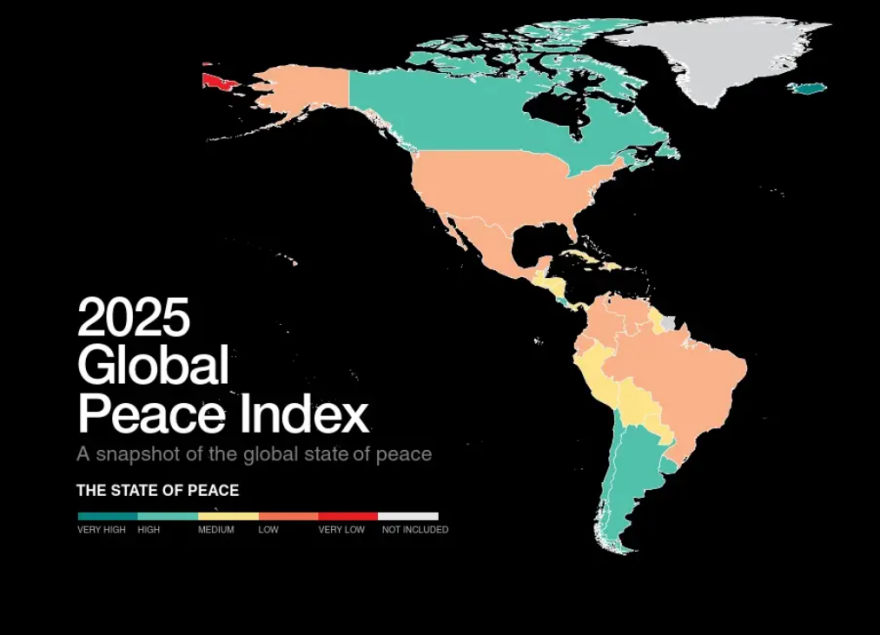
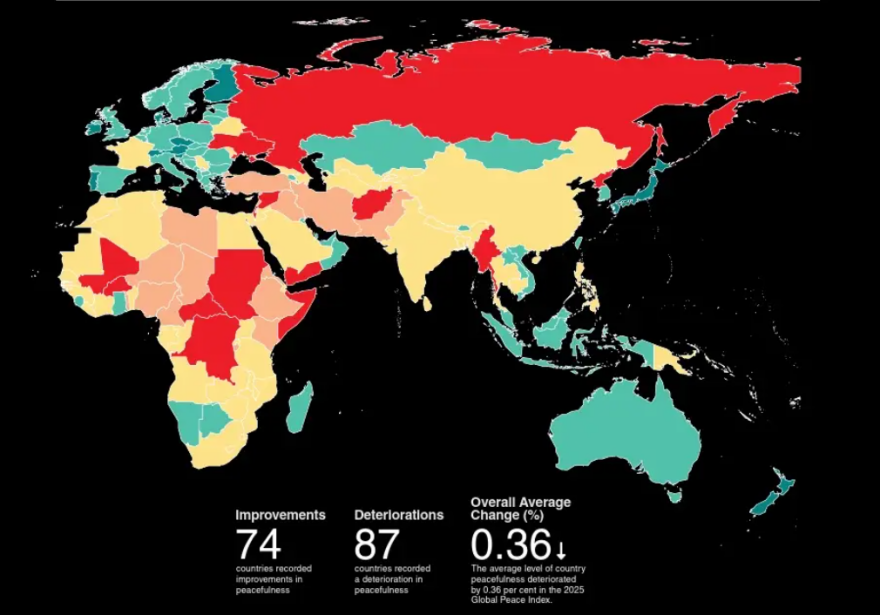
But which countries are the safest and most dangerous in the world — and where does Greece stand?
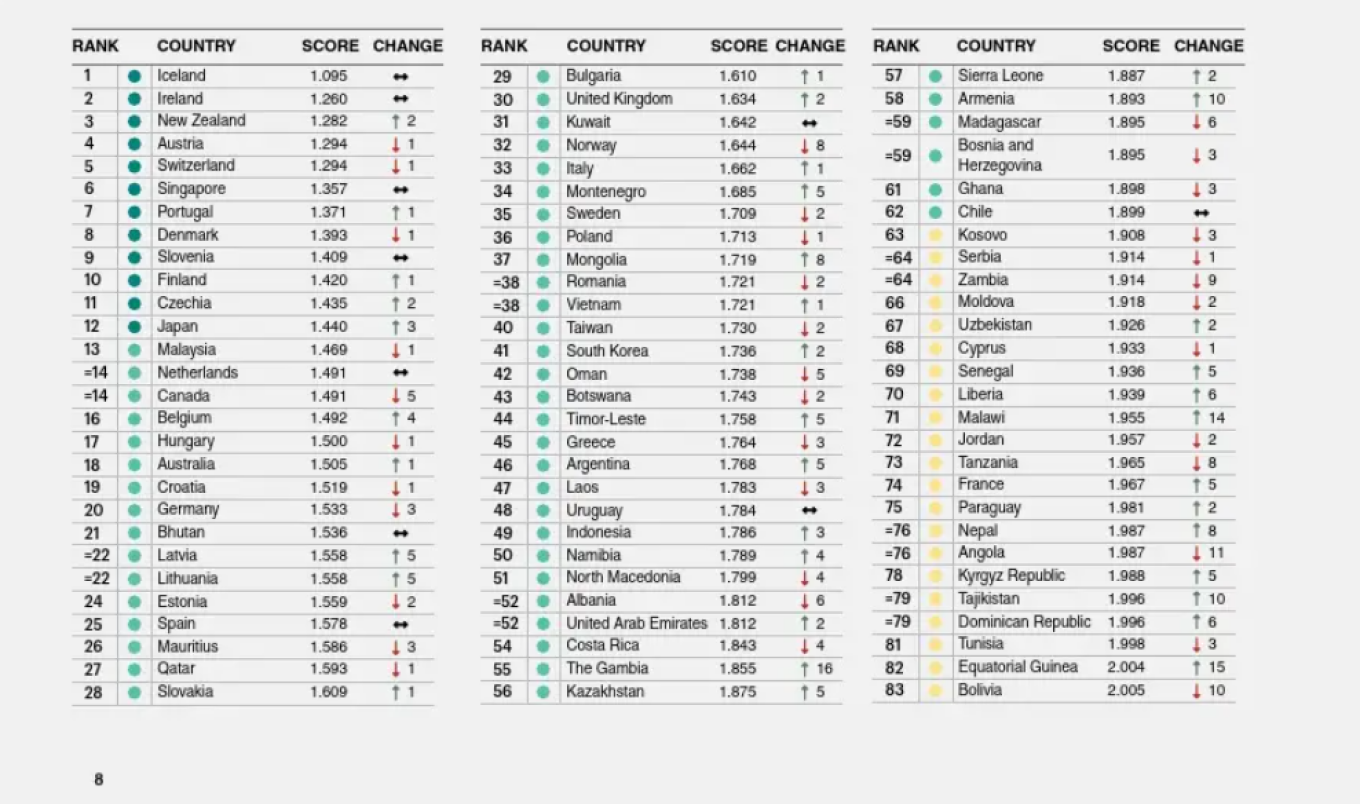
According to the Index, the top five safest countries for 2025 are:
- Iceland
- Ireland
- New Zealand
- Austria
- Switzerland
Greece ranks 45th, above Argentina, North Macedonia, Albania, and Gambia, and below Vietnam, South Korea, Botswana, and Oman.
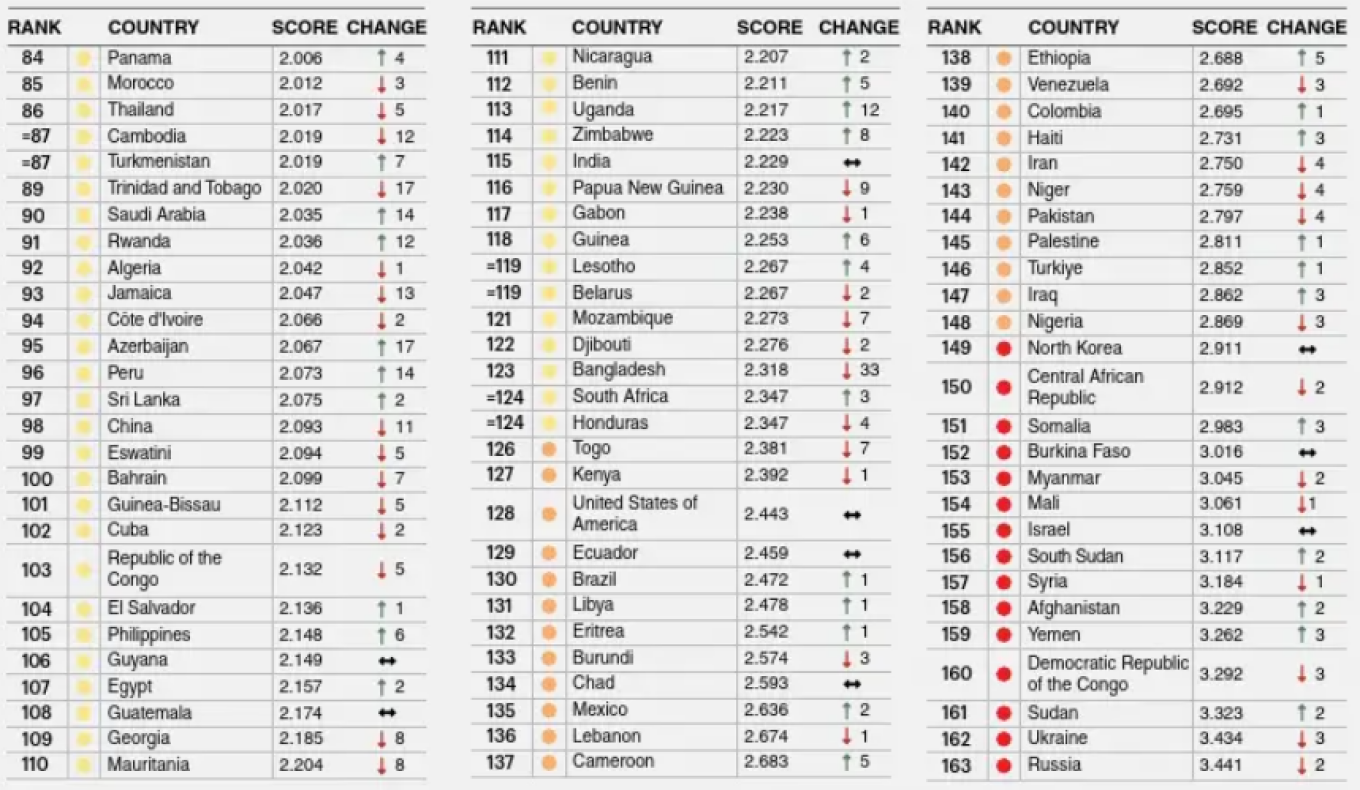
On the opposite end, the last position is occupied by Russia, followed by Ukraine, Sudan, Congo, Yemen, and Afghanistan.
The countries that have consistently remained at the top of the Index for decades highlight, according to the data, the long-term benefits of peaceful policies. At the very top of the list is Iceland, which has held first place continuously since 2008, achieving the best performance in all three major domains: safety and security, ongoing conflicts, and degree of militarization. This year, it even shows an additional 2% improvement, reinforcing the image of highly effective state governance. Despite often extreme and dangerous weather conditions, Icelandic society manages to maintain a strong universal sense of safety.
In second place is Ireland, a country that experienced numerous conflicts during the 20th century but has, in recent decades, made peace and social cohesion central priorities. Low conflict intensity, strengthened social safety, and systematic crime reduction are reflected in its high ranking.
The top ten is completed by New Zealand, Austria, Switzerland, Singapore, Portugal, Denmark, and Slovenia. Common traits among these states include strong and effective institutions, low levels of violence, distancing from armed conflicts, and robust welfare systems — factors directly linked to high quality of life, a sense of security, and political stability.
At the opposite end, at the bottom of the list, the title of least safe country in the world for 2025 is attributed to Russia. It is followed by Ukraine, Sudan, and Congo — countries facing a combination of intense internal and international conflicts, high levels of militarization, and severe social and humanitarian crises. Violence, instability, refugee flows, and widespread violations of humanitarian norms decisively affect their position in the Index.
Greece ranks 45th globally, recording a drop of three places compared to the previous year. It remains at a relatively high level of safety, far from the world’s most dangerous areas, though not among the top-performing countries in peace and stability. Despite an overall positive picture, Greece lags behind states such as Taiwan, Mongolia, and Oman — a point which, based on the Index’s findings, should be a cause for reflection regarding its trajectory in the coming years.
Ask me anything
Explore related questions