





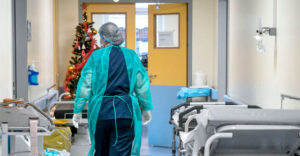
The war against hospital-acquired infections caused by resistant microbials continues with intensity in Greek hospitals, which are recording negative performance in this field. However, a major victory that has been achieved, the operational details of which were presented yesterday at a special event at the Stavros Niarchos Foundation, appears to have the potential to change the outcome of this war.
The report of the five-year Hospital-acquired Infection and Microbial Resistance Prevention and Control Programme (GRIPP) of the Stavros Niarchos Foundation’s International Health Initiative (IHIP), showed that:
– 933 blood infections (microbioses) in hospitalized patients, children and adults, associated with central line-associated venous catheterization (CLABSI)
– 16,873 hospital days were avoided due to infections. The number of these hospitalizations is equivalent to the hospitalizations of a 15-bed ICU for an entire year.
– 14.1 million euros were saved.
The GRIPP-SNF program was piloted in 10 major hospitals in Greece, providing guidelines for the prevention and control of nosocomial infections and microbial resistance, in collaboration with the Health Quality Assurance Agency (HQA), the Centre for Clinical Epidemiology and Disease Outcome – CLEO and the National Public Health Organization (NOPH). These are: “Panagiotis and Aglaia Kyriakou” and “Agia Sophia” Children’s Hospital, “Evangelismos”, “Agios Savas” Athens Cancer – Oncology Hospital, “Attikon” University General Hospital, “Papageorgiou” Hospital of Thessaloniki, University General Hospital of Alexandroupolis, University General Hospital of Larissa, University General Hospital of Patras (Rio), University General Hospital of Heraklion (Pagni).
Physical University of Athens, University of Piraeus Medical Center, University Hospital of Piraeus Medical Center of Piraeus, University Hospital of Piraeus, University Hospital of Piraeus, University Hospital of Athens.
The important results were highlighted by the scientists from the institutions that collaborated on the program’s implementation and by the leadership of the Ministry of Health, who attended the event.
“This program was evaluated, judged, and succeeded. Funding has been secured for its continuation and for its expansion to the ESY,” said the Deputy Minister of Health, Marios Themistocleous, welcoming the event and thanking all those who contributed to the program. In this context, the relevant actions and procedures have been initiated for its gradual integration into the NHS under the coordination of the ODIHR.
In his address, the Minister of Health, Adonis Georgiadis referred to the start of the first pilot phase in 2014 under Professor Theoklis Zaoutis at the pediatric hospitals “P. & A. Kyriakou” and “Aghia Sophia”, but also his own dark experience when as Minister of Health he was informed about the “red” Greek hospitals in the world map with the countries with the highest rates of hospital infections and about the quarantine that Greek patients were placed in when they went to hospitals in other countries. “Thanks to the GRIPP-SNF programme, this picture has changed and the programme has led to the adoption of safer practices aimed at protecting patients from dangerous pathogens,” Georgiades noted.
For his part, K. Zaoutis, Founder and CEO of CLEO and Professor of Pediatrics at the University of Athens, reported a 20-50% increase in hand hygiene compliance among healthcare professionals and a 40% reduction in CLABSI infections. He even noted that 28 hospital departments managed to eliminate CLABSI micro-virus infections for six full months, while 13 departments achieved this for a year.
Mr. Giannis Kopsidas, Director of CLEO, unfolded the actions planned and implemented in the 10 Greek hospitals, such as the reinforcement with nurses of the Hospital Infection Committees, the creation of educational programs for health professionals, the creation of the unified system of infection registration and surveillance, as well as the implementation of strategies to address the problem.
The big picture of the majority of health professionals who have worked and are working following the program and the small minority of those who have denied and underestimated it, was mentioned by Antonia Koutsoukou, Professor of the School of Medicine of the National Academy of Sciences of Greece, Pulmonologist, Intensivist. “The programme has proven that reducing hospital-acquired infections is an achievable goal despite staff shortages, burn out of staff and unforeseen circumstances such as the pandemic during which we were implementing GRIPP,” Ms Koutsoukou said, stressing also the multiplier value of the training received during the hundreds of health professionals within the NHS, “as they are the best ambassadors of the culture that needs to change, for the safety of hospitalization”.
Ask me anything
Explore related questions




