

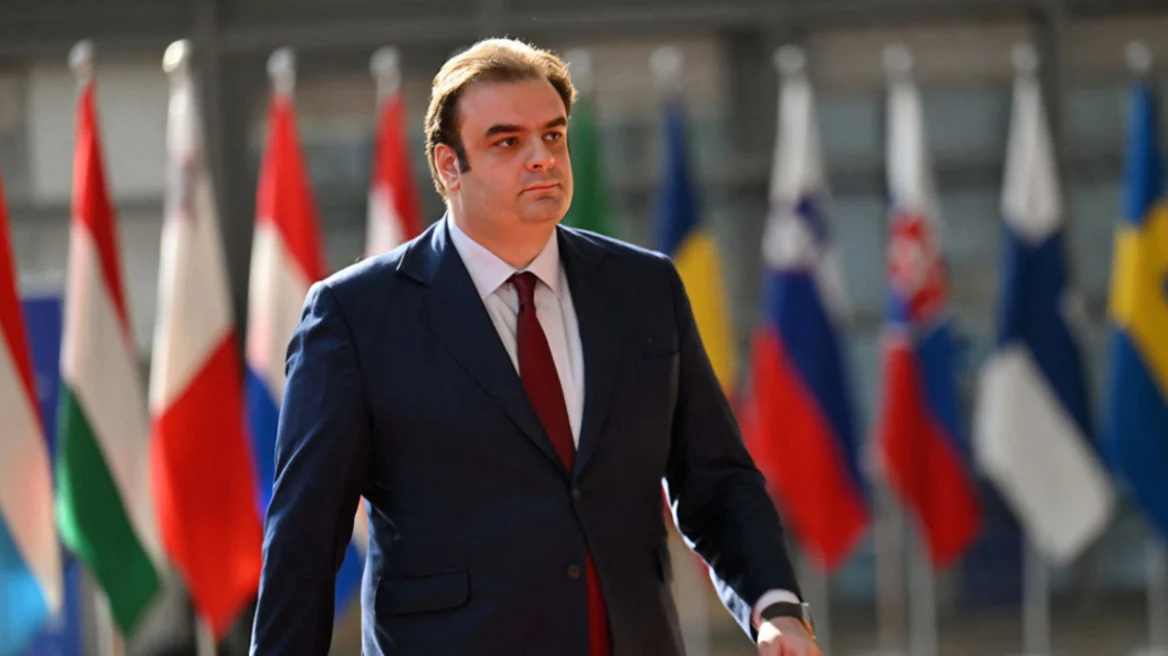
Greece is about to face its most symbolic test yet on its path toward full restoration within the eurozone, as Finance Minister Kyriakos Pierrakakis runs for the presidency of the same forum where the country’s debt crisis once unfolded, Bloomberg reports.
In a vote taking place tomorrow, Thursday, Pierrakakis will compete against Belgium’s Vincent Van Peteghem for the post of Eurogroup president — the club of euro area finance ministers whose late-night meetings more than a decade ago focused on Greece for all the wrong reasons.
Both candidates have been campaigning over the past two weeks, since they emerged as the only two contenders for the position left vacant after the sudden resignation of Paschal Donohoe. The winner will chair the monthly meetings and represent the eurozone around the world.
The likely outcome is still unclear, as most capitals have so far remained silent on whom they will support. But the narrative of national redemption put forward by Athens after years of effort to rein in its debt is something Pierrakakis’s rival cannot match.
“It would be a true recognition of Greece’s success in turning the page and leading the eurozone,” said Jeroen Dijsselbloem, former Dutch finance minister who chaired the group for most of the country’s sovereign debt crisis. “All the hard work and reforms have paid off. An example for many other member states.”
Dijsselbloem presided during perhaps Greece’s darkest moment in the Eurogroup in late June 2015. One day after the government announced a surprise referendum on new bailout terms — and urged voters to reject them — a Brussels meeting became more heated than ever.
When Greece’s finance minister at the time walked out, the remaining members of the group proceeded to discuss how to shield their economies from a potential Greek exit from the euro.
Such episodes during the sovereign debt crisis, which hit much of southern Europe and Ireland and required three consecutive bailouts for Athens, gave the Eurogroup and its leaders a bad reputation across the region. For years, Greek citizens viewed it as one of the key bodies making harsh decisions that affected their economic future.
In contrast, recent EU polls show that Greece now has the highest share of voters who say there should be “greater coordination” of economic policy among eurozone members, even though 28% of respondents still view the currency as “bad” for the country.
From a fiscal standpoint, Greece has made dramatic progress. Although its debt-to-GDP ratio remains the highest in the EU, it is falling rapidly. The country is one of the few in the Union running a budget surplus, and its economy is growing faster than many others, even if it has much ground to make up after years of lost growth.
Meanwhile, Belgium — host to the EU’s biggest institutions and NATO — is struggling to rein in deficits that far exceed the EU’s ceiling of 3% of GDP. Its debt is on track to potentially surpass that of Greece by the end of the decade.
The change in Eurogroup leadership comes at a time of mounting challenges, including the EU’s efforts to remain competitive, China’s growing economic influence, and the increasingly strict trade policies of the U.S. Countries also face the burden of NATO’s commitments to spend 5% of GDP on defense.
Unlike the central role it played during the debt crisis, the Eurogroup itself has struggled to find relevance in recent years.
Among the potential future priorities are strengthening the role of the euro — including reducing national barriers in capital markets — and issuing a digital version of the common currency.
The growing significance of cryptocurrencies may also become a topic of discussion — an area in which Pierrakakis is seen by some as having an advantage, given his background as Greece’s former digital minister.
The Eurogroup has had only four leaders since the role became permanent two decades ago: Luxembourg’s Jean-Claude Juncker from 2005 to 2013, followed by Dijsselbloem for the next five years. Portugal’s Mário Centeno and then Donohoe led the group in the years that followed.
Ask me anything
Explore related questions