





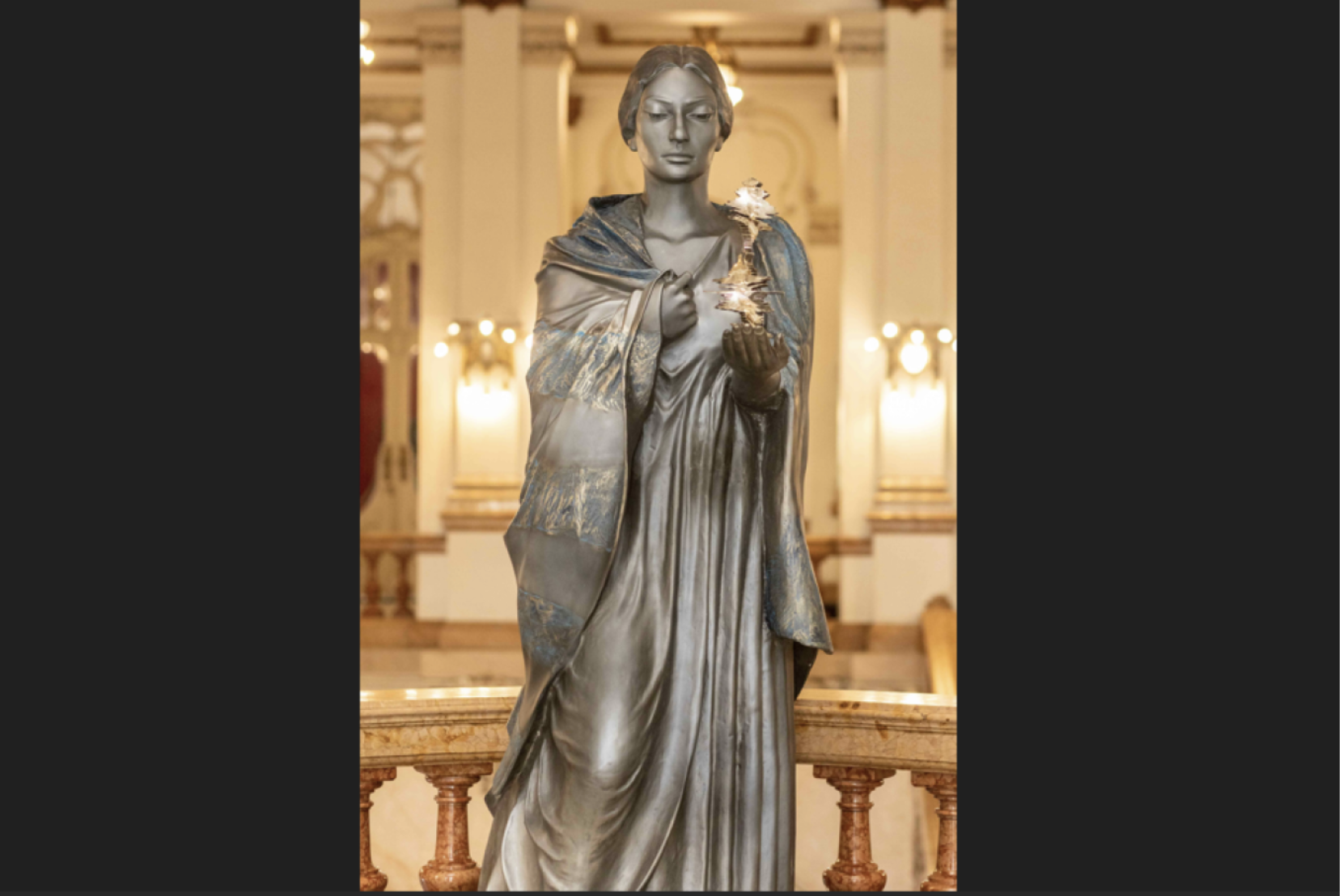
In Brazil, at the iconic Theatro Municipal de São Paulo—where in 1951 she gave a legendary live performance—Maria Callas “returned” through Nikos Floros’ monumental sculpture dedicated to her.
The work, standing 2.5 meters tall and weighing around 400 kilograms, titled “Goddess from Steel,” transforms voice into matter and memory into a timeless experience. It was the centerpiece of the exhibition by the distinguished Greek sculptor, which will run until June 20. The opening took place at the São Paulo Opera in the presence of prominent figures, including the Consul General of Greece in São Paulo, Thomas Matsoukas, the State Secretary for Culture of São Paulo, Marilia Marton, the Head Representative of the Ministry of Foreign Affairs in São Paulo, Nelson Antonio Tabajara de Oliveira, and the representative of the Greek delegation to UNESCO, Maria Chatzianesti, among others.
Nikos Floros and soprano Myrto Papathanasiou with the sculpture.
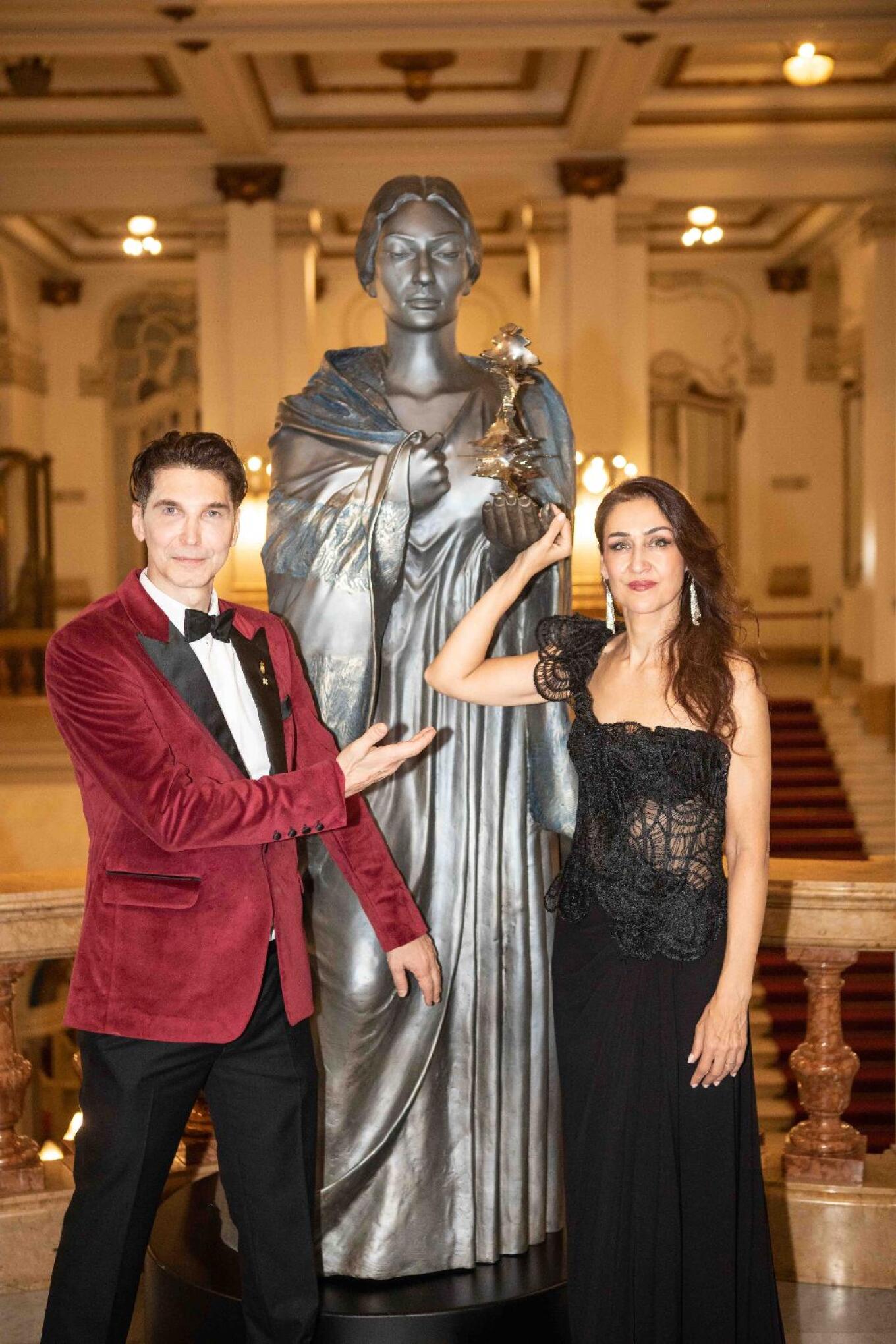
At the heart of the evening was “Goddess from Steel,” a work dedicated to the legendary Maria Callas, transforming voice into matter and memory into a timeless experience. The monumental sculpture, 2.5 meters high and weighing about 400 kilograms, dominates the historic opera space—at the very site where Maria Callas performed in 1951—creating a powerful symbolism of return and eternity.
“My relationship with Brazil is deep and timeless. The presence of this work here is a particularly moving moment and a meaningful connection with a people who love art,” said Nikos Floros. This work, beyond Brazil, has also traveled to Venice, Rome, Florence, Paris, and Dubai.
Following the unveiling of “Goddess from Steel,” the stage of the Theatro Municipal de São Paulo transformed into a space of profound artistic emotion. The world-renowned Greek soprano Myrto Papathanasiou, accompanied by piano, performed arias associated with Maria Callas. The internationally acclaimed soprano presented a program dedicated to the Italian operatic repertoire, performing the aria “Un bel dì vedremo” from Madama Butterfly and “Vissi d’arte” from Tosca by Giacomo Puccini.
Ask me anything
Explore related questions




