





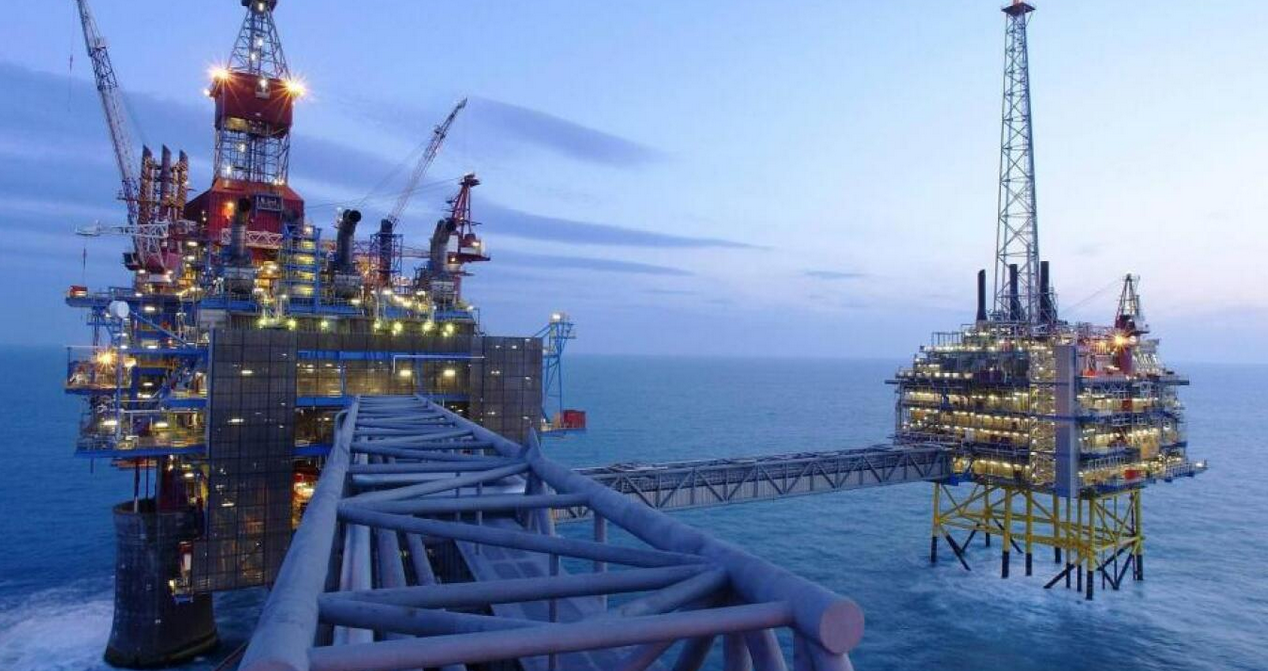
The Ministry of Environment and Energy confirms once again the rapid progress of the licensing process in the field of hydrocarbon exploration.
Yesterday, the General Directorate of Environmental Policy of the Ministry issued the environmental approval for the hydrocarbon exploration and exploitation program (by the Chevron–Helleniq Energy consortium) in the offshore area “South Peloponnese,” based on the Strategic Environmental Impact Assessment (SEIA-S-P) and the results of the consultation with the public and public authorities.
Thus, the much-anticipated exploration of potential deposits comes one step closer, marking a new era in this crucial sector. The participation of the American energy giant Chevron as operator is itself a strong “vote of confidence,” giving the project heightened strategic significance.
The program
According to the decision, the hydrocarbon exploration and exploitation program concerns an offshore area with a total surface of 7,974 km² named “South Peloponnese,” which consists of two subsections (northern and southern).
The environmental approval—addressed to the Hellenic Hydrocarbon and Energy Resources Management Company as the competent Planning Authority—naturally includes conditions, restrictions, and guidelines that must be adhered to during the specification and implementation of the program, primarily under the supervision of the Authority.
The SEIA-S-P program is structured into the following main phases:
Exploration
Promising areas are investigated initially through geophysical seabed surveys, mainly acoustic (seismic), in order to identify targets—i.e., suitable tectonic and/or stratigraphic structures underground that could have acted as traps for liquid and gaseous hydrocarbons. One or more exploratory wells are drilled at these targets. If hydrocarbons are found, production zones (reservoirs) and recoverable reserves of each field are determined based on drilling data and production tests. If no commercial reserves are discovered, the next development phase is not implemented.
Development and production
Hydrocarbons are extracted using wells drilled during the exploration stage or through new wells, and then processed, stored, and transported to loading facilities for further distribution. This phase includes the construction of all necessary infrastructure, such as processing facilities, temporary storage and loading systems, pipeline networks, etc. Processing of the extracted hydrocarbons to make them marketable does not include refining.
Decommissioning and rehabilitation
After production in a hydrocarbon field is completed, wells are sealed, all surface installations and production, storage, and transport infrastructure are dismantled and removed, and the area is restored.
Environment Unit
As noted, comprehensive measures for preventing, minimizing, and addressing environmental impacts will be assigned to a dedicated Environment Unit. This Unit will be organized and operate under the sole responsibility of the hydrocarbon exploration and exploitation rights-holder, under the supervision of the Planning Authority (HEREMA).
The Environment Unit will act as the liaison for all environmental matters with local communities, hydrocarbon and environmental monitoring bodies, and relevant public administration services.
In addition, from the start of the SEIA-S-P program’s implementation, a rapid environmental response system will be developed and applied, activated in cases such as observation of sensitive species (cetaceans, sea turtles, etc.), sudden acoustic incidents, or pollution events.
Environmental monitoring will also include an operational mechanism for suspending activities if new scientific evidence emerges indicating the presence of sensitive species or habitats within the intervention zone.
According to the decision, the area’s leaseholder, in cooperation with the Planning Authority (HEREMA), must prepare as soon as possible—and in any case before seismic surveys or exploratory drilling begin—documented scenarios predicting cumulative medium- and long-term impacts for each activity phase. These scenarios must be based on an integrated assessment of combined effects, taking into account all human activities in the study area, and must adequately document interactions with existing pressures, especially fishing and maritime traffic, as well as concurrent or planned large-scale exploration activities in the same marine area.
Strict conditions
It is further stipulated that once production prospects are confirmed, the field development plan must incorporate detailed environmental protection measures. Central development decisions—such as the general type of the main installation (subsea, floating, or hybrid), its location, production well layout, fluid separation system, loading system, etc.—will be made through multicriteria analysis in which environmental criteria carry increased weight.
Additionally, all alternatives examined in Environmental Impact Studies must meet adequate safety standards (for all development–production works and installations) according to applicable regulations, and must utilize the latest technological advances available at the time of design.
The decision applies for the entire duration of the hydrocarbon exploration and exploitation program in the “South Peloponnese” offshore area.
Extensive consultation
Before the “green light” was given, the results of the public consultation were taken into account, along with certain key findings and evaluations. Among these: the program is not expected to cause transboundary environmental impacts, and therefore consultation with countries that are either EU members or parties to the Espoo Convention’s SEA Protocol is not required. It was also noted that the program area does not include Natura 2000 protected zones, although it does contain formations important for marine biodiversity.
For this reason, the Directorate for Natural Environment and Biodiversity Management and the Hellenic Biodiversity Organization (OFYPEKA) issued positive opinions on the SEIA-S-P, subject to conditions incorporated into the decision.
Moreover, the requirements raised by other public authorities, regional bodies, or services can be met through appropriate conditions included in the environmental approval.
In particular, remarks from Greenpeace, WWF, and the Pelagos Cetacean Research Institute, processed by the Planning Authority (HEREMA), were thoroughly taken into account in formulating the terms of the decision, especially regarding the protection of sensitive marine environmental elements.
Strategic importance
At the same time, the strategic significance of the endeavor was taken into account. As stated, “the exploration and exploitation of hydrocarbon deposits in Greece is included in the revised National Energy and Climate Plan (NECP), contributing to the optimal economic utilization of domestic energy resources and the country’s economic development, in a complementary manner and without undermining the achievement of renewable energy targets (80% of electricity consumption by 2030).”
Furthermore, the implementation of the program is expected to provide in-field environmental data regarding the conservation status of Greece’s marine species and habitat types, through the surveys to be carried out in the next stages.
Ask me anything
Explore related questions




