





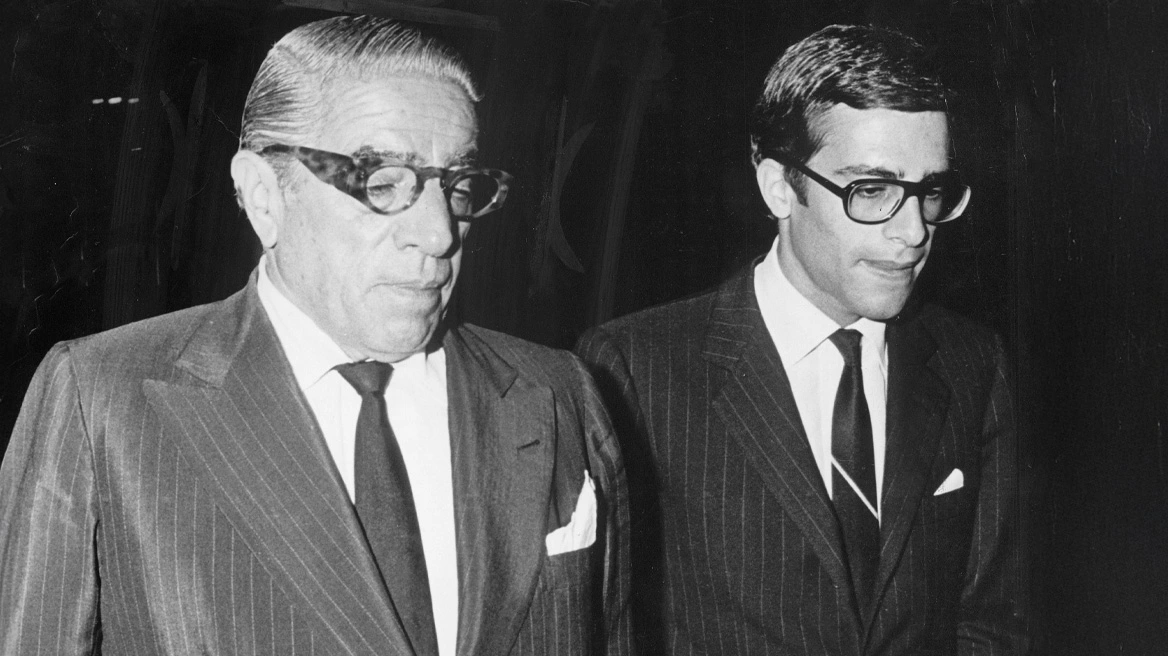
A few days before Christmas of 1974 arrived, the atmosphere in Greece was already festive and the capital was living in a climate of euphoria, as people were finally feeling free after the fall of the Junta.
In Glyfada, in a neighborhood known to many because Aristotle Onassis kept a very beautiful residence there, few had seen him a couple of days before the eve of the great holiday.
The man who wanted everything—and to a very great extent had it—was now a shadow of his former self, an existence submerged in the sorrow born of a loss that cannot be overcome.
The death of his son Alexander after the crash of the airplane he was piloting last January shattered him as well.
Within a few months he was transformed into a tired man who had lost all interest in life, despite belonging to the elite of the planet’s billionaires and the international jet set.
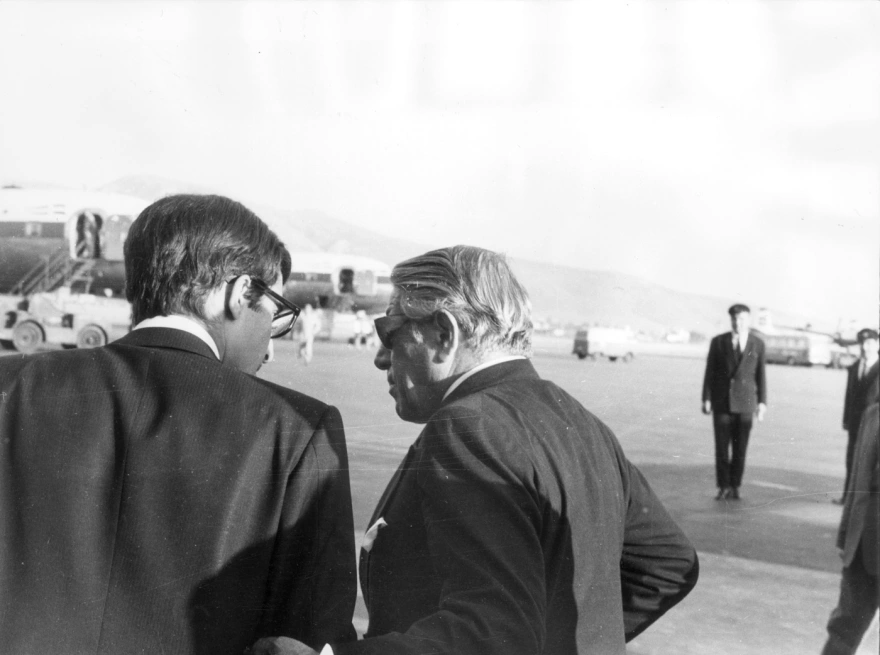
He no longer found any joy looking out from his car at Athens, which had been decorated to celebrate the coming of the Lord.
For him there were no longer holidays and glittering réveillons.
When his appointment ended, he returned to Glyfada, and a few hours later—while the cold was quite biting—Onassis’s sister, Artemis Garoufalidis, visited him at his residence.
She did not want to think that these might be Aristo’s last Christmases, but she was worried about him, mainly because he seemed to have surrendered to his fate.
Lost in thought
The death of her nephew changed overnight the fate of the dynasty and “transformed” Onassis, who seemed to have aged abruptly within a few months.
The myasthenia from which he suffered further worsened the psychology of the man who had graced the cover of Time and the world’s biggest newspapers for his achievements and his love affairs with some of the most famous women on the globe.
When Garoufalidis entered the house, she found her brother smoking a cigarette, sitting in the living room and staring into space.
He was lost in his thoughts, and her heart tightened—perhaps because she sensed, however faintly, that Aristo might be heading toward the end of his novel-like journey.
As she left him alone, she wondered to herself whether these were the last Christmases she would see him.
Three months later, on a rainy March morning in Paris, the legendary Smyrniot “passed away” at the American Hospital where he was being treated.
There, where he begged the doctors to let him die, having become a “shadow” or a bundle of bones, as was seen in a photograph taken from afar by a paparazzo perched on a rooftop.
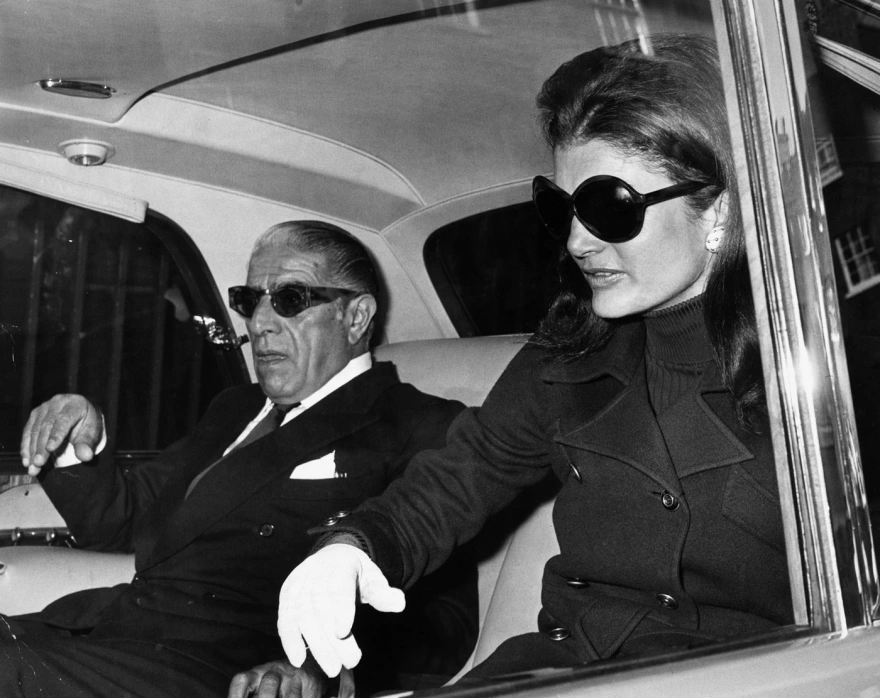
Alone on New Year’s Day
That December day, however, a few kilometers away from the southern suburbs, an acquaintance of the Greek magnate, the charming Della Roufogali, was experiencing her own sorrow.
Her husband, Michalis Roufogalis, former all-powerful head of the Colonels’ KYP, was now in prison.
She knew Onassis well and believed that if she spoke to him he might be able to help her husband somehow, so she decided to go see him in person at his villa in Glyfada in the following days.
She ultimately chose to go early in the evening on New Year’s Eve, and when she arrived at the house she rang the doorbell and waited for someone from the staff to open the door for her.
She was surprised when Onassis himself opened it, and her surprise grew even greater when she realized that the magnate was completely alone in the house.
They sat in the living room, and Della Roufogali laid out for him the situation regarding what was happening with her imprisoned husband.
Years later, in an interview she gave, she noted that she was astonished that on such a day such a powerful man was entirely alone inside his villa.
He himself confided to her that he had dismissed all the staff that New Year’s Eve of 1975 in order to remain alone in his Glyfada residence, even though he could have been wherever he wished.
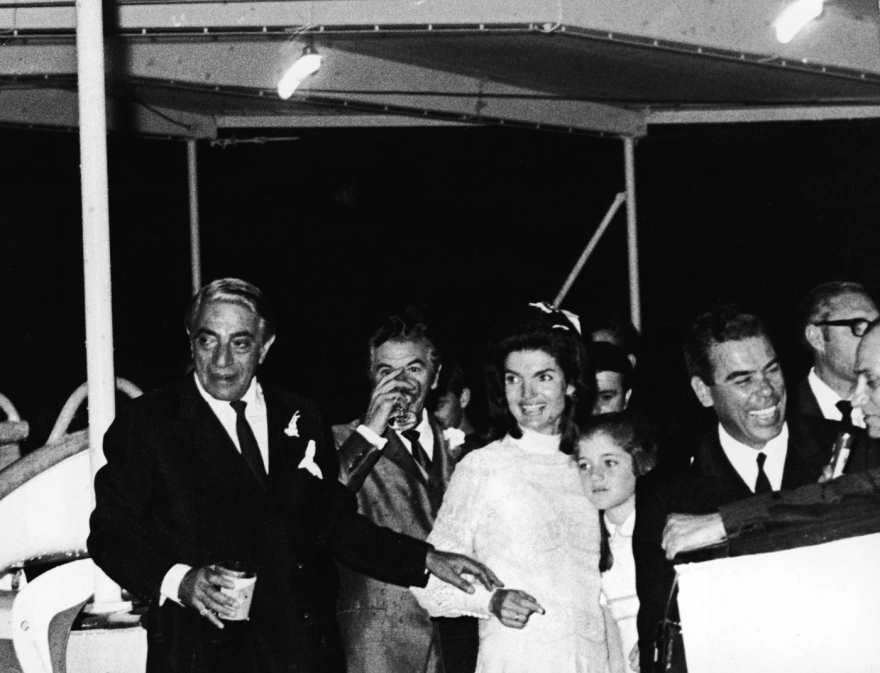
The invitations for réveillons—from Paris and New York to the chalets of the powerful in Gstaad and St. Moritz—were many, but the outgoing Smyrniot who built an empire did not want to go anywhere.
All he wanted was for his son to be alive—the heir, the child for whom he had created everything—only this was something impossible.
When time stopped
He promised Della Roufogali that he would look into her matter, bade her farewell, and sank once again into his world of sorrow and into that fateful day in January 1973, when time for him stopped.
That moment when they called him to tell him that his son had had an accident with that cursed Piaggio amphibious aircraft, which he piloted very often.
Read also: Alexander Onassis: On this day 47 years ago, the fatal plane accident
Hours later, a nurse at KAT remembered him sitting on the steps with his hair disheveled and smoking, while hopes of recovery for Alexander—who was hospitalized, intubated, with extremely severe cranioencephalic injuries—had vanished.
The one who would inherit the empire built by the man with the novel-like journey, the famous romances, and the big deals, was clinically dead.
Some of those who were present at those dramatic moments later said that from the moment Onassis gave the order to disconnect the machines that were keeping his son alive, he was a man who had surrendered to his fate.
At the press conference he gave a few hours later, he collapsed after his first words to the journalists, when he told them, almost in tears: “Alexander was a good boy.”
He was now a living dead man, counting down the time to be “released” from pain and to go meet him.
Ask me anything
Explore related questions




