





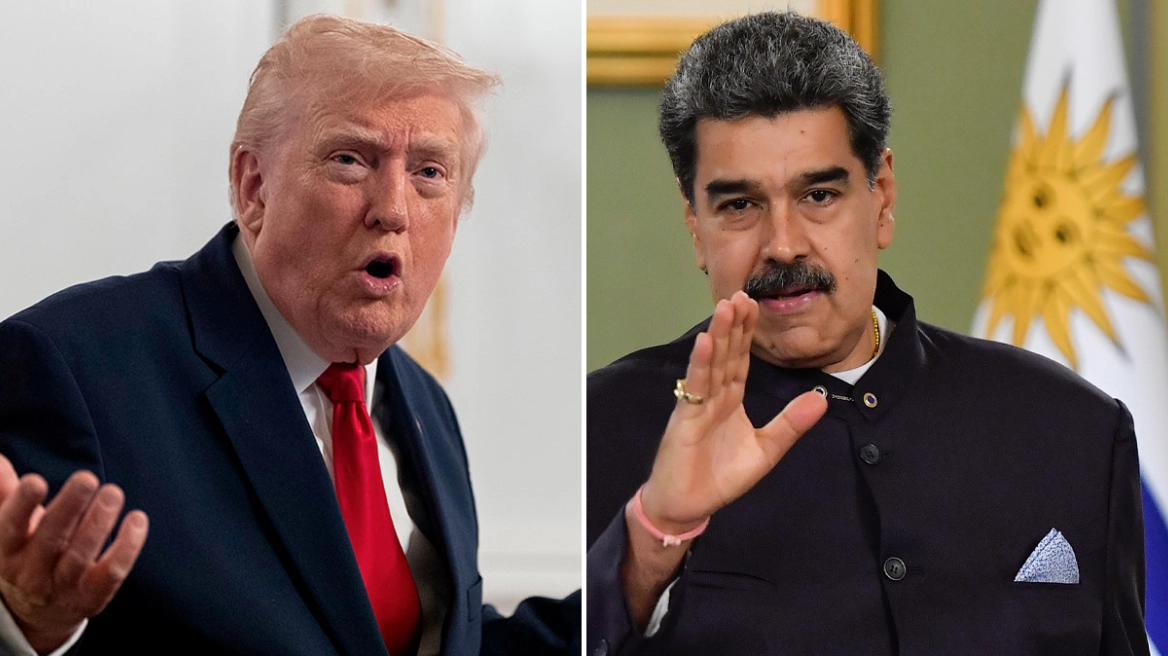
U.S. President Donald Trump warned yesterday, Tuesday, that the United States will move forward with imposing a blockade on Venezuela by targeting oil tankers already under sanctions, further intensifying economic pressure on Caracas and opening a new chapter in the ongoing crisis between the two countries.
At odds for years, relations between the two countries have become even more strained since Mr. Trump returned to the White House in January, having turned Venezuelan President Nicolas Maduro into one of his prime targets.
“I hereby order the full and absolute blockade of all oil tankers currently under sanctions that are going to or leaving Venezuela,” the Republican announced via Truth Social.
The Maduro government, the U.S. president states, uses oil to finance “narco-terrorism, human trafficking, murders, and kidnappings.”
He also stated that by his decision, “the Venezuelan regime was designated a foreign terrorist organization” yesterday.
Caracas responded by describing the move as a “grotesque military threat,” which it “rejects.”
“The U.S. president is attempting, in a completely irrational manner, to impose a supposed military naval blockade on Venezuela with the aim of stealing wealth that belongs to our homeland,” the government of President Maduro stressed in its statement.
Opposition leader Machado calls for more “pressure”
The Trump administration accuses Venezuelan President Maduro of leading a drug-trafficking ring—an allegation he categorically denies—countering that Washington seeks to overthrow him in order to seize the Latin American country’s vast oil reserves.
Since August, the United States has deployed warships in the Caribbean, including missile destroyers and amphibious vessels, a nuclear-powered submarine, the world’s largest aircraft carrier, the USS Gerald Ford, as well as F-35 multirole fighter jets, F/A-18 Growler electronic warfare aircraft, and now aerial refueling aircraft at a base in Puerto Rico. Officially, Washington says these maneuvers are part of an operation to combat drug trafficking to the U.S. market.
Since early September, at least 26 vessels allegedly involved—according to the Trump administration—in drug trafficking have been bombed by U.S. armed forces, mainly in the Caribbean and the eastern Pacific. At least 95 people have been killed in these strikes.
The legality of these operations is being questioned by some experts and the United Nations.
“Venezuela is completely surrounded by the largest armada ever assembled in the history of South America,” Donald Trump said yesterday, adding that its power will continue “to grow.”
“The shock they will experience will be unprecedented,” the U.S. president threatened, periodically raising the prospect of ground operations on Venezuelan soil.
This policy was welcomed by opposition leader Maria Corina Machado, who received the Nobel Peace Prize this year. Over the weekend, she told the U.S. television network CBS News that “more pressure” is needed so that “Maduro understands he must leave” and relinquish power.
Venezuela, which has been under a U.S. oil embargo since 2019, is forced to sell its oil on the black market at lower prices. Most of these sales are destined for China.
Seizure of a tanker
The announcement by the U.S. head of state came a week after the United States seized a tanker carrying a massive quantity of oil off the coast of Venezuela and escorted it to a U.S. port. The vessel was the Skipper, which is believed to have been bound for Cuba.
The ship was carrying between one and two million barrels of Venezuelan crude, worth between 50 and 100 million dollars, according to various sources.
According to Washington, the vessel has been under U.S. sanctions since 2022 due to its alleged ties to Iran’s Islamic Revolutionary Guard Corps, an elite branch of Iran’s armed forces, and the Lebanese movement Hezbollah.
The White House announced that it is proceeding with the “seizure of the oil” aboard the Skipper, while acknowledging that this may entail legal complications.
The announcement of the blockade also came as the U.S. Secretaries of Defense and State were defending before Congress yesterday the strikes against speedboats that were transporting drugs in the Caribbean and the Pacific.
Ask me anything
Explore related questions




