As mentioned in previous articles, many Muslims fought alongside the Nazis during World War II. A significant role in this was played by Mohammed Amin al-Husseini, a Palestinian Arab nationalist and the Grand Mufti of Jerusalem. Al-Husseini did not limit himself to Arab Muslims but also targeted Europeans. In 1941, he was received by Hitler and declared his intention to offer his services to the Axis. At that time, a compact Muslim population in Europe existed mainly in Bosnia, which he visited in 1943 to recruit volunteers. However, others had preceded him…

The “Independent State of Croatia” and the Muslim Legion of Bosnia
On April 10, 1941, just days after the German invasion of Yugoslavia, Croatia declared its independence (“Independent State of Croatia”) with Ante Pavelić as leader. Among its territories was the province of Bosnia and Herzegovina. This province had 2,500,000 inhabitants (1,000,000 Serbs, 911,000 Bosnians, and about 600,000 Croats, Jews, Roma, etc.). Other sources say Bosnians were the majority, about 1.2 million. The most likely version is that Serbs, Croats, and Bosnians are Slavic peoples. However, there is also the view that Croats descend from ancient Iranians, and Bosnians, to some extent, from ancient Illyrians who speak the Slavic language. There are huge cultural and religious differences among these peoples, as seen after the breakup of Yugoslavia and the tragic events of the 1990s that followed. Serbs are Orthodox Christians, Croats Catholic Christians, and Bosnians Muslims (with a few Catholics).

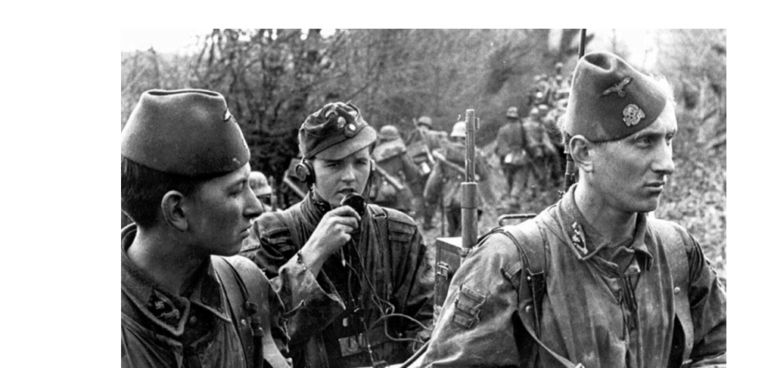
The Bosnians of Handschar during their training
Until the Ottoman conquest (15th century), Bosnians belonged to the Christian sect of the Bogomils. Then they adopted Sunni Islam and converted. They became the advanced Ottoman outpost in their wars against the Venetians and the Habsburgs. After the Russo-Turkish War of 1878, Bosnia and Herzegovina were handed over to Austria-Hungary, although the annexation officially took place in 1908. After World War I, Bosnia and Herzegovina was annexed to the newly formed Kingdom of Yugoslavia. Even today, many do not consider Bosnians a distinct ethnicity but believe they are identified based on their religious identity.
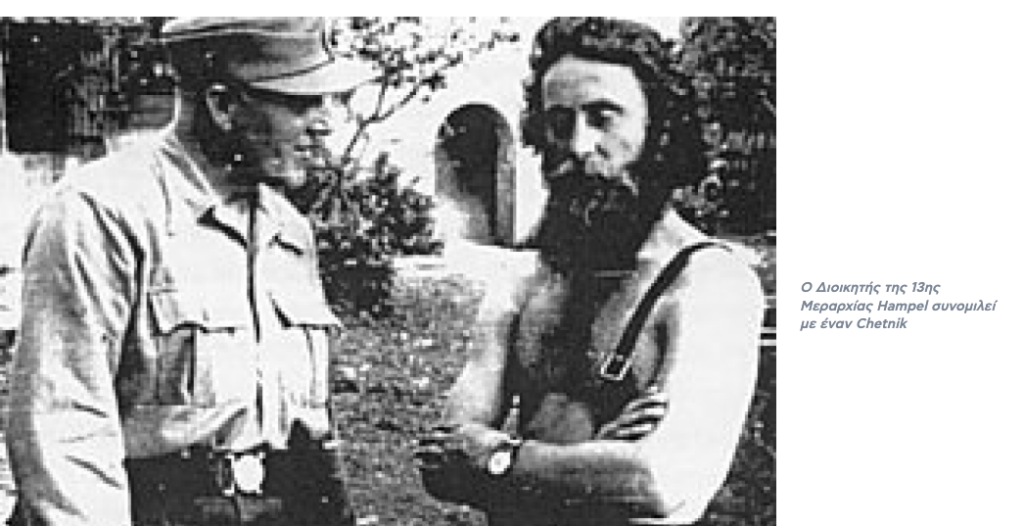
The first German to conceive the idea of forming a Division made up exclusively of Muslims from Pavelić’s Croatia was the SS chief Heinrich Himmler. These men would join the SS and fight against the pro-monarchy Chetniks (mostly Serbs), led by Serbian Colonel Draža Mihailović, and the communist partisans of Tito. Himmler relied on the traditional religious hostility between Serbs and Bosnians and believed that the Islamic faith made fighters fearless in battle.
Formation and Early History
The first Muslim legion in Bosnia was formed in December 1941. Its founder was Mohamed Hadžiefendić, a Bosnian and former officer in the Royal Yugoslav Army. The legion had 6,000 men and was based in the city of Tuzla in northeastern Bosnia. Its goal was to protect the local population from Chetniks and Tito’s partisans. Hadžiefendić supported the enlistment of his men into the Waffen SS, where he himself became an officer in July 1943.
However, in October 1943, Hadžiefendić was executed by Yugoslav partisans. His legion formed the core of the first Muslim SS Division. Other armed Muslim groups also operated in Bosnia, such as “Zeleni Kadar” (“Green Cadres”), made up of Muslim deserters from the Croatian Home Guard, led by Nesad Topčić.
The Race Question
There was a further issue in forming the Division: whether Bosnian Muslims belonged to the Aryan race. Until then, the Waffen SS had admitted volunteers from Northwestern Europe and ethnic Germans abroad (Volksdeutsche). The 7th Mountain SS Division “Prinz Eugen,” which had fought Yugoslav partisans, was formed from some of these.
Himmler certified that Bosnians were not Slavs but descendants of the Goths, thus “Aryans.” Hitler approved in February 1943 to form the Muslim Division. Pavelić initially opposed this, fearing secessionist tendencies from the Bosnians, even though Džafer Kulenović, Vice-President of Pavelić’s “state,” participated in the Division. Eventually, the objections were overcome, and the Division began forming in March 1943. It was also decided to include Croats and Albanians from Kosovo.
Training and Mutiny in France
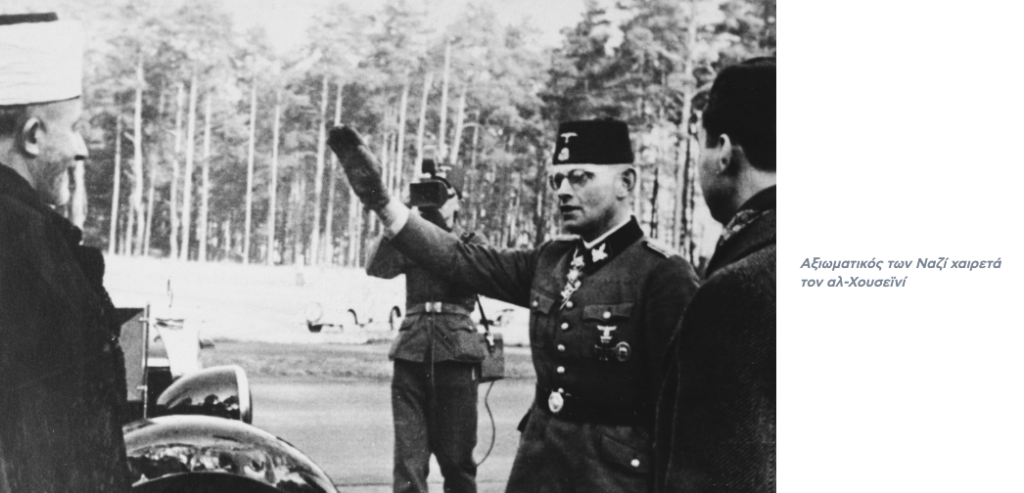
To increase recruitment, they called on al-Husseini, who was living in Berlin. In April 1943, he went to Bosnia but did not achieve much. Initially, about 8,000 volunteers appeared. The Germans then supplemented the Division with Muslims serving in the Croatian Army and began compulsory conscription. By mid-1943, the Division had 26,000 men.
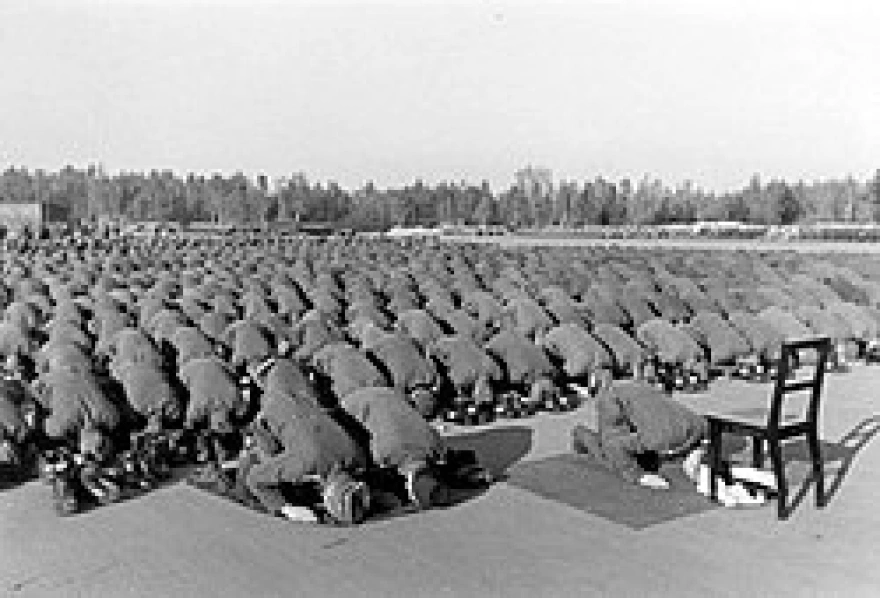
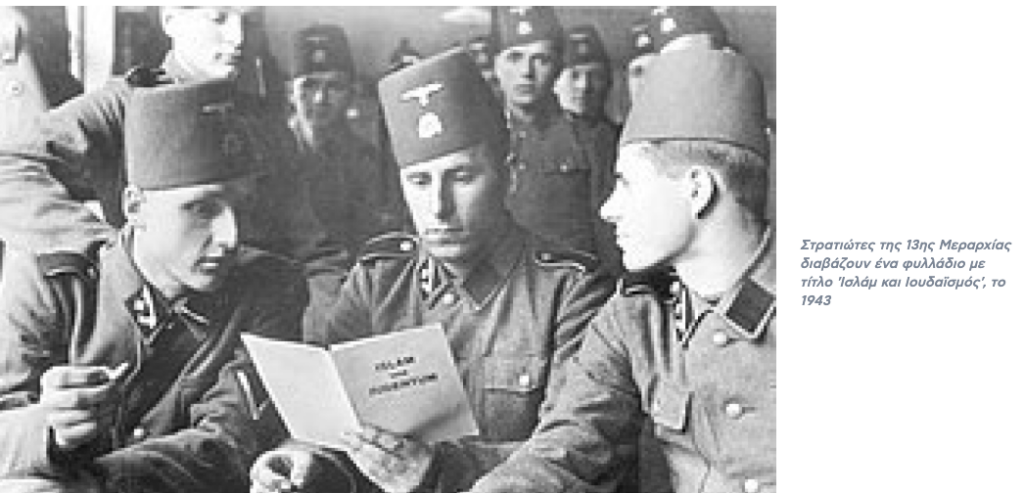
Among them were 2,800 Croats and 300 Albanians from Kosovo. The staff were Germans from abroad and former Croatian army officers; some personnel came from the 7th Mountain SS Division “Prinz Eugen.” In July 1943, the Muslim Division was named the “13th Croatian Mountain SS Volunteer Division.” Each battalion had an imam to perform religious duties, and each regiment had a mullah. All men could wear the traditional Muslim fez, which bore the SS eagle and skull.

From April 1943, Colonel Herbert von Obwurzer was the division commander.
The Mutiny
Al-Husseini did not want the Division moved outside Bosnia to protect their homeland and families, but the Germans disagreed. In the summer of 1943, the Division was sent to France for training, which caused great dissatisfaction, especially among conscripts. The Muslims also felt the Germans treated them arrogantly.
On September 16, 1943, there was a mutiny in the 13th Engineering Battalion. Instigators included Ferid Džanić from Bihać, Edward Matutinović or Božo Jelenek (possibly the same person) from Vinkovci, Lutvija Dizdarević from Sarajevo, and Nikola Vukelić from Zagreb.
Later, it was said these were communists who had joined the Division to cause problems and planned to join the French Resistance before returning to Yugoslavia.
The mutineers killed five German officers, including the battalion commander, Lt. Col. Oskar Kirchbaum, and captured others. The rebellion was suppressed with the help of the battalion’s imam, Halim Malkoč, who convinced the rebels to surrender. Malkoč was awarded the Iron Cross 2nd Class but was later executed by Yugoslav authorities in 1947.
The Division’s Operations and Decline
The Division continued training in Silesia and was renamed the 13th Mountain Division of SS Volunteers of Bosnia-Herzegovina in October 1943. By January 1944, its total strength was 21,065 men.
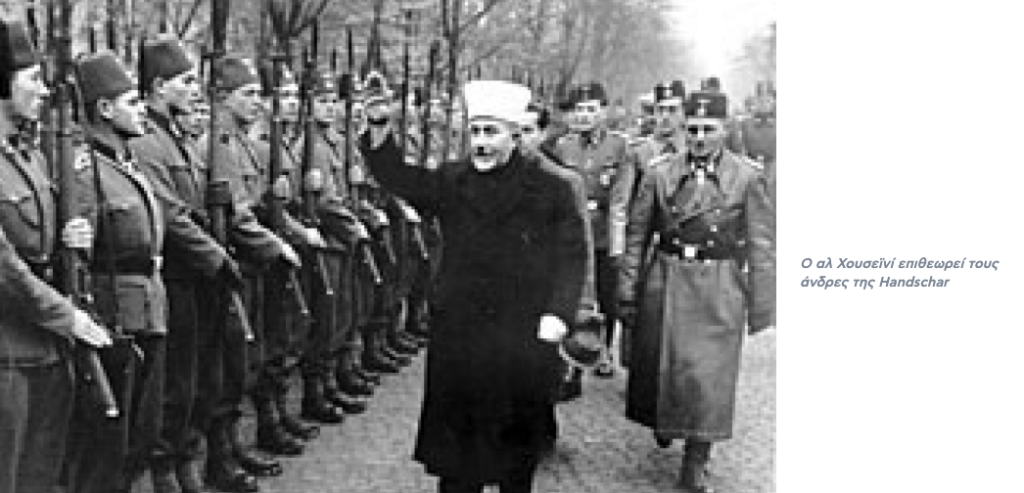
Before going into action in Bosnia, al-Husseini visited and gave a fanatical speech praising the Division’s role fighting for Muslim causes under German leadership.
The Division was deployed to northeast Bosnia near Brčko in February 1944 under the V Mountain Corps led by General Artur Phleps. Its main opponents were Tito’s partisans, as the Chetnik movement was largely weakened.
The first operation was “Wegweiser” (“Signpost”) on March 9, 1944, capturing the Serbian village Bela Crkva (“White Church”). Two days later, the Germans announced the entire village’s population had been slaughtered, blaming Tito’s partisans.
Further operations, such as “Sava” and “Osterei” (“Easter Egg”), resulted in heavy fighting with partisans. The Division often committed atrocities against civilians, wounded, and captured partisans.
Later Phase and End
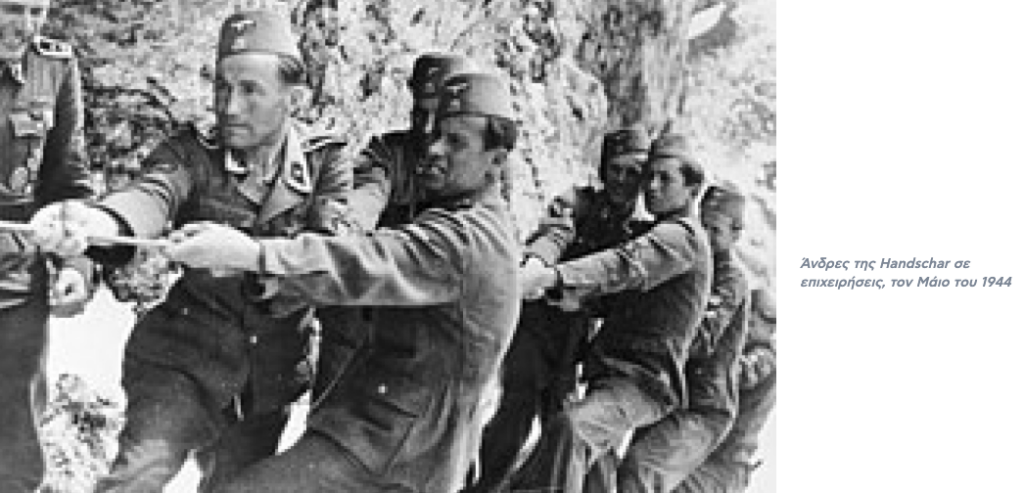
By May 1944, the Division took the definitive name “13th Waffen Mountain Division of the SS Handschar (1st Croatian).” “Handschar” means “scimitar” (from Turkish hançer, from Persian hanjar). The name “Croatian” indicated the members were Croatian citizens, while “Waffen SS Division” distinguished it from other divisions.
The Division fought in many operations through 1944 but suffered from declining morale and desertions, especially as Tito offered amnesty to defectors. By September 1944, thousands had defected. The Germans disarmed many Bosnian soldiers, dissolved parts of the division, and transferred others to non-combat roles.
By late 1944, the Division was almost exclusively German in makeup. It retreated through Hungary and Austria and surrendered to the British in May 1945.
The “Kama” Division
In summer 1944, 1,350 men were taken from Handschar to form a new Division called “Kama” (another type of dagger). However, Kama never took part in any combat and reached only 3,793 men at its peak.
Aftermath
Post-war, Handschar was accused of war crimes against Serbs, Jews, and Roma in Bosnia-Herzegovina, with at least 2,000 civilians killed. Over 200,000 Serbs and 12,000 Jews were killed during the war in Bosnia-Herzegovina.
At least 150,000 Bosnian Muslims were also victims, mainly of Chetniks. During the war, Orthodox Serbs, Catholic Croats, and Muslim Bosnians fought all against the communist partisans of Tito.
After the war, 38 Handschar soldiers were tried for war crimes. Seven were executed, and the others received prison sentences from 5 years to life. They were released by 1952.
As for al-Husseini, in March 1944 he broadcast a call for Arabs to rise and kill Jews. After the war, he fled to Switzerland (where he was denied asylum), then Germany (placed under house arrest), escaped to Egypt, and later Lebanon, where he died in 1974. His case is an example of how religion can be exploited for political ends, often with dangerous consequences.
Ask me anything
Explore related questions