The study published in the scientific journal Proceedings of the National Academy of Sciences reports that traces of the extremely rare CI chondrite meteorite were identified on the lunar surface for the first time.
These meteorites are rich in water and volatile elements—substances that evaporate easily.
Very few samples have been found on Earth because they are fragile and tend to disintegrate upon entering the atmosphere.
Their presence on the Moon, scientists note, suggests that in the early Solar System, there were water-rich asteroids that collided with the Earth and Moon more frequently than current data indicates.
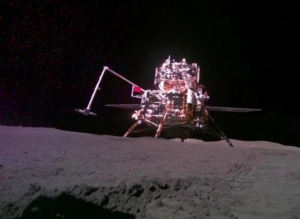
The Chang’e-6 mission returned over 1.8 kilograms of lunar rocks from the Moon’s far side—the side not visible from Earth, often called the dark side. The landing was near the lunar south pole, in a region with a large crater.
Chinese scientists analyzed over 5,000 microscopic fragments. Among them, seven tiny grains rich in olivine were found, whose chemical composition matches that of CI chondrites.
These grains show melting traces from the impact, indicating that the asteroid material melted upon collision with the Moon and then cooled very rapidly.
Scientists estimate that a large portion of the Moon’s—and possibly Earth’s—water originated from impacts of water-rich asteroids.
Ask me anything
Explore related questions