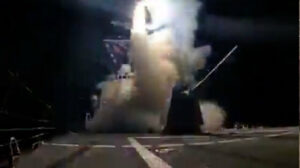
The American military strike ordered by U.S. President Donald Trump in northwestern Nigeria is not just another operation against Islamist organizations in West Africa. It reflects a broader political and communication strategy that brings religion back to the forefront of U.S. foreign policy.
Trump publicly presented the strike as a response to the massacre of Christians by the Islamic State, adopting a narrative aimed primarily at the conservative audience in the United States. In his statements, he spoke of “hell paid” and directly linked the military operation to the protection of the Christian population.
However, the Nigerian government sought to immediately detach the strike from any religious dimension. The country’s foreign minister, Yusuf Tuggar, confirmed that President Bola Tinubu had given approval for the operation, but clarified that “this is not a matter of religion,” stressing that victims of terrorism in Nigeria include citizens of all faiths.
The emphasis gains particular weight when considering realities on the ground. According to security analysts who spoke to CNN, violence in Nigeria and across the wider Sahel region is fueled by a complex web of factors: armed Islamist groups, ethnic rivalries, conflicts over land and natural resources, and the chronic inability of the state to enforce security in remote areas. Muslims, in fact, make up the majority of victims in many of these attacks.
African security analyst Oluwole Oyewale warned that Trump’s “binary” approach—focusing exclusively on Christians—does not reflect the real picture and could exacerbate religious tensions in a society already strained by deep divisions. In a country of more than 230 million people, where Muslims and Christians coexist in fragile balances, such rhetoric could prove destabilizing.
At the same time, it remains unclear which specific organization was targeted by the American strike. While Trump and AFRICOM referred to ISIS, Nigerian officials avoided naming a specific group, and analysts suggest the likely target was the Lakurawa group, which operates in the northwest of the country and has recently escalated its attacks.
The U.S. action, following requests or coordination with countries in the region, shows that Washington is not limiting itself to the role of observer, even if it periodically expresses a preference for fewer “open” military engagements.
In any case, how the strike is described proves almost as important as the fact that it occurred: in Nigeria, the language of politics can become either a factor of security or, conversely, a factor of further destabilization.
Ask me anything
Explore related questions