





It was cold in Brescia toward the end of December 1970, and the Christmas atmosphere did little to lift Maria Callas’ spirits as she was in the city for a specific engagement.
The love affair that would prove fateful with Aristotle Onassis had ended tragically when “Aristos,” as she called him, left her to marry the most famous widow in the world, Jackie Kennedy.
All that remained for the famous soprano were a few sporadic meetings with the Greek tycoon, who had already regretted his choice, and an unfinished divorce from her former mentor and husband, Battista Menegini.
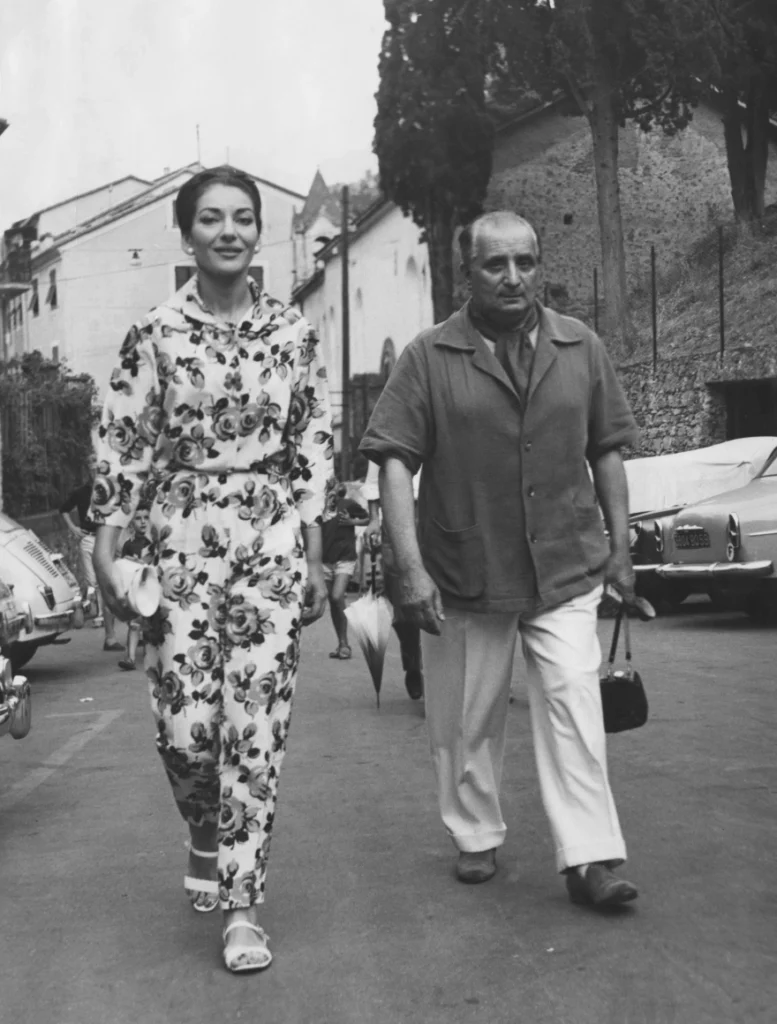
Until then, divorce cases were extremely difficult due to the stance of the Roman Catholic Church, and Callas, who had essentially separated from the Italian businessman in 1959, had already waited 11 years.
The new law, effective December 1, 1970, was the only piece of good news for La Divina, who had sunk into melancholy after the shock of her 1968 breakup with Onassis.
The man who had entered her life like a storm and swept away everything in his path, especially her colorless marriage to Menegini, could do nothing to reverse the situation.
Yet from 1959, she had to wait 11 years to be able to file for divorce under the new Italian law and finally be officially free.
From Passion to Tempestuous Love
In the letters included in the book Letters and Memories, it sounds strange that Callas passionately referred to Battista Menegini, speaking of a love “so strong and true that sometimes it makes me suffer. The night before last I was tormented all night and the following morning. It would be unbearable to lose you.”
On April 24, 1954, at the age of 31, Maria wrote her handwritten will, naming her Italian husband as her sole heir.
However, when their marriage broke down, Menegini kept this document and sought to seize many of the diva’s possessions, citing Callas’ letter.
By then, Callas had fallen in love with the legendary Smyrniot Aristotle Onassis during an unforgettable cruise for all the guests.
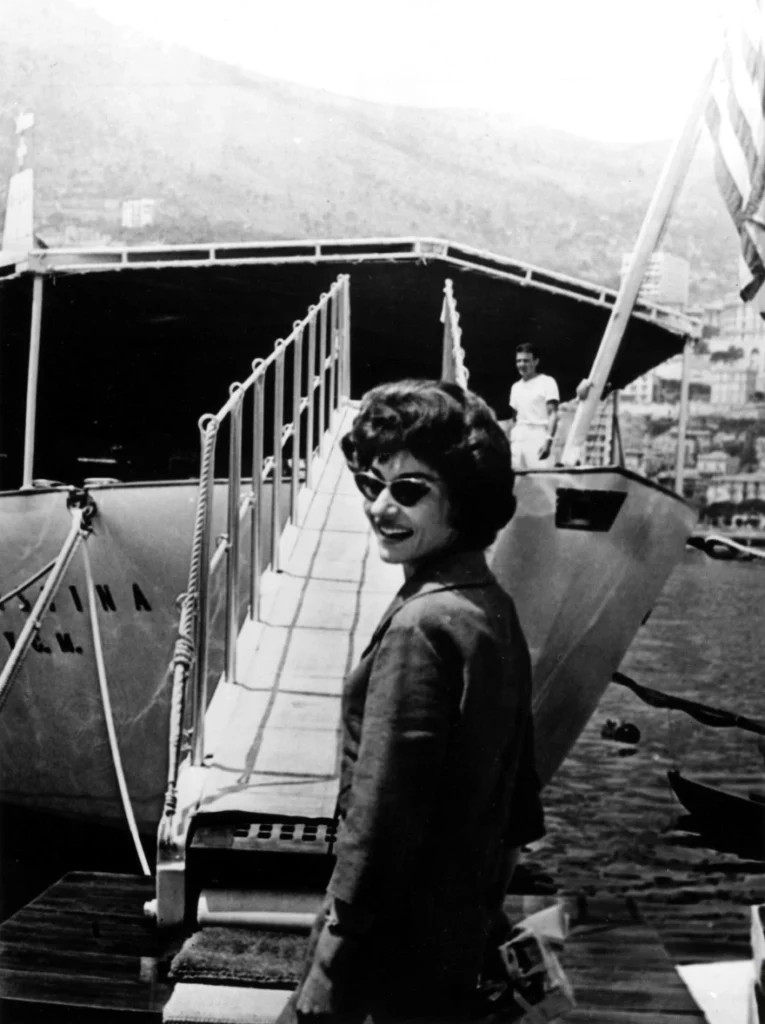
July 1959 would prove “truly hot,” according to Callas’ close friend and famous socialite Elsa Maxwell, who dined with Callas and Menegini aboard Onassis’ yacht Christina, anchored in Monaco.
A few days later, the famous and mythical cruise would begin with guests including the Menegini-Callas couple, as the Christina crossed the Mediterranean with stops first in Greece and then Turkey.
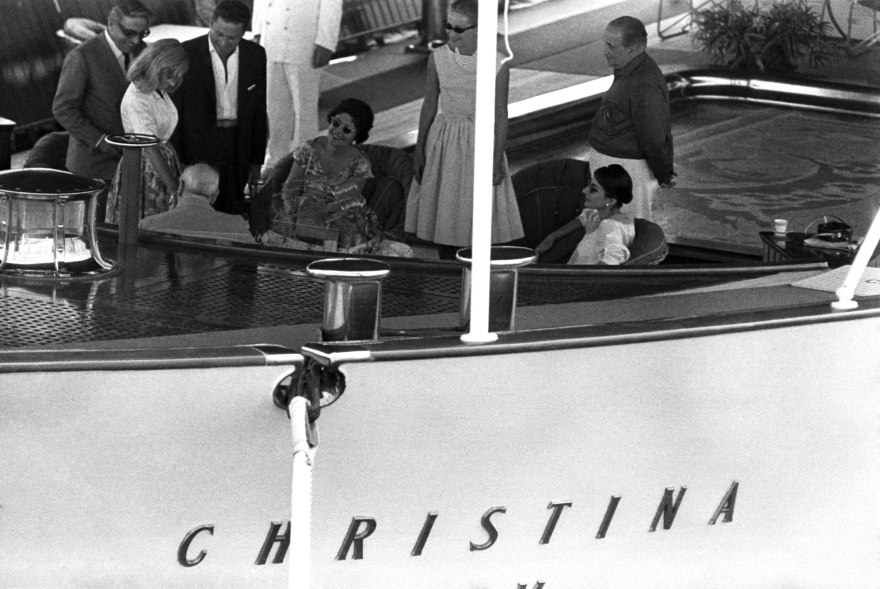
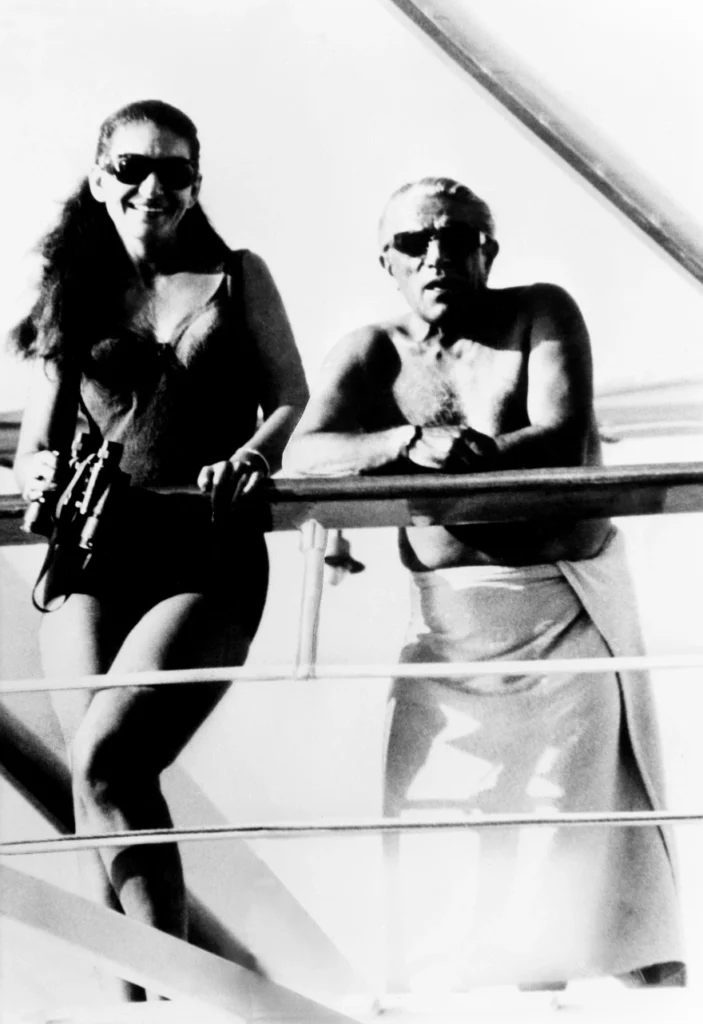
The Smyrniot billionaire flirted almost from day one with the opera diva, who later said she felt what we now call “tempestuous love” for the first time in her life.
This love reached its peak one evening aboard the Christina, setting the cruise “ablaze,” while a desperate Menegini later wrote to Maria’s housekeeper, Bruna Lupoli: “You know, you know everything! What is happening is unbelievable.”
Onassis, though married to Tina Livanos, seemed to enjoy the attention and rumors surrounding his relationship with Callas.
One morning, as he descended from his room at the Danielli Hotel in Venice, a swarm of journalists blocked him on the stairs, asking about Callas and the nature of their relationship. Smiling and with a cigar in hand, he replied: “Kids, I’m a sailor, and these things happen to sailors!”
On August 28, 1959, Callas wrote to a friendly couple, dropping the bomb without giving details: “I’m afraid I must tell you the bad news, which will probably shock you. Please, for now, say nothing to anyone. I am separating from Battista.”
From then on, Menegini made her life difficult even with the divorce, with behavior the opera diva did not expect from a man of his standing, yet one who had hurt her deeply.
In a letter to her friend Emily Colman shortly before the Christmas holidays that same year, she wrote: “What I want is to rest and recover from the shock of realizing the true nature of my ‘beloved’ husband. I’m not saying I didn’t try to prevent our separation, but when I realized he had transferred everything to his name! Only God—he knows what he did with all that money…”
In another letter written in Monaco on March 2, 1962, she spoke of Onassis, saying: “But Aristos would have had fewer worries because of me, both as a businessman and as a man.”
“Destiny Cannot Be Escaped”
Eventually, fate brought Maria Callas and Jackie Onassis face to face with the same man—a short man with an Eastern look and a sparkling gaze, who had conquered the world and was nearly every day the subject of discussion in global media.
“Aristos is very tender with me,” “Don’t you think Aristos has changed a lot for the better?” were words of the love-struck Callas to her friend Elvira de Hidalgo, when everything was going smoothly.
But her letter on January 30, 1968, to the man of her life was shockingly confessional about her love: “I love you with all my body and soul, and my only wish is that you feel the same. Please, try, try to stay with me, united forever, for I need your eternal love and eternal respect. I am yours; you can do with me as you wish. Your soul, Maria.”
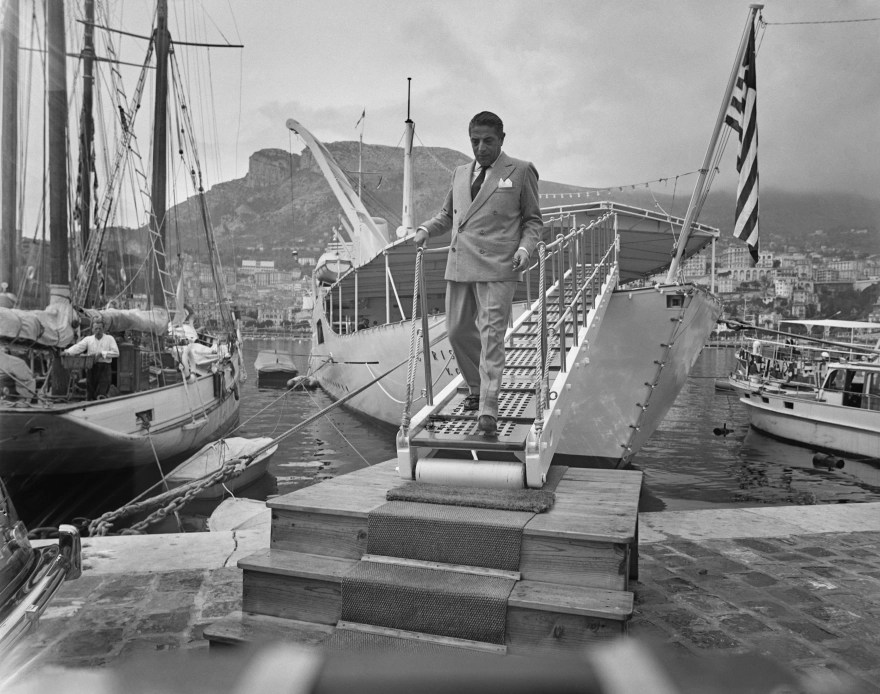
Perhaps sensing that something bad would happen, six months later she was proven right: Onassis was now with Jackie on a cruise, after Callas refused to be the second woman in his life and broke off the relationship.
In correspondence with her friend Elvira de Hidalgo in June 1968, she bitterly wrote that he was “an irresponsible man, whose behavior eventually makes me disgusted.”
On the night of October 20, 1968, it rained incessantly on Skorpios as Onassis married the world’s most famous widow in the chapel of Panagitsa, which the opera diva loved so much.
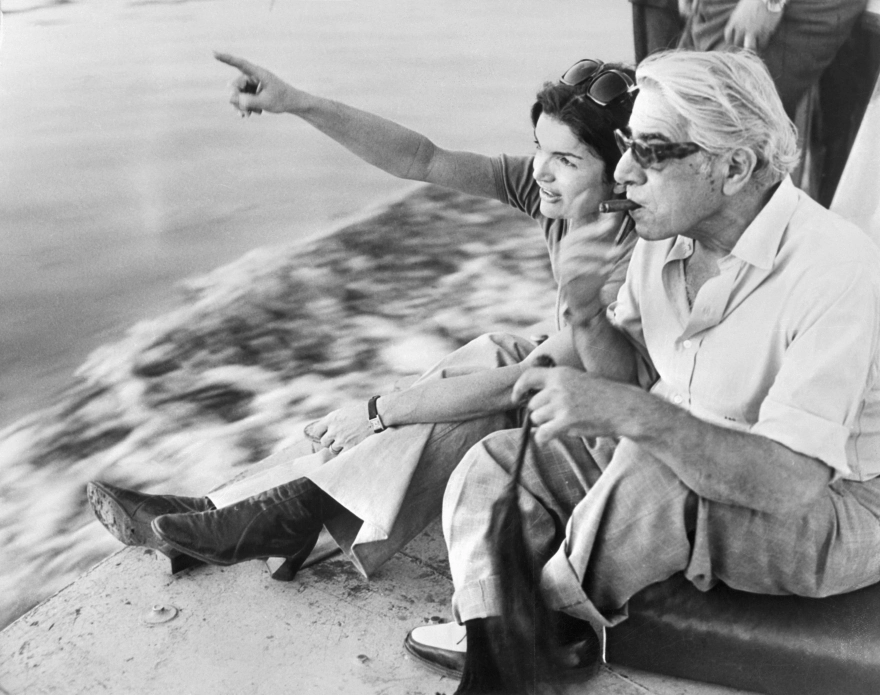
Maria appeared that same evening dazzling at the Parisian Théâtre Marigny, accompanied by Elizabeth Taylor and Richard Burton, showing that she was unaffected by the event.
In her final confessions to Stelios Galatopoulos, a few months before her death, she spoke more openly than ever about Aristotle Onassis: “Fate brought me together with Aristos. Yes, our love was mutual. Aristos was lovable, straightforward, fearless. The only thing I could really reproach him for was his insatiable desire to conquer everything.”
A few years later, when the now-ill magnate left Athens for Paris, the only thing he took with him was a small Hermes cashmere blanket, a gift from Maria.
She went to see him a few days before he left this world, now a mere shadow of his former self at the American Hospital in the French capital.
“When I saw Aristos in the hospital shortly before he died, he was calm, and I think reconciled with himself. We didn’t talk about the old good days we had together. Nor did we talk much about anything else. We mostly communicated in silence. When I was leaving, with great effort, he managed to tell me: ‘I loved you. Not always in the best way but as best and as much as I could.’”
Her words on the day she learned of the death of the man who had marked her life forever perfectly capture the novel-like nature of their relationship: “When Aristos died, I felt as though I had been widowed…”
Ask me anything
Explore related questions




