More than three decades ago, the United States government took an action that was described as shocking even at the time: the arrest of the leader of a foreign state. It involved the dictator of Panama, Manuel Noriega. His case may now serve as a guide for prosecutors, defense attorneys, and judges handling the case of Nicolás Maduro.
Like Maduro, Noriega was accused of participating in a large-scale drug trafficking operation to the United States, and like Maduro, he was arrested on his own country’s soil as part of a military operation. Noriega’s lawyers immediately launched an aggressive defense, accusing the Justice Department of President George H. W. Bush of violating international law and fair-trial guarantees by invading Panama and arresting him. They also argued that Noriega enjoyed immunity as a head of state…
Maduro, whom prosecutors accuse of directing “state-sponsored gangs” and facilitating drug trafficking in Venezuela, is likely to raise “a series of serious objections to the prosecution,” similar to those attempted by Noriega. The case is expected to involve “novel constitutional and international law issues,” which could attract top, high-profile criminal defense lawyers, according to leading American legal experts and analysts.
Noriega’s arguments ultimately failed. In 1991, he was convicted and sentenced to 40 years in prison. A year later, however, a federal judge ruled that the former dictator should be considered a prisoner of war and enjoy certain rights in prison—although judges do not have the authority to designate specific prisons, and enforcement of such rulings is often limited.
A decisive factor in the failure of the defense was the fact that U.S. courts “refused to examine the legality of the invasion itself.” Specifically, federal courts ruled that the manner in which a defendant is brought before a U.S. court—even by force, even from foreign soil—does not negate criminal jurisdiction. If Maduro claims that he was unlawfully transferred to the United States, there is already case law explaining why defendants may be tried even if they were brought there illegally.
If prosecutors are called upon to justify his arrest, they may cite a 1989 memorandum from the Office of Legal Counsel at the Department of Justice, authored by William Barr, which argued that the president has “constitutional authority” to order the FBI to arrest individuals in foreign countries, even if doing so violates international law. Barr served as Attorney General both in the Bush administration and in the first Trump administration. His memorandum remains highly controversial in legal circles.
The most difficult puzzles for prosecutors will be Maduro’s arguments regarding immunity—either as a head of state or, even if he is not considered one, on the grounds that his alleged crimes stem from official acts carried out under state authority.
In the Noriega case, courts accepted the executive branch’s position that he was not entitled to immunity, taking into account the “blatantly illegal nature” of the acts attributed to him. There was, however, one crucial difference: the State Department did not recognize Noriega as the leader of Panama.
Whether courts will revisit this precedent in light of Maduro’s status as president remains to be seen, although the Department of Justice described him in the indictment unsealed on Saturday as the “de facto but illegitimate ruler” of Venezuela.
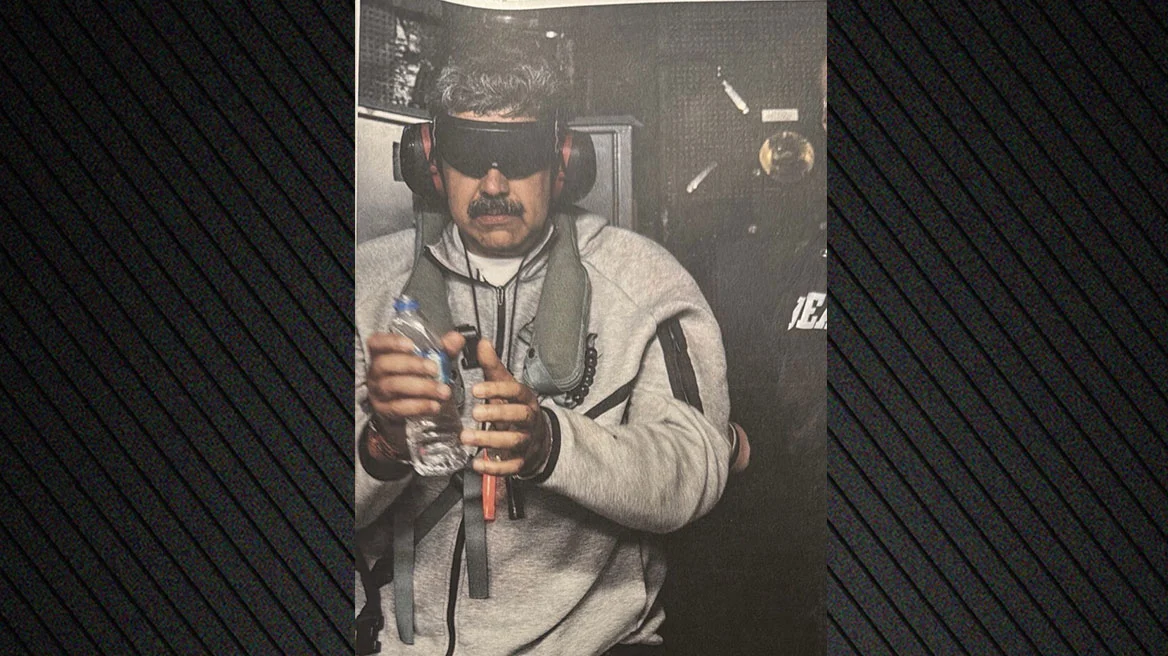
Ultimately, the prosecution against Maduro is unlikely to be a “walk in the park,” as his arrest at his home in Caracas proved to be.
Well-known New Jersey lawyer to represent Maduro today
The lawyer appointed by the court for Nicolás Maduro’s initial appearance before a judge in New York today is David Wickstrom, according to a person with knowledge of the matter who spoke to CNN.
Wickstrom, a certified attorney specializing in civil litigation, is recognized for representing clients in cases involving legal malpractice, product liability, personal injury, and workplace discrimination. He was named one of the Top 100 Lawyers in New Jersey for 2019–2020.
His professional career includes significant leadership roles: he served as President of the Union County Bar Association, President of the Product Liability Section of the Essex County Bar Association, and a member of the Standing Committee on Legal Malpractice and Insurance. He was also a member of the Board of Trustees of the New Jersey State Bar Association and President of the Civil Litigation Committee of the Union County Bar Association, as well as Chair of the Civil Trial Certification Committee of the New Jersey Supreme Court.
Wickstrom is also a regular lecturer for ICLE (International Center for Legal and Economic Studies) on issues of legal malpractice and ethics, and has presented seminars both in the United States and internationally, solidifying his reputation as an experienced and well-qualified legal professional.
Ask me anything
Explore related questions