





A photograph of a Dalmatian pelican from Lake Kerkini managed to travel beyond Greece’s borders and capture the admiration of the world-famous National Geographic.
Tony Konstantinidis’s photo stood out among thousands of entries and was published on one of National Geographic’s official accounts, “National Geographic Animals”, which has 15 million followers.
The photographer spoke to protothema.gr about his emotions when seeing his photo published by such a large organization, why he chose to pursue professional photography at age 39, his connection with Greece, and his future plans and projects.
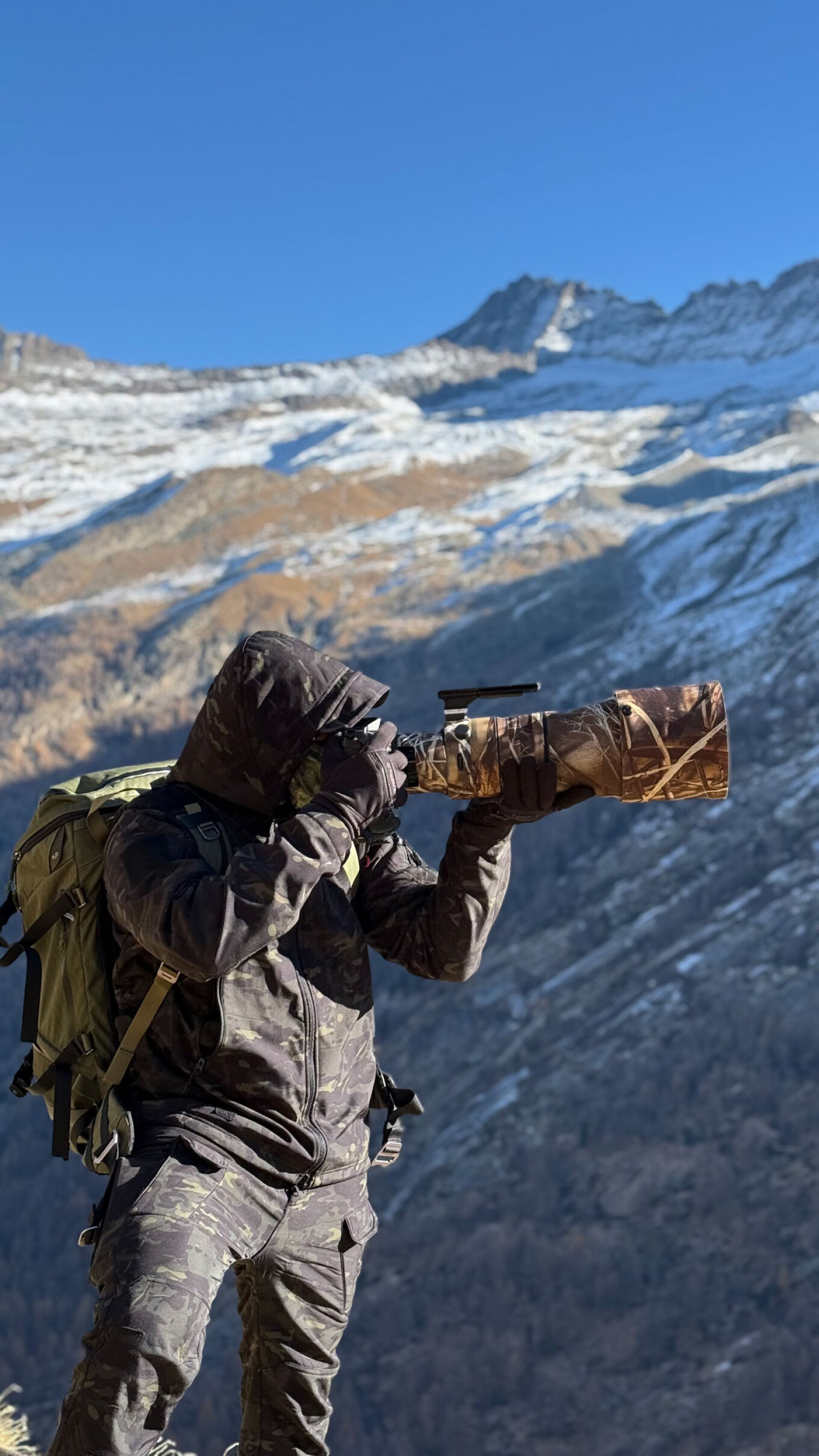
How he started professional photography
Tony began working professionally in photography only last April (2025). Previously, he worked in maritime sectors, but due to job stress, he decided to quit and chase his dream of wildlife photography, despite being 39.
He had ensured financial stability from his previous job, as professional photography is an expensive pursuit.
He uses a camera worth around €3,500, with his top-quality lens priced at €14,000. For the Dalmatian pelican photo, he used a lens worth €2,500.
Childhood dreams and early support
From a young age, he dreamed of becoming a photographer and working with wildlife. From the beginning, he had the support of his wife and friends, who encouraged him to follow his dreams.
“I was 39 when I finally admitted something to myself. I never stopped wanting it. As a child, I dreamed of becoming a wildlife photographer.
I would look at magazine images and feel something I couldn’t explain — as if the world were bigger, wilder, and I wanted to be part of it.
But life moves on. Responsibilities grow. Dreams are shelved with the note ‘maybe someday.’
For years, I told myself it wasn’t realistic. That it was too late. That people who succeed start young, have connections, have more time.
Yet… the pull never left. At 39, I decided to stop negotiating with that voice.
Starting from scratch at that age is humbling. You feel behind. You constantly doubt yourself. You wonder if you’re chasing something important or just being naive. There were cold mornings, long trips, empty memory cards, and the quiet fear that maybe I’d waited too long.
And then, one day, an image I had dedicated myself to was shared by National Geographic.”
The story behind the Dalmatian Pelican photo
Tony traveled to Lake Kerkini for four days specifically to capture the rare Dalmatian pelican in its stunning habitat.
The first two days were challenging due to bad weather, which prevented him from photographing the bird in its natural environment. He began to get discouraged, thinking the perfect scene in his mind might remain only a fantasy.
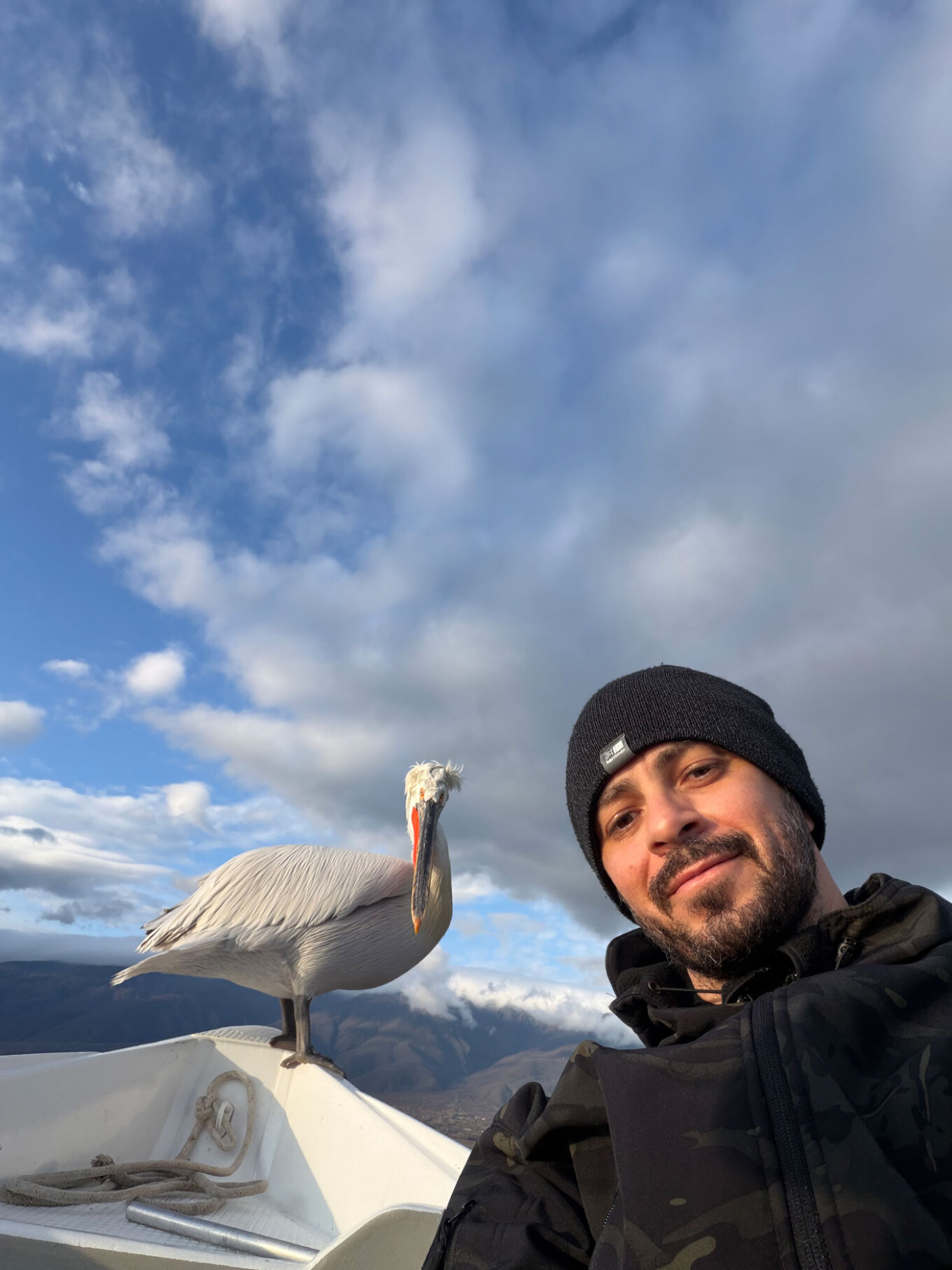
However, on the third day, after a storm, an incredible opportunity appeared — a “now or never” moment. Tony seized it. The sky turned purple and pink, and the reflection on the lake created the perfect setting for the shot. The only thing left was to find a special pelican.
From the start, one pelican had stood out with its unique “hairstyle.” Upon seeing it, he immediately knew it was the chosen one.
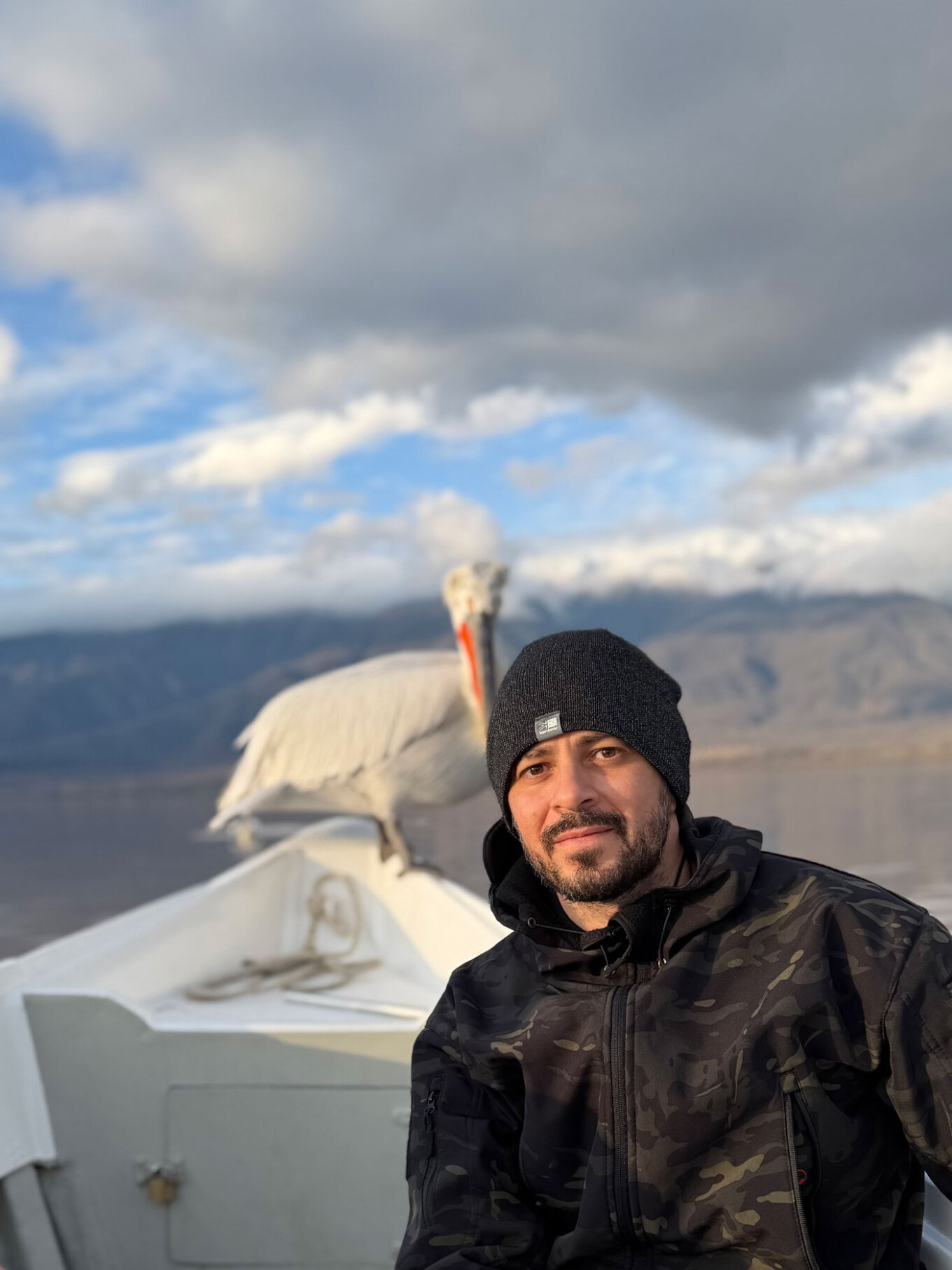
He was in a boat on the lake, searching for the perfect moment. He was so focused when pressing the shutter that he almost fell into the lake. His lens got wet without him even realizing it.
“There was no time to think, just instinct and a click. A moment where doubt turned into one of my favorite frames ever captured.”
Learning photography
Tony is self-taught. He did not attend a school or take formal courses. He learned alone by studying videos of professional photographers on YouTube (tutorials).
He notes that one doesn’t need to learn only from famous professionals — every photographer has something to offer, whether amateur or professional. He continues to learn and improve with every opportunity.
His purpose
His goal is not to earn a lot of money from photography. For Tony, photography is a form of recognition, a way to appreciate the countless hours spent capturing a single click.
Through his work, he wants to tell a story, not just show an image. He wants to reveal what exists behind the photo, doing what truly makes him happy.
Recognition from National Geographic
He did not receive monetary compensation from National Geographic. Instead, they sent him a message via Instagram (tony_wanders_photo) requesting permission to use his photo.
The process involved him sending the original file to verify authenticity, followed by a signed agreement through DocuSign for written confirmation of rights and credits. After that, the photo was ready for publication.
He emphasized that he is especially happy that Greece and its beautiful landscapes are being promoted. He appreciated that his effort was recognized.
“When I saw my photo on National Geographic, I didn’t feel like I had ‘made it.’ I felt relief.
Relief that the young man who carried this dream for decades wasn’t foolish. Relief that starting late doesn’t mean starting wrong. Relief that sometimes courage is simply deciding not to give up on yourself.
I’m still at the beginning. Still learning. Still doubting. But I no longer ignore what I always knew.”
He confirmed that although he would have loved to work with National Geographic, no offer came through. However, many doors opened for the future, including offers to work with photography agencies or print his Dalmatian pelican photo on canvas to sell. He remains fully committed to his dream of capturing wildlife moments.
Future plans and projects
Tony Konstantinidis (40) is from Limassol, but he has a deep love for Greece, having visited many times. He admires its beautiful landscapes and locations.
He wants to go to Parnitha to photograph wolves, which have been increasingly spotted there.
His next photography destination is Dovrefjell, home to the musk oxen in the national park.
In June, he plans to travel to Kenya to photograph the famous “black spotted leopard.” He is also interested in voluntary projects in Latin America, including Costa Rica.
Ask me anything
Explore related questions




