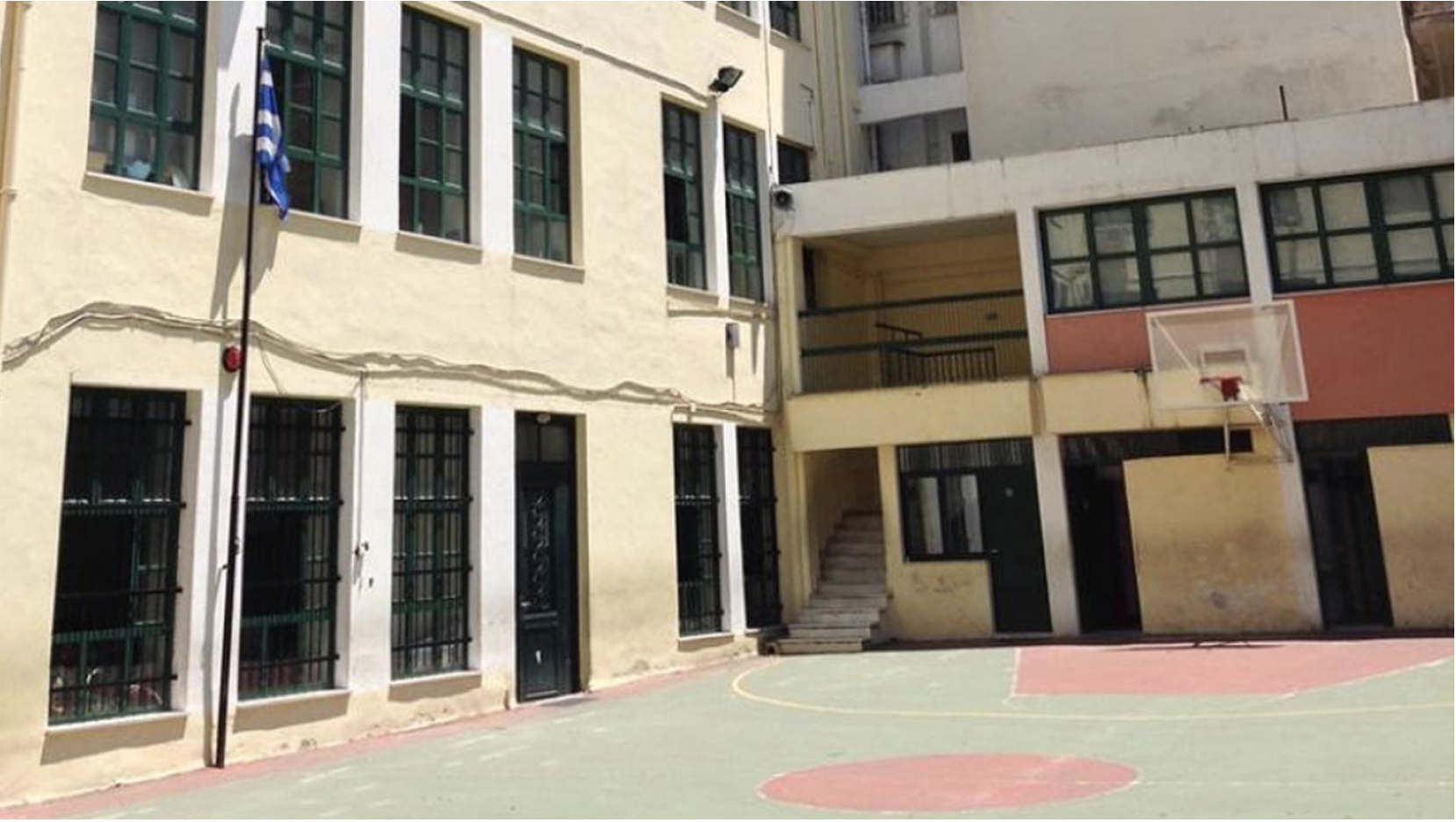
The unification of procedures and reduction of bureaucracy mark a significant change with the publication of the new Joint Ministerial Decision for electronic applications to Model, Experimental, Public Onassis, and Ecclesiastical Model Schools. For the first time, applications fully include Public Onassis Schools, established under Law 5174/2025. Using the unified digital platform on gov.gr, the Ministry aims to create an admission system that is fair, transparent, and socially responsible.
The platform for applications will open in early March 2026. The lottery for Experimental Schools will take place on April 24, while entrance exams for Model and Ecclesiastical Model Schools will follow on April 25. Exams for Public Onassis Schools will take place on April 26.
Even though the application platform is unified, the four types of schools retain their distinct educational and institutional character, serving different student needs. Model Schools (Gymnasium and Lyceum) focus on developing high-level skills, with an emphasis on language, mathematics, and critical thinking. Admissions use skills-based tests that assess understanding and application rather than memorization. Experimental Schools, from Kindergarten through Lyceum, do not select only the “top students” but act as labs for educational innovation. Admission occurs through a public lottery to ensure social diversity.
Public Onassis Schools, the newest institution, use a dual filter of skills and knowledge tests and give clear priority to social and geographical criteria in student selection. Ecclesiastical Model Schools combine the general curriculum with enhanced religious education, reflected in the structure of the entrance exams, which are also skills-based.
The online application, as outlined in the Joint Ministerial Decision published in Government Gazette B’ 942/20.02.2026, simplifies the process. Families must pay particular attention when selecting schools because submitting the application is equivalent to a formal declaration, with no option for correction after the deadline. The order of preference is crucial, as the system enrolls students in the school listed highest, regardless of later grades or decisions.
Applications are submitted through the Admission Information System (Π.Σ.Α.Ε.). Student information is automatically retrieved using the AFM tax number, while contact details are verified through the National Communication Registry. The platform is fully accessible to students with disabilities, and a helpdesk provides technical support.
Parents or guardians log in via TAXISnet, confirm student details, select schools from one or more categories, declare their order of preference, attach the required documents, submit the application, and receive a Unique Submission Number (Μ.Α.Υ.).
Each application can include up to five schools, with a maximum of one Experimental School, two Model Schools, one Public Onassis School, and one Ecclesiastical Model School. Families should consider their child’s readiness, geographic location, daily schedule, school philosophy, and historical admission competition when ranking preferences.
Special provisions apply for certain students. Experimental Schools allow exceptions for twins, triplets, adopted siblings, or siblings of current students or staff. Public Onassis Schools strengthen oversight mechanisms, as 60% of admissions rely on locality, and missing documentation may lead to exclusion from this category. Students with disabilities or special educational needs have tailored evaluation procedures, ensuring fair assessment for every child (Law 3699/2008).
The entrance exams do not rely on strict school curricula. They test students’ real-life reading comprehension, mathematical reasoning, problem-solving, concentration, and time management. The absence of negative marking reduces stress, although many students start preparing early.
Admission results are announced online, while enrollments are completed by the schools through the myschool system. Personal data is managed under GDPR regulations and deleted at the end of the application year.
This new process unifies applications, ensures merit-based selection, and maintains social equity, offering families a clear and structured path to enroll their children in Greece’s leading educational institutions.
Ask me anything
Explore related questions