The latest geopolitical escalation in the Middle East has once again injected uncertainty into global energy markets. As a key hub for oil and natural gas production and transit, the region’s instability is closely tied to international prices — and ultimately to consumer costs in countries like Greece.
According to Giannis Aligizakis, president of the Greek Association of Oil Marketing Companies and head of ELINOIL, an impact is inevitable. “The question is how strong it will be and how long it will last. Iran is not Syria or Venezuela. We are talking about a state with significant geopolitical weight. This situation is unlikely to de-escalate quickly, which increases uncertainty,” he noted. While he does not expect oil to immediately jump to $100 per barrel, he considers it very likely that prices will remain above $80.
Two gasoline scenarios
Scenario 1: Oil at $80 per barrel
If crude stabilizes at $80, the average price of unleaded gasoline in Greece — currently around €1.75 per liter — is expected to rise to approximately €1.78 within the next two days.
Scenario 2: Oil at $100 per barrel
In a more aggressive but less likely scenario, gasoline could reach around €1.79 per liter, possibly slightly higher, though still below €2 per liter.
Although the difference between the two scenarios appears limited, retail prices are projected to increase by 2–3 cents per liter in the coming days. In Greece, fuel price adjustments typically lag by about four days, as around 35% of the pump price reflects international product benchmarks (Platts), while the remainder consists of taxes, transport costs and margins — a structure that tempers volatility.
Much of Iran’s oil, already constrained by Western sanctions, has been flowing primarily to China. In the event of deeper disruption, China may seek alternative supplies, intensifying competition for LNG cargoes currently heading to Europe and indirectly pressuring European energy markets.
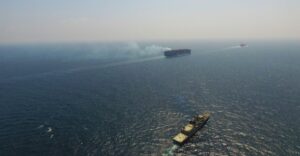
Another critical factor is the stance of OPEC, which has announced a production increase of 206,000 barrels per day in an effort to calm markets. However, the most sensitive chokepoint remains the Strait of Hormuz, through which roughly 20% of global oil trade passes. Any disruption there could trigger serious global supply shocks, even though alternative routes exist — at higher cost and longer transit times.
What this means for electricity bills
The Iran–Israel escalation also revives geopolitical risk in energy pricing, a factor that weighed heavily on European markets during the Russia–Ukraine war. So far, no sharp spike has been recorded in European energy contracts, partly because markets were closed over the weekend. The key determinant will be how long and how intensely the crisis unfolds.
Energy suppliers do not automatically add a “Middle East premium” to retail tariffs. Sustained higher wholesale prices — rather than short-term volatility — would be required for increases to filter through to consumer electricity bills.
Notably, natural gas at the Title Transfer Facility (TTF), Europe’s main benchmark, closed last Friday at €31.8/MWh, well below the peaks seen during the 2022 energy crisis. Wholesale electricity prices were also about 26% lower than in January, offering some buffer against short-term turbulence.
Where the risk lies
The crisis is unfolding in a region hosting critical energy infrastructure and major producers such as Saudi Arabia and Qatar. If LNG flows are disrupted, shipping insurance costs surge, or oil prices spike sharply, natural gas prices would likely come under pressure. Given Greece’s significant reliance on natural gas for power generation, the first impact would be felt in the wholesale electricity market, followed — with a time lag — by variable retail tariffs.
Markets can absorb a short-lived shock. However, if tensions persist, energy costs could face stronger upward pressure in the coming weeks.
Ask me anything
Explore related questions