For decades, airplane food functioned more as a service component than as part of the overall experience. Today, however, that picture is changing — and not merely in terms of taste, but in how airlines strategically position themselves toward a public that travels frequently, compares services and brings its everyday wellness habits onboard. Inflight dining is gradually becoming a tool of differentiation in an environment where comfort, functionality and quality carry new weight.
One of the clearest signs of this shift comes from the United Kingdom. A new survey by dnata Catering & Retail, conducted among 2,000 adults, shows that 47% of passengers now say they are more wellness-oriented when choosing food and beverages during flights compared to five years ago. Specifically, 56% seek fresh and minimally processed ingredients, while 50% believe airlines should offer low-sugar or low-carb options that reflect modern dietary trends.
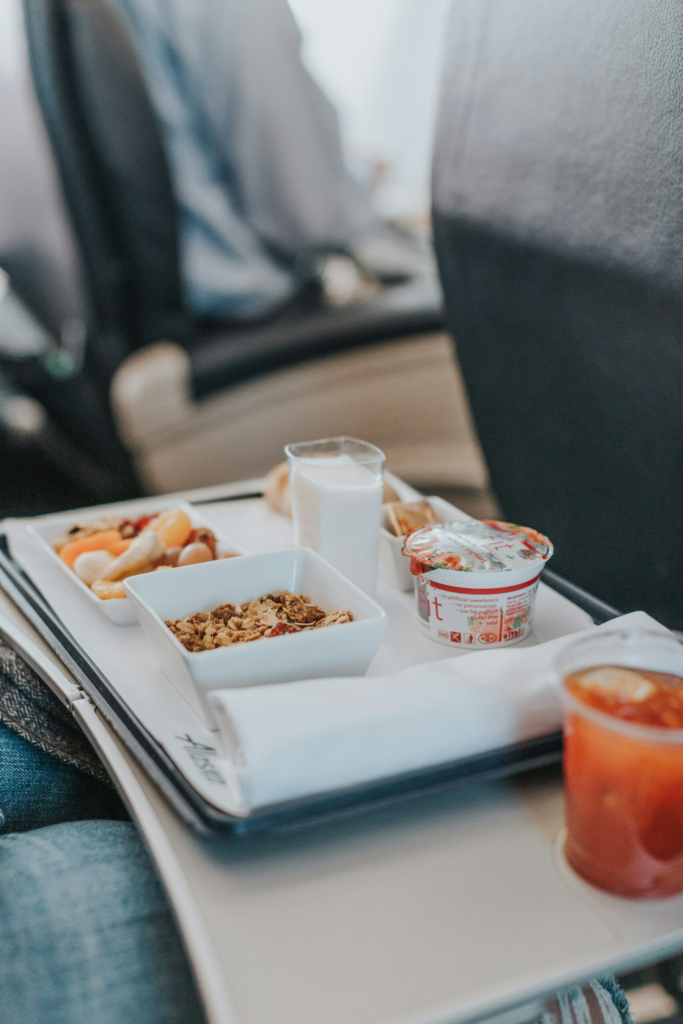
The survey further defines what “better food” in the air now means. Some 53% of respondents want more hydration-enhancing options, such as electrolyte water or vitamin-enriched drinks. Meanwhile, 45% are turning toward higher-protein meals, and 46% prefer lighter or calorie-controlled portions tailored to travel needs.
From indulgence to functionality
This shift is not simply a passing trend. Nearly one in five passengers (19%) say they would pay extra for meals or drinks that support gut health or the immune system. At the same time, 41% report having already replaced alcohol with juices or vitamin-enriched beverages during flights. Younger age groups appear to be accelerating the change, favoring protein-rich, plant-based and hydration-focused options.
Industry executives note that inflight dining is evolving at the same pace as passengers themselves — with less emphasis on heavy consumption and greater focus on how food affects the overall travel experience, from energy levels upon arrival to a sense of wellbeing after a long-haul flight.
The operational challenge behind the menu
Although 46% of respondents acknowledge that airline food has improved in recent years, 41% believe wellness-oriented options still lag behind. This highlights a competitive field that extends beyond taste to strategic positioning in a market where passengers demand transparency, quality ingredients and a clear nutritional direction.
At the same time, operational constraints remain significant. Meals are prepared on the ground, transported, stored and simply reheated onboard — at a scale measured in millions of portions annually. In the UK alone, dnata Catering & Retail serves 22 airlines and produces approximately 20.5 million meals per year, supporting more than 1,000 flights daily.
A new area of differentiation for airlines
In a market where seat comfort and fares are increasingly comparable, food is taking on a new role as a differentiator. The shift toward lighter, functional and higher-quality options is not only about nutrition but about how airlines position their product to a frequent-flying audience that knows what it wants and is willing to pay for experiences that stand out.
As a result, food is no longer a routine amenity. It is becoming part of the flight’s overall value proposition — where luxury is measured not only in materials and service, but in how well the airline cares for the passenger before, during and after the journey.
Ask me anything
Explore related questions