×
GreekEnglish

×
  • Politics
  • Diaspora
  • World
  • Lifestyle
  • Travel
  • Culture
  • Sports
  • Cooking
Saturday
07
Mar 2026
weather symbol
Athens 13°C
  • Home
  • Politics
  • Economy
  • World
  • Diaspora
  • Lifestyle
  • Travel
  • Culture
  • Sports
  • Mediterranean Cooking
  • Weather
Contact follow Protothema:
Powered by Cloudevo
> World

Scientists grew chickpeas in simulated lunar soil

The study represents a major leap in understanding how food could be produced on the lunar surface

Newsroom March 6 08:56

As the return to the Moon approaches with the upcoming Artemis II mission, one key question remains: what will future lunar explorers eat? According to new research from the University of Texas at Austin, the answer might be…chickpeas.

Lunar soil, scientifically known as lunar regolith, does not support healthy plant growth. It contains high concentrations of certain metals, such as aluminum and zinc, does not allow water to filter through easily, and lacks the microbiome found in Earth’s soils.

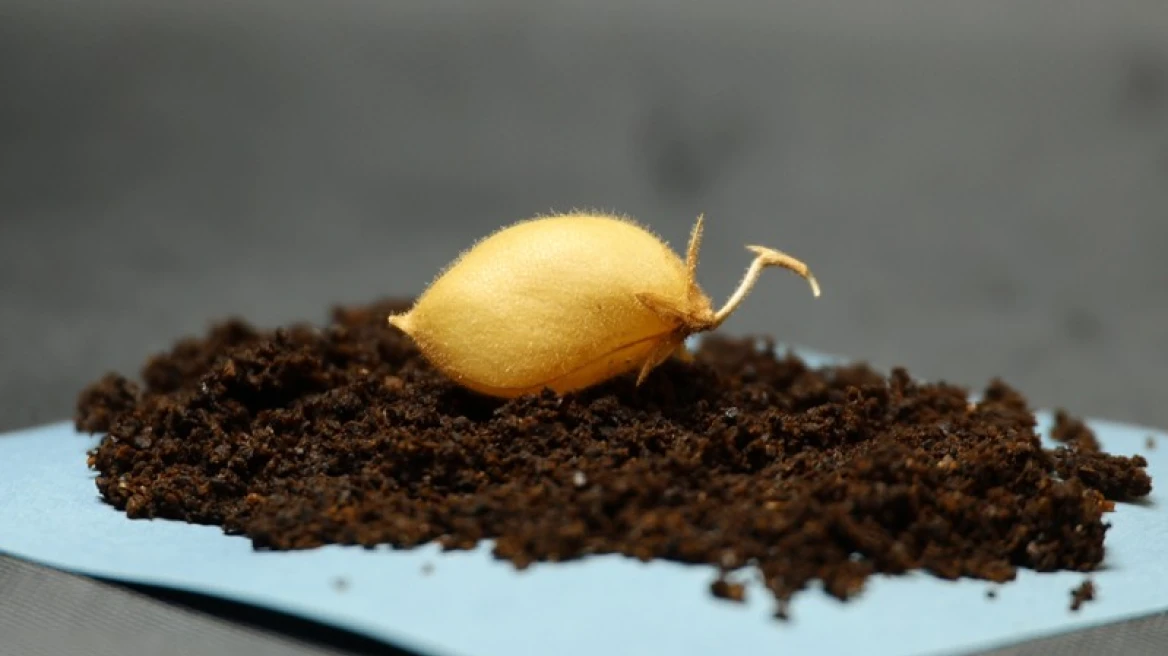
A scientific team managed to grow and harvest chickpeas using simulated lunar soil, a mixture that mimics the composition of samples brought back to Earth by astronauts from the Apollo missions. The research is presented in the scientific journal Scientific Reports.

The lead author, Sarah Santos, a postdoctoral researcher at the University of Texas Institute for Geophysics, notes that the study is a major step forward in understanding how food could be produced on the Moon’s surface.

To create suitable growing conditions, the scientists added a natural organic fertilizer produced from the decomposition of organic materials through the action of earthworms (vermicompost). They also inoculated half of the samples with fungi. The fungi and chickpeas function symbiotically: the fungi absorb certain essential nutrients required for plant growth while also reducing the plants’ uptake of heavy metals.

The research team then planted chickpeas in mixtures of lunar soil and vermicompost in different ratios. The results showed that chickpeas could flower and produce seeds only in the samples treated with both vermicompost and fungi. Plants treated with fungi also had significantly greater shoot and root mass than untreated plants, indicating improved growth.

In addition, the researchers found that the fungi were able to colonize the simulated lunar material and survive, suggesting that under real conditions they would likely only need to be introduced once.

>Related articles

Oil: Explosive weekly surge of 35% in US crude and 28% in Brent amid crisis in the Strait of Hormuz

British Wildcat helicopters and Italian frigate Martinengo strengthen the air-defense shield in Cyprus

Iran as a testing ground for new weapons: The US used new precision missiles with a range of up to 500 km (video)

Although harvesting chickpeas marks an important milestone, it remains unclear whether they are tasty and safe to eat. Scientists still need to examine the plants’ nutritional value and determine whether they absorbed toxic metals during growth.

The research was initially funded by the researchers themselves and later supported by a NASA grant through the FINESST program. The scientific publication can be viewed here.

In a second article in the same journal, another research team led by the British Northumbria University investigated the growth conditions of microbes in simulated Martian soil. The research suggests that some microbes may be able to absorb enough water from the atmosphere to grow in simulated Martian soil at atmospheric humidity levels comparable to those on Earth.

Ask me anything

Explore related questions

#artemis II#chickpeas#cultivation#food#moon#science#space#space exploration#technology#world
> More World

Follow en.protothema.gr on Google News and be the first to know all the news

See all the latest News from Greece and the World, the moment they happen, at en.protothema.gr

> Latest Stories

Oil: Explosive weekly surge of 35% in US crude and 28% in Brent amid crisis in the Strait of Hormuz

March 6, 2026

Additional AEGEAN flight cancellations to and from Israel, Iraq, Lebanon, the United Arab Emirates, and Saudi Arabia

March 6, 2026

Reuters: Turkish MIT asked Britain’s MI6 to help protect Syrian leader al-Sara

March 6, 2026

British Wildcat helicopters and Italian frigate Martinengo strengthen the air-defense shield in Cyprus

March 6, 2026

Scientists grew chickpeas in simulated lunar soil

March 6, 2026

Iran as a testing ground for new weapons: The US used new precision missiles with a range of up to 500 km (video)

March 6, 2026

Controlled explosion of the backpack of the Sudanese man outside the General Police Directorate (GADA) – He had what looked like a grenade (Update)

March 6, 2026

The Telegraph was sold for €663 million to the group of Politico, Bild and Welt

March 6, 2026
All News

> Greece

Additional AEGEAN flight cancellations to and from Israel, Iraq, Lebanon, the United Arab Emirates, and Saudi Arabia

The airline announced new route cancellations to Middle Eastern destinations due to the situation in the region

March 6, 2026

British Wildcat helicopters and Italian frigate Martinengo strengthen the air-defense shield in Cyprus

March 6, 2026

Controlled explosion of the backpack of the Sudanese man outside the General Police Directorate (GADA) – He had what looked like a grenade (Update)

March 6, 2026

Hundreds of jellyfish washed ashore on a beach in Evia

March 6, 2026

The Bank of Greece presented the silver coin commemorating the 200th anniversary of the naming of Ermoupolis

March 6, 2026
Homepage
PERSONAL DATA PROTECTION POLICY COOKIES POLICY TERM OF USE
Powered by Cloudevo
Copyright © 2026 Πρώτο Θέμα