09/03/2026 21:45
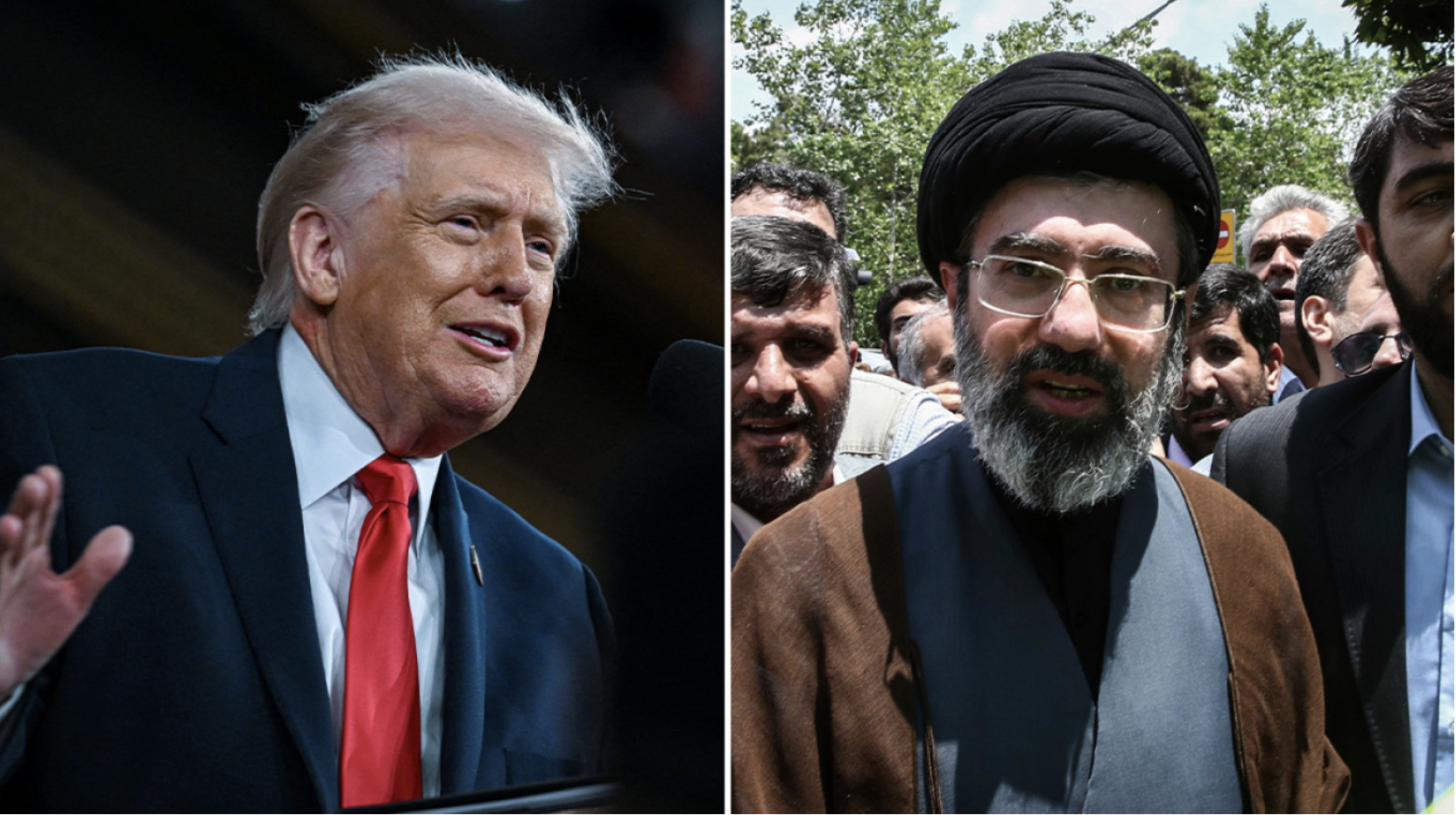
Trump to CBS: The war is almost over
“We are doing very well compared to the 4–5 week timeline,” he said in an interview.
09/03/2026 21:34
Lebanon: Hezbollah will defend its existence whatever the cost, says one of its officials
The launch of missiles toward Israel is retaliation for the death of Khamenei.
Read more
09/03/2026 21:32
Iran warns it will increase the power, frequency and range of its missile launches
The power and frequency of the Iranian missiles launched by Tehran will increase and their range will expand, Iran’s state media reported, citing the commander of the Revolutionary Guards’ Aerospace Force.
From now on, no missile with a warhead smaller than one ton will be launched, Majid Mousavi reportedly said.
09/03/2026 21:19
Turkey’s Foreign Ministry demanded explanations from the Iranian ambassador in Ankara over the ballistic missile
The Iranian ambassador was summoned to the ministry to provide explanations regarding the launch of a ballistic missile from Iran toward Turkey.
Read more
09/03/2026 21:13
“No mercy”: Post by the US Department of War on the conflict with Iran
“We have just started fighting,” is the message accompanying the post.
The drone that struck the British air base in RAF Akrotiri last week was launched either from Lebanon or Iraq, according to the UK’s Defence Secretary John Healey.
The UK Ministry of Defence had confirmed that the drone, which caused minimal damage to the British military base last Sunday, was not launched from Iran, but had not previously disclosed where it originated from.
Explosion heard in Qatar as Defense Ministry says it intercepted a missile
09/03/2026 14:33
Turkey warns of “decisive” measures to protect its territory after latest ballistic missile incident
Turkey’s Ministry of Defense warned that it will take “all necessary measures” against any threat to its territory after announcing that a ballistic missile launched from Iran was intercepted as it entered Turkish airspace.
“Turkey places great importance on good neighborly relations and regional stability,” the Turkish Ministry of Defense said in a statement. “However, we once again stress that all necessary measures will be taken decisively and without hesitation against any threat directed at our country’s territory and airspace.”
“We also reiterate that it is in everyone’s interest to take Turkey’s warnings on this matter into account.”
Turkish Ministry of Defense: A ballistic missile launched from Iran and entering Turkish airspace was neutralized by NATO air and missile defense units deployed in the Eastern Mediterranean.
Iranians take to the streets of Tehran to show support and allegiance to Mojtaba Khamenei
Thousands of people gathered Monday midday in a central square of the Iranian capital to pledge their allegiance to the new leader of the Islamic Republic, Ayatollah Mojtaba Khamenei, according to AFP journalists.
In the crowd gathered at Enghelab Square in Tehran, many were holding Iranian flags and portraits of Mojtaba Khamenei, the son of the late Supreme Leader Ali Khamenei, who was killed in the U.S. and Israeli attacks on February 28.
European Commission: All EU member states hold oil or equivalent reserves sufficient for 85 to 90 days
09/03/2026 13:24
Trilateral meeting begins in Cyprus
The Mitsotakis–Macron–Christodoulides trilateral meeting starts, focused on the European shield in Cyprus.
09/03/2026 13:24
Macron to depart after trilateral meeting
Immediately after the trilateral meeting, Emmanuel Macron will leave Paphos.
Therefore, following the joint statements, there will be no joint visit to the frigate Kimon.
G7 Holds Emergency Meeting at 3:30 PM on Energy Crisis: Coordinated Release of Oil Reserves on the Table
Finance ministers of the G7 will discuss the possibility of a coordinated release of oil reserves, in cooperation with the International Energy Agency (IEA), during an emergency meeting scheduled for today. The move aims to address the sharp rise in oil prices following the conflict in the Persian Gulf.
According to sources familiar with the discussions, cited by the Financial Times, the ministers will hold a videoconference at 8:30 AM New York time (3:30 PM Greek time) with IEA Executive Director Fatih Birol to assess the impact of the war with Iran on global energy markets.
Three G7 countries, including the United States, have already expressed support for the idea of releasing reserves, the sources said.
The IEA’s 32 member countries maintain strategic oil reserves under a collective emergency mechanism established to manage oil price crises. Some U.S. officials suggest that a coordinated release of 300–400 million barrels—roughly 25%–30% of total reserves of 1.2 billion barrels—would be appropriate.
The discussion comes as U.S. President Donald Trump faces pressure to curb the rapid rise in oil prices since the start of the conflict. The average gasoline price in the U.S. rose to $3.45 per gallon on Sunday, up from $2.98 a week earlier, and is expected to continue increasing if the price surge is not halted.
The recent spike in oil prices has global economic repercussions, increasing the risk of rising inflation that could negatively affect worldwide economic growth. Countries such as China, India, South Korea, Japan, Germany, Italy, and Spain are major crude oil importers and particularly vulnerable to sudden price swings.
Brent crude, the main international benchmark, surged up to 24% in Asian markets on Monday, reaching $116.71 per barrel, before retreating slightly to around $110.85, a 19% increase, following news of the G7 emergency meeting.
Similarly, U.S. West Texas Intermediate crude jumped up to 28% to $116.45 per barrel before dropping to around $108, a near 19% increase.
Strategic oil reserves were established in 1974 with the founding of the IEA, following the Arab oil embargo, which caused price spikes and severe fuel shortages in the West. This mechanism allows high-oil-consumption countries to respond to significant energy shocks.
Since the IEA’s creation, member countries have conducted five coordinated releases of reserves. The two most recent occurred in 2022, after Russia’s invasion of Ukraine, to limit price increases.
On Tuesday, the IEA convened an emergency meeting to explore options for addressing a potential oil supply crisis. A related document states that the agency is “ready to act to support the stability of oil markets.”
The IEA member countries hold over 1.24 billion barrels of public reserves, with an additional 600 million barrels in industry reserves available if needed. These reserves are sufficient to cover nearly one month of total oil demand in member countries and over 140 days of net imports. The U.S. and Japan hold about 700 million barrels of the total 1.24 billion.
The oil price surge also threatens to undermine Trump’s commitment to controlling inflation and reducing energy costs. The president has faced criticism from some Republicans for focusing too much on foreign policy rather than domestic cost-of-living issues.
In a post on Truth Social Sunday night, Trump downplayed concerns over rising oil prices, stating, “Short-term increases in oil prices—which will quickly fall once the Iranian nuclear threat is eliminated—are a very small price to pay for the security and peace of the U.S. and the world,” adding, “Only fools would believe otherwise.”
Stock markets across much of Asia fell Monday due to rising oil prices, while U.S. futures indicated significant losses, potentially increasing pressure on international financial markets.
The discussion over tapping strategic reserves marks a shift for the Trump administration, which just last week had indicated that no release would be needed to stabilize markets. Energy market analysts warn that the unprecedented price surge leaves policymakers with limited options.
In a Friday interview with the Financial Times, Qatar’s Energy Minister Saad al-Kaabi warned that the war could “collapse the world’s economies” and predicted that Gulf energy exporters might have to halt production within days.
On Sunday, Rapidan Energy Group warned that IEA member states will face “intense pressure to release strategic reserves.”
China, not a full IEA member, also holds large oil reserves that have grown significantly over the past year, estimated between 1.1 and 1.4 billion barrels, enough to cover approximately 140 days of oil imports.
09/03/2026 12:58
Kyriakos Mitsotakis was welcomed at Paphos Airport by Nikos Christodoulides. Emmanuel Macron is expected to arrive in Cyprus shortly.
Israel reports wave of cyberattacks from Iran: Targets span multiple sectors
Israeli cybersecurity authorities announced on Monday that in recent days a wave of cyberattacks, attributed to Iran, has targeted organizations across the country as part of an operation dubbed “Lion’s Roar.”
According to Israel’s Cyber Directorate, the attacks aimed to destroy information and IT systems to disrupt organizational operations and impact economic activity within the country.
The Cyber Directorate reported that it has received an increasing number of incident reports from organizations across various sectors affected by these attacks. Specialized teams from the service are working with organizations to contain the attacks and prevent further spread.
At this stage, Israeli authorities said no critical infrastructure essential to the functioning of the domestic economy has been affected.
The agency stated that in most cases, the attackers were able to infiltrate organizational networks using legitimate user credentials that had been stolen previously or leaked in earlier cyber incidents. In some cases, they also exploited vulnerabilities in systems used for remote access to corporate networks. Once inside the networks, the attackers proceeded to delete systems and data.
Authorities have called on all organizations to take immediate protective measures, including changing passwords for remote access systems, enabling two-factor authentication, auditing for unknown users with administrative privileges, updating remote access tools to the latest security versions, and ensuring the existence of secure backups.
Athens Stock Exchange: General Index at a four-month low with losses of 2.5%
The Greek stock market is once again being left at the mercy of sellers today due to the geopolitical crisis in the Middle East, which is reaching a critical point, causing the General Index to retreat to levels last seen in November.
A sell-off is also being recorded in international markets, which are pricing in a more prolonged energy crisis related to Iran following escalating tensions with the United States and disruptions in the supply chain centered around the Persian Gulf.
Oil prices started today’s session with a rally of +30%, even approaching $120 per barrel. Currently, U.S. crude (WTI) is trading +14.2% at $103.8 per barrel, while Brent crude is up +17% at $108.4 per barrel.
As for Monday’s session (March 9) on the Athens Stock Exchange, the General Index is down -2.41%, trading at 2,071.46 points. The day’s low stands at 2,036.77 points, while the day’s high reached 2,109.22 points.
These are the lowest levels since November 24, 2025 (when the index closed at 2,065.42 points), with the critical support level of 2,000 points now under threat for the first time since the beginning of that month.
Bank stocks are once again facing the strongest pressure today, falling by about 4%.
Sirens sound again in Akrotiri, Cyprus
“For Akrotiri residents only: A security threat is currently in progress. Please remain inside your homes and stay where you are until further official notice. Move away from windows and take cover behind or under sturdy, solid furniture. Await further instructions,” read the alert message sent to residents.
09/03/2026 – 10:26
The first images have emerged of the Turkish F-16 Fighting Falcon fighter jets that arrived Monday morning in the occupied areas of Cyprus.
09/03/2026 – 10:22
Two injured in Abu Dhabi from falling debris after interceptions
Authorities in Abu Dhabi announced that two people were injured in separate incidents involving debris that fell from the sky after the country’s air defense systems intercepted incoming threats.
In the first incident, a Jordanian citizen was injured, while in the second an Egyptian national was wounded.
09/03/2026 – 10:19
Statement from Iranian ambassadors and diplomatic mission heads worldwide
Iranian ambassadors and heads of diplomatic missions around the world issued a statement regarding what they described as the military attack by the United States and Israel against Iran.
09/03/2026 – 10:16
Baku reopens its border with Iran for cargo transport after drone incident
Baku announced today that it has reopened its border crossings with Iran for all cargo transportation, according to Russia’s state news agency TASS.
The border crossings—among the shortest land routes linking Iran with its ally Russia—were closed last week after what Baku described as an Iranian drone attack on its exclave of Nakhchivan Autonomous Republic.
Late Sunday evening, Iranian President Masoud Pezeshkian called his Azerbaijani counterpart Ilham Aliyev and stated that Iran was not involved in the incident in Nakhchivan and that Tehran is conducting an investigation, according to the Azerbaijani presidential office.
09/03/2026 – 10:06
Iranian attack on Abu Dhabi
The capital of the United Arab Emirates came under attack from Iran on Monday. Two people were injured by bomb fragments in Abu Dhabi, authorities announced.
09/03/2026 – 09:53
Energy support measures under consideration if Middle East war escalates
The Greek government is closely monitoring developments in the Middle East with growing concern, as the escalation of the conflict raises the risk of a new energy crisis and a renewed surge in electricity and fuel prices.
The first clear signs have already appeared in international markets. The price of natural gas, which before the outbreak of the conflict was around €30 per megawatt-hour, has now risen to about €52.
Although the increase is not yet considered explosive, it is raising concerns about further upward pressure as the crisis continues and hostilities spread to areas with critical energy infrastructure.
However, the rise in oil prices—with Brent Crude Oil approaching $120 per barrel—has already triggered alarm within government ministries, which had previously identified $100 per barrel as the warning threshold.
Tensions in the Middle East intensified on Monday after Iran launched a strike on the largest oil refinery in Bahrain, triggering global concern and pushing oil prices close to $120 per barrel. The attack is part of a broader wave of Iranian retaliation targeting several countries in the Gulf, including Kuwait and Iraq, raising fears of a wider regional escalation. The surge in energy prices has already prompted emergency discussions among the finance ministers of the G7, who are considering the coordinated release of strategic oil reserves to stabilize markets.
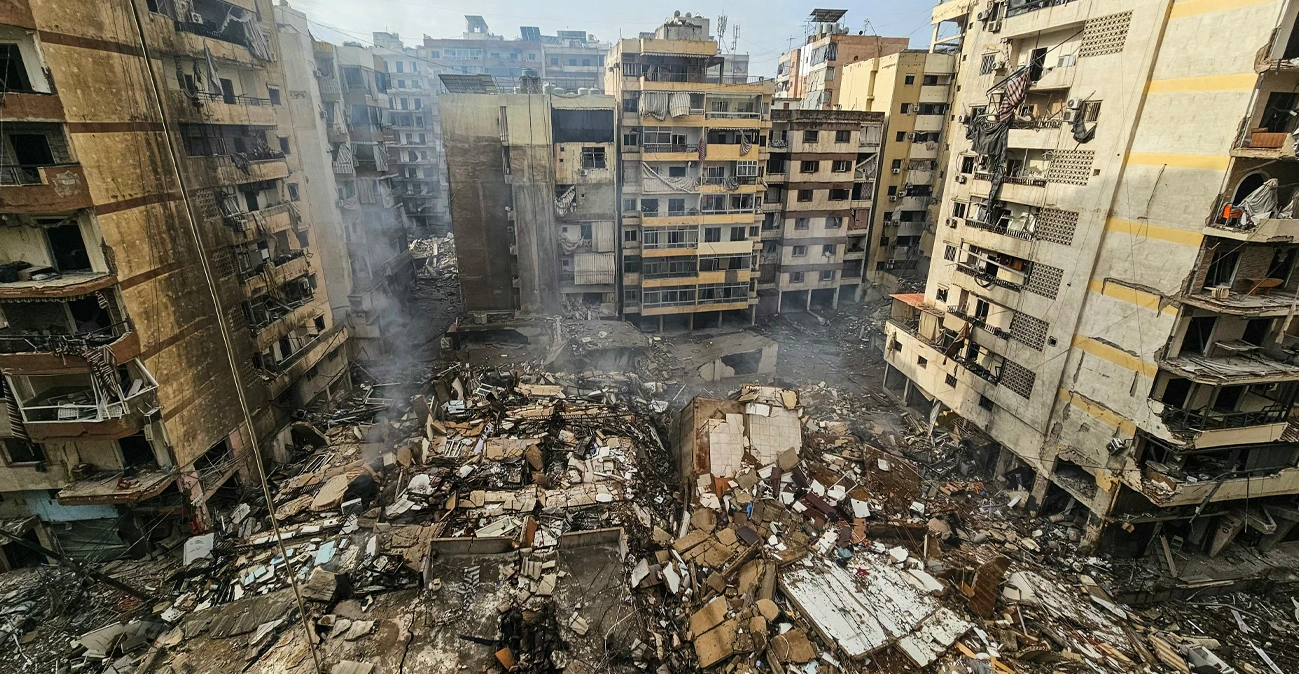
At the same time, military activity across the region continues to escalate. Israel announced new airstrikes targeting infrastructure linked to Iran’s Revolutionary Guards in central Iran, as well as Hezbollah positions in Beirut. According to Israeli media, the Israeli army is preparing for a conflict that could last at least a month. Meanwhile, several Gulf states activated their air defense systems to intercept missiles and drones, while Saudi Arabia reported shooting down multiple unmanned aircraft targeting oil facilities.
The crisis has also spread beyond the battlefield into the geopolitical arena. Turkey announced that six F-16 fighter jets and additional air defense systems have been deployed to Northern Cyprus, stating that further measures may be taken if necessary. Regional leaders have strongly condemned Iran’s attacks, with Qatar warning that the strikes against Gulf states represent a “dangerous miscalculation” that could destabilize the region and disrupt the global economy.
The growing conflict is already sending shockwaves through international markets and diplomacy. Oil prices have surged sharply, increasing fears of inflation and economic instability worldwide. As military operations continue and diplomatic channels struggle to contain the crisis, the coming days are expected to be critical for determining whether the confrontation will remain regional or spiral into a broader global conflict.
Ask me anything
Explore related questions