The war launched by the United States and Israel against Iran in the early hours of February 28 has now entered its 11th day, and no one can say with certainty exactly when it will end. Beyond the consequences for those directly involved in the conflict, countries across the Middle East have been affected—some suffering economic losses and casualties—while nations around the world are also feeling the impact. Disruptions to fuel supplies have sent prices soaring.
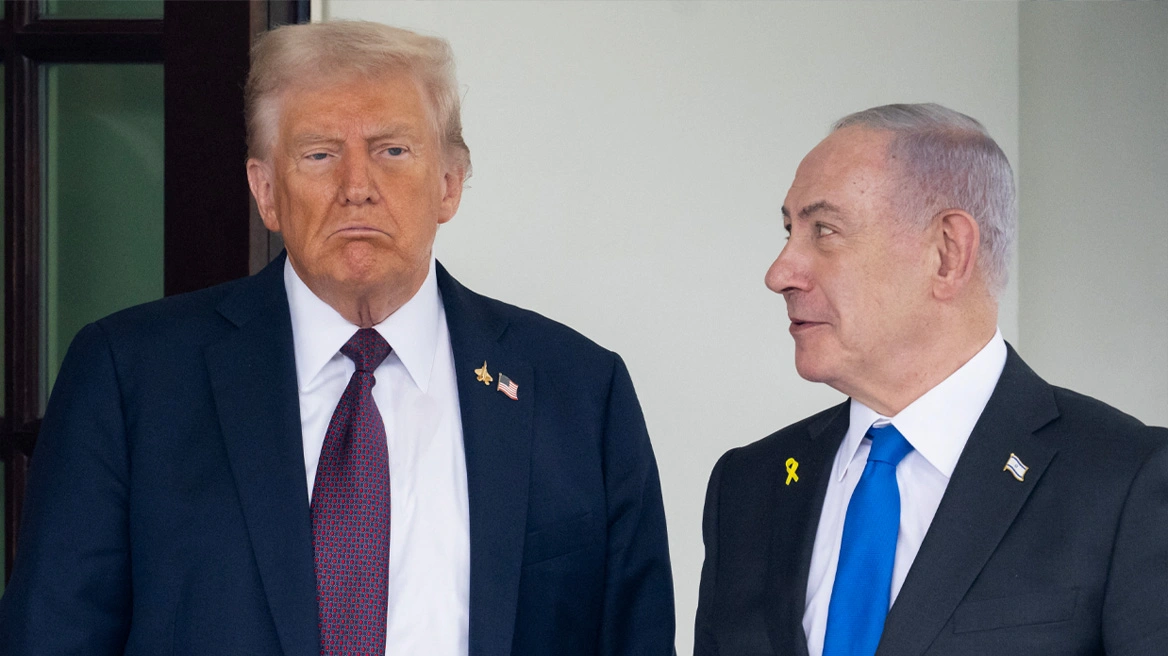
At the same time, the allies in this war—Washington and Tel Aviv—are sending different and even contradictory messages about the duration of the hostilities. Europe, through the remarks of German Chancellor Friedrich Merz, is expressing concern and pointing out what now seems obvious: the absence of a common plan for exiting the crisis that a large part of the planet has become entangled in.
“The war is almost over,” says Trump
Statements made yesterday by U.S. President Donald Trump to various media outlets, suggesting the war could end soon, changed the overall mood.
“We are far ahead of schedule. The war is almost over. From a military standpoint, nothing remains in Iran—they have no navy, no communications, no air force. Their missiles have been destroyed. Their drones are exploding everywhere, even at the facilities where they are produced,” Trump said, bringing relief to the markets.
He struck a similar tone later during an evening appearance in Florida, describing the operation in Iran as a “short midterm excursion.” In comments to Fox News, he also appeared to reopen the door to dialogue with Tehran:
“I hear they very much want to talk. It’s possible—it depends on the terms. It’s possible, only possible. If you think about it, we don’t really have a great need to talk anymore, but it’s possible.”
According to analysts, these remarks reveal the pressure Trump is facing from advisers to present a plan for the United States to exit the military operations, which are costly both financially—estimated at around $1 million per day—and politically, with the U.S. midterm elections approaching in November.
With the average price of a gallon of gasoline now reaching $3.48—up 48 cents compared with a week ago—unemployment rising to 4.4%, and consumer prices inevitably climbing, political wear and tear only months before the vote that will determine control of Congress is considered almost certain if the conflict continues and increasingly affects Americans’ daily lives.
“We are not finished yet,” says Netanyahu
At the same time, while Trump appears to be looking for a way to bring the war with Iran to a conclusion, his close ally in the operation, Israel, is sending very different signals.
“We are not finished yet,” said Israeli Prime Minister Benjamin Netanyahu, speaking during a visit to a health center in Israel. He added:
“We aspire to lead the Iranian people to break the yoke of tyranny. Ultimately, it depends on them. There is no doubt that with the actions taken so far we are breaking their bones—and we are not done yet.”
Tel Aviv believes the objectives it has set for this operation—ending Iran’s nuclear program, destroying its missile stockpiles, bringing radical changes to the country’s system of governance, and financially cutting off proxy groups such as Hezbollah, the Houthis, and Hamas—cannot realistically be achieved through a brief “trip into the woods.” From the beginning, Israel has prepared its citizens, neighboring countries, and the wider world for a prolonged process.
Although officials in Netanyahu’s government appear to be stepping back from some of their initial goals (“Of course we would like to see the regime fall, but that is not the only outcome we are seeking,” they say), emphasizing that their main focus is the military dimension and the security of their citizens, the messages coming from the other side—the determination of Tehran to resist and not lay down its arms—prevent them from speaking about specific timelines.
“We will consult with the Americans,” says Israel’s foreign minister
A few hours later, Israel’s Foreign Minister Gideon Sa’ar indicated that differing views may exist even within the Israeli government itself.
“We will consult our American friends when we believe the time is right to do so. We are not seeking an endless war,” Sa’ar told journalists in Jerusalem, adopting a more balanced stance while avoiding a clear answer about when the war might end.
No common exit strategy, warns Merz
It was precisely this mismatch in the positions of the allies—which only prolongs uncertainty and insecurity at every level—that German Chancellor Friedrich Merz highlighted on behalf of Europe.
“The United States and Israel have been waging war against Iran for more than a week. We share many of these objectives, but with each passing day more and more questions arise… We are particularly concerned that there appears to be no common plan for how this war can be ended quickly and convincingly,” Merz said on Tuesday.
He warned of the risk of a new recession in the Eurozone, reflecting the concerns troubling many countries that have become involved—directly or indirectly, willingly or not—in this conflict.
Ask me anything
Explore related questions