On Tuesday (10/3), the Revolutionary Guards warned that they would not allow the transfer of oil from the Middle East if attacks by the United States and Israel continue. U.S. President Donald Trump responded, stating that Washington would hit Iran “much harder” if an export blockade were attempted.
Despite the strong rhetoric, oil prices continued to fall, and global stock markets rose following Trump’s statements that he expects a swift end to hostilities.
These developments came even after Tehran signaled intransigence by naming Mojtaba Khamenei as its new supreme leader.
On Monday (9/3), President Donald Trump said that the United States had inflicted serious damage on Iran’s military capabilities. He also suggested that the conflict might conclude sooner than the initial four-week timeframe he had previously set, although he did not specify what would constitute a “victory.”
Meanwhile, Israel has stated that the goal of the war is to overthrow the theocratic regime in Iran. U.S. officials, by contrast, have mainly said that Washington aims to destroy Iran’s missile capabilities and nuclear program. Trump has added that the conflict can only end if Iran has a government that complies with U.S. demands.
According to Iran’s ambassador to the United Nations, at least 1,332 Iranian civilians have been killed and thousands more injured since the U.S. and Israel launched air and missile strikes across the country in late February.
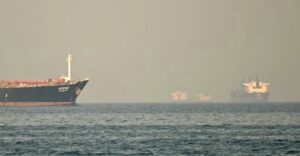
Trump also warned that U.S. attacks could intensify significantly if Iran attempts to block oil tankers from passing through the Strait of Hormuz, which handles about a fifth of the world’s oil supply. “We will hit them so hard that it will not be possible for them—or anyone who helps them—to ever recover in that part of the world,” the president said at a Monday news conference.
In response, a Tehran spokesperson said, “We will determine the end of the war,” calling Trump’s comments “nonsense,” according to Iranian state media.
Ask me anything
Explore related questions