





We need cheaper energy—but above all, more of it! The surge in electricity demand driven by Artificial Intelligence is being felt worldwide and in Greece, which is evolving into a regional hub. Every time we ask ChatGPT a question, it’s like switching on a light bulb, according to an MIT study. And every time we ask it to perform a more complex task—such as generating an image or video of Cristiano Ronaldo and Lionel Messi making souvlaki—it consumes as much energy as an entire household uses in an hour.
Will Greece need more electricity, as supercomputers, data centers and AI “factories” are being developed? Investors are already seeking up to 2.2 GW of power capacity, while demand for data center and AI infrastructure is expected to exceed 2.9 GW.
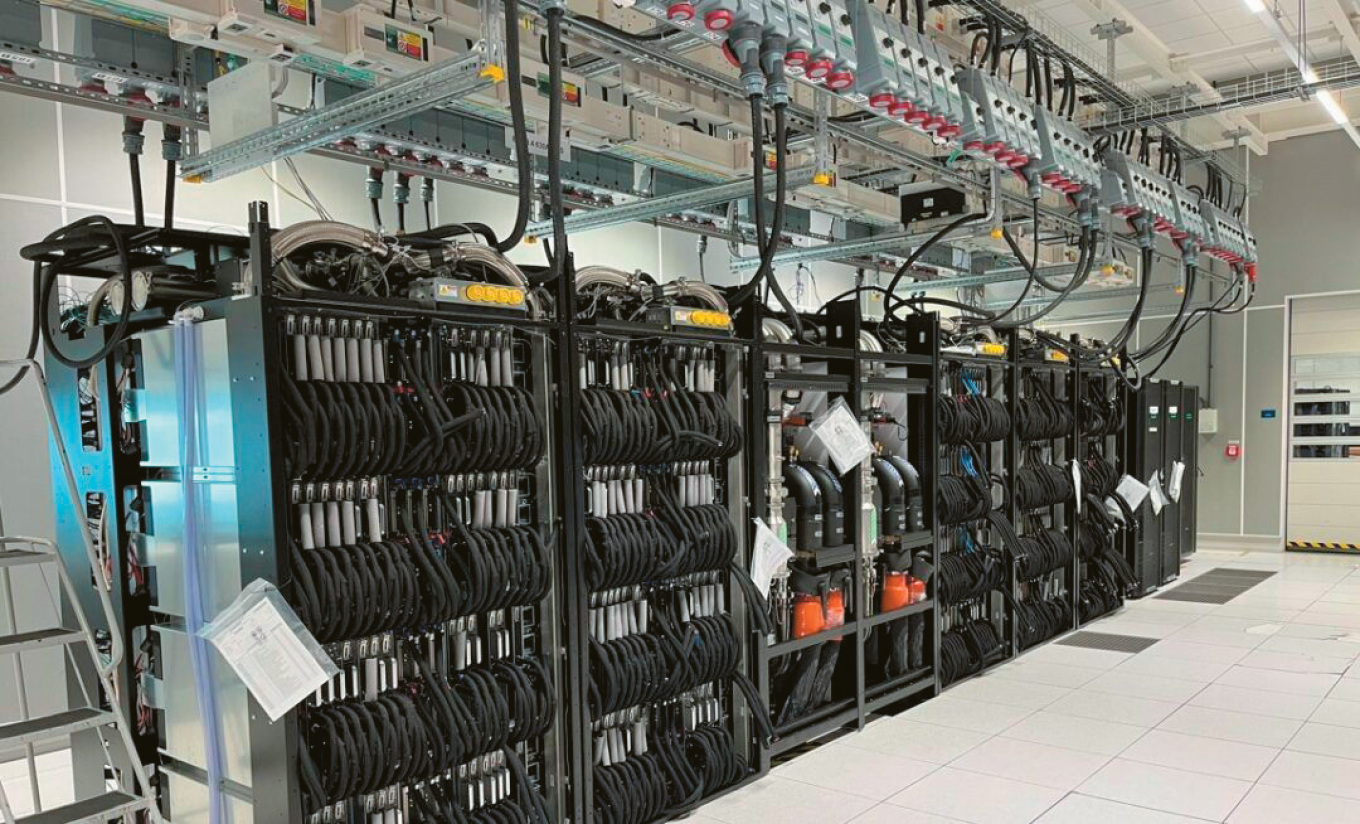
Mini reactors
Today, electricity consumption from data centers powering AI chatbots is estimated at 415 terawatt-hours (TWh), or about 1.5% of global energy consumption, according to the International Energy Agency.
As Artificial Intelligence is still in an early stage of development, demand is growing exponentially year by year, prompting local authorities to search for new energy sources. “Everyone thinks they will import electricity from a neighboring region or country—but the neighbors are thinking the same thing,” scientists explain. As a result, new and innovative energy production methods—such as small modular nuclear reactors (which also offer advantages like no need for grid interconnection and minimal water consumption)—are becoming increasingly attractive solutions.
18 centers in Attica–Boeotia
Such practical solutions are also being sought in Greece, which is emerging as a regional data center hub following decisions by major players like Microsoft, Google, Amazon and Digital Realty to invest in more than 18 data centers by 2030, mainly in Attica and Boeotia, focusing on high-capacity and AI infrastructure. This rapid AI growth—with Greece among the few places that will host a supercomputer (“Daedalus”) and an AI factory (“Pharos”)—is driving the country’s interest in boosting energy production.
In any case, according to a PwC study presented by the Minister of Digital Governance and AI Dimitris Papastergiou, alongside the Minister of Environment and Energy Stavros Papastavrou and the Minister of Development Takis Theodorikakos, Greece is becoming a new emerging regional hub for data centers, as congestion in major European markets pushes expansion elsewhere.
In FLAP-D regions (Frankfurt, London, Amsterdam, Paris, Dublin), occupancy of existing facilities exceeds 90%, with electricity grid saturation causing delays and constraints for new developments. A striking example is Dublin, where data centers consume 20% of the country’s total annual energy.
Rising demand
The widespread use of AI is expected to increase global computing demand up to fivefold (over 60% of total data center loads by 2034). This is logical given that the growing number of queries to AI chatbots is driving a tenfold increase in average data center size, while investments in Europe’s digital sovereignty exceed €20 billion.
This regional expansion is creating a market of up to 5 GW across Southeast Europe and the Middle East, according to PwC analysts, as demand for data center capacity across Europe, the Middle East and North Africa (EMEA) is expected to triple.
In practice, this means that by 2034 an additional 40 GW of capacity will be required, with demand rising from 18 GW today to 58 GW. Of this, 60%–70% will be AI-related loads, with the rest being conventional.
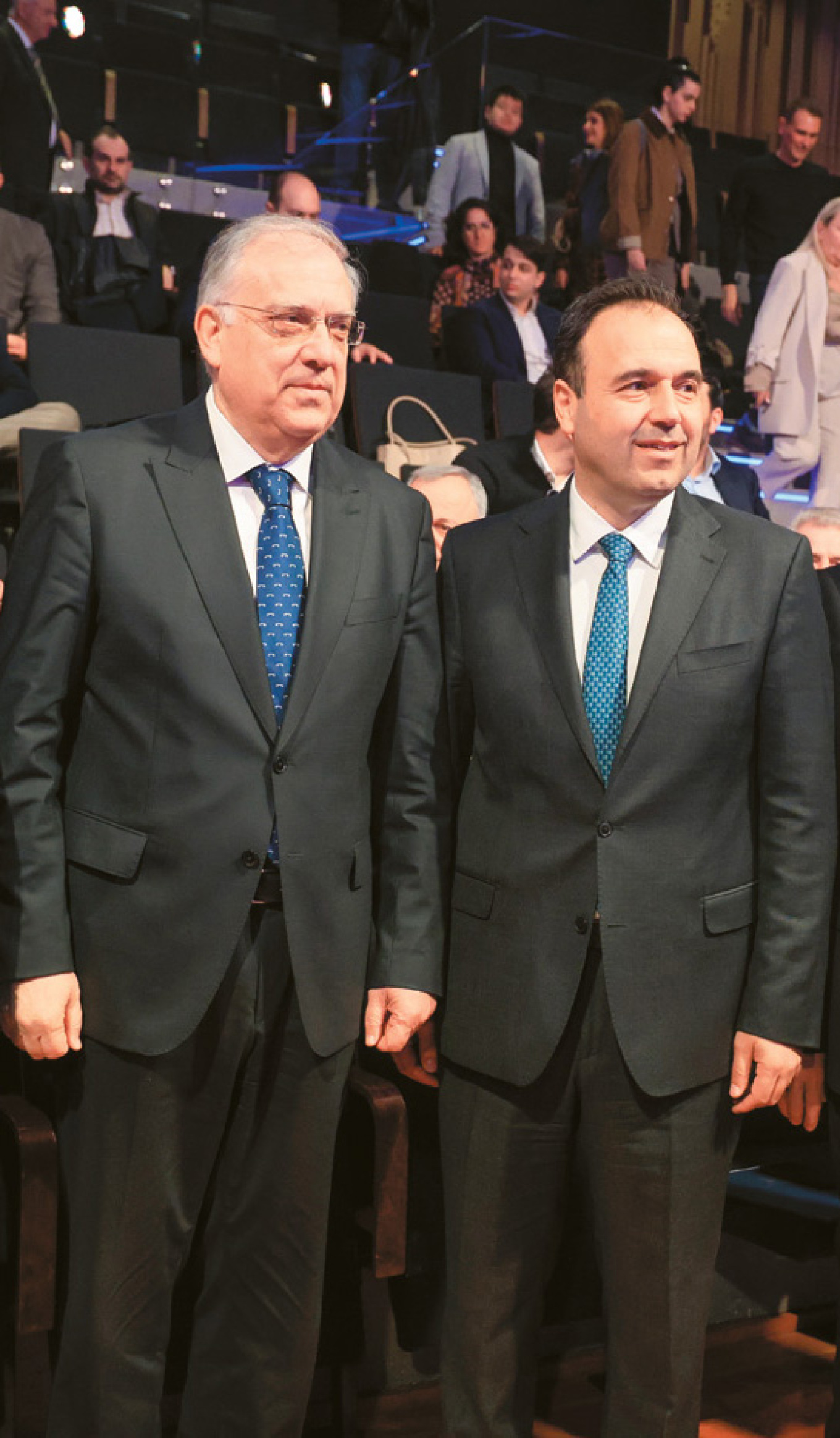
The Minister of Digital Governance Dimitris Papastergiou and the Minister of Development Takis Theodorikakos presented a study highlighting Greece as an emerging regional data center hub
Greece
Greece is ready to seize this opportunity. According to the PwC study, recorded investment interest in the country has already exceeded 1 GW, mainly in Attica (~65%). Total expressed interest ranges between 1.4 and 2.2 GW. Of this, 0.8 GW has been officially announced, 1.2 GW corresponds to transmission system connection requests (ADMIE), and additional capacity relates to distribution network requests (DEDDIE).
The highest energy demand from data centers is in Attica (800–1,260 MW, with 330 MW already approved for connection), followed by Western Macedonia (140–440 MW) and Boeotia (275 MW). Other areas include Crete (45 MW), Corinth (40–80 MW), Thessaloniki (30 MW), Megalopolis (25 MW) and Filippiada (0.4 MW).
The study notes that while there is sufficient national electricity capacity, there is a mismatch between areas of high availability and high demand. From 1.9 GW today, total grid capacity for data centers is expected to reach 2.9 GW by 2034.
Energy and fiber optics
Data centers are critical infrastructure for the digital economy and require two main conditions: reliable energy supply and high-capacity telecommunications connectivity. This connectivity is largely achieved through submarine fiber optic cables, which carry most international internet traffic.
When these cables reach land, they connect to landing stations and then to data centers via terrestrial fiber networks, where data is processed, stored and routed to the internet, cloud services and end users.
Proximity to submarine cables reduces latency, increases capacity and enhances reliability. In this context, Athens and Crete are gradually becoming key digital hubs in the Mediterranean due to new investments in submarine cables and digital infrastructure.
PwC concludes that new data centers with about 1 GW capacity could unlock major benefits, including €10 billion in investments, 1,000 permanent jobs, and broader infrastructure development. Combined investments in data centers, submarine cables and supercomputers are driving the creation of a digital hub.
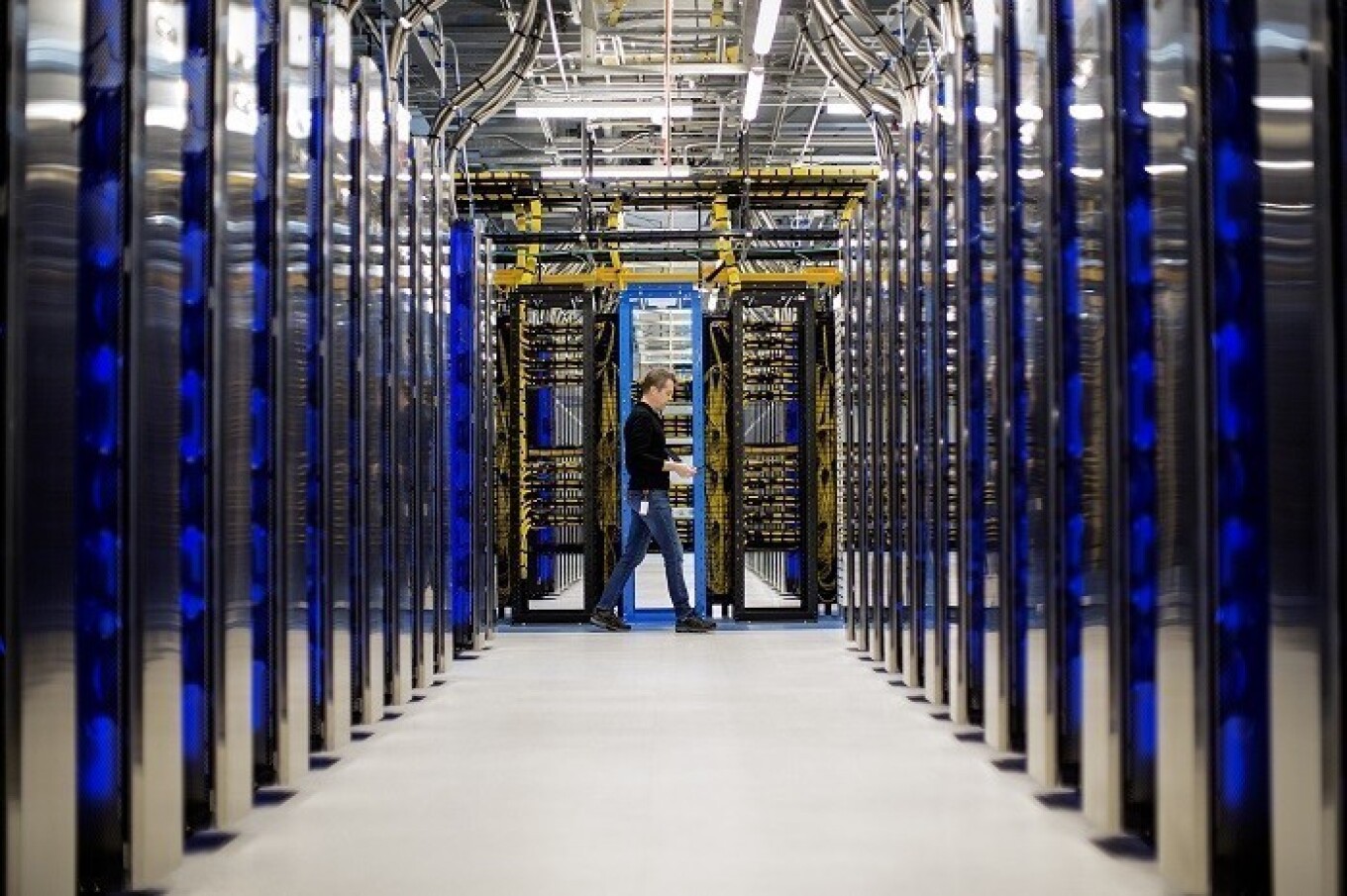
“Daedalus”
A second new supercomputer will be developed in Kozani to boost research and innovation in strategic sectors such as energy and agri-food. It will support AI applications and be funded by national resources.
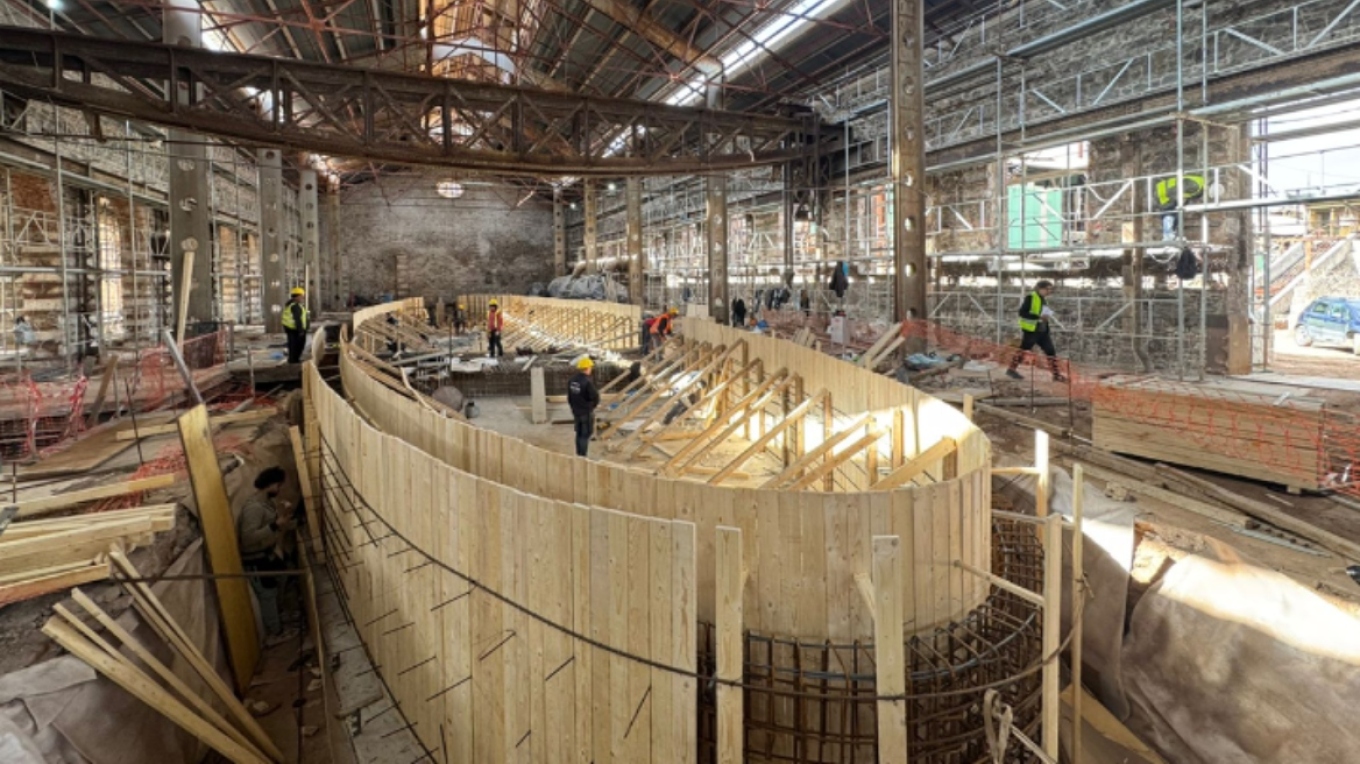
This approach ensures faster implementation, aligning with the development of the national supercomputer “Daedalus” at the Lavrio Technological Cultural Park and the Green Data Center project in Western Macedonia. The initiative will fall under the EuroHPC framework, as does “Daedalus.”
Thus, Kozani is set to become an AI hub for Southeast Europe, leveraging high-performance computing infrastructure as a core pillar for developing, training and applying advanced AI models in key sectors.
Papastergiou: The opportunity for Greece
“Greece today has a real opportunity to upgrade its position on the global digital map,” said Minister Dimitris Papastergiou. “Global demand for data infrastructure is rapidly increasing due to AI and cloud services, while traditional European hubs face growth constraints. In this environment, Greece can evolve into a strong regional data center hub in Southeast Europe.”
He emphasized that this must be done with planning and balance: “We are not aiming for uncontrolled infrastructure growth, but a strategic approach that respects sustainability and the energy footprint. At the same time, we are implementing key projects such as the ‘Daedalus’ supercomputer, a second supercomputer in Kozani and the AI Factory ‘Pharos,’ strengthening the country’s computational capacity and digital ecosystem.”
“With strategic planning, Greece can play a key role in shaping a strong and sustainable European digital ecosystem, where data centers act as drivers of investment, innovation and technological autonomy.”
Ask me anything
Explore related questions




