Israeli Defense Minister confirms new strike on South Pars
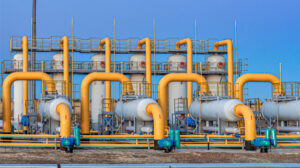
Israeli Defense Minister Israel Katz confirmed the strike on petrochemical facilities at South Pars in southern Iran.
“The Israel Defense Forces (IDF) carried out a powerful strike against Iran’s largest petrochemical plant. This key facility represents about 50% of Iran’s petrochemical production. This action follows last week’s attack on Iran’s second-largest facility. As a result, both facilities—which together account for 85% of Iran’s petrochemical production—have now been taken out of operation. This constitutes a multi-billion-dollar economic blow to the Iranian regime. Netanyahu and I have instructed the IDF to continue intensive attacks on the national infrastructure of the Iranian regime,” Katz said.
06/04/2026 14:18
Revolutionary Guards leak that they struck an Israeli container ship with a cruise missile
According to the semi-official Fars news agency, sources within the Revolutionary Guards said that naval forces “targeted and destroyed the Israeli container ship SDN7 with a cruise missile.”
Reports say the vessel caught fire after the attack.
No information was provided on whether the ship was targeted in the Strait of Hormuz or elsewhere.
06/04/2026 14:13
Iran has received 12 million applications in mobilization campaign
Iran’s Interior Ministry announced that during a 10-day mobilization campaign, 12 million citizens declared themselves ready to fight to repel a potential U.S. ground invasion.
06/04/2026 14:12
Tehran links rescue operation of American pilot to alleged attempt to steal enriched uranium from Isfahan
Iran claims that the hours-long rescue operation of a U.S. F-15 pilot shot down by Iranian forces may have served as cover for an attempt to “steal enriched uranium” from the country.
06/04/2026 14:04
Fars reports attacks on petrochemical facilities linked to South Pars
Iran’s Fars news agency reported Monday midday attacks on petrochemical facilities in South Pars, southern Iran.
South Pars is the largest natural gas field in the world and a critical hub for Iran’s energy industry and revenues.
There are no official details yet on the extent of damage or possible casualties.
06/04/2026 13:54
Among the top three IRGC commanders: Who was Majid Hadami, killed at dawn by Israelis
Majid Hadami, who had accused Donald Trump of inciting anti-government protests in Iran, is the latest senior Tehran figure killed in attacks since the start of the U.S.–Israel war against the Islamic Republic on February 28.
06/04/2026 13:44
Netanyahu on killing of IRGC intelligence chief: “Whoever acts against us will pay with their blood”
Israeli Prime Minister Benjamin Netanyahu praised the killing of the head of intelligence of Iran’s Islamic Revolutionary Guard Corps (IRGC), Majid Hadami, by the Israeli military, stating that Israel “will continue with full force” until its war goals are achieved.
He also referenced the killing of Yazdan Mir, known as Sardar Bagheri, leader of the covert Unit 840 of the IRGC’s Quds Force, calling him “responsible for attacks against Jews and Israelis worldwide.”
“Whoever acts to murder our citizens, whoever directs terrorism against Israel, whoever builds the Iranian axis of evil—their blood is on their own head. We act with strength and determination and will reach anyone who seeks to harm us,” Netanyahu warned.
“We will continue with full force, on all fronts, until the threat is eliminated and all war objectives are achieved,” he concluded.
06/04/2026 13:32
Video allegedly showing Mojtaba Khamenei entering operations room released by Iran
A video showing Mojtaba Khamenei walking into an Iranian military operations room, preparing an attack on Israel’s Dimona nuclear facility, has been circulated by Iranian sources.
The authenticity of the video has not been verified, and it is suspected to be AI-generated, as Iran’s new supreme leader has not appeared publicly since the February 28 bombing that killed his father and reportedly seriously injured him.
06/04/2026 13:17
Iranian Foreign Ministry spokesman: No projectiles were launched toward Azerbaijan or Turkey
“We clearly stated that no projectiles were launched from Iran toward the Republic of Azerbaijan, and I believe the talks between the presidents and foreign ministers resolved the misunderstandings,” said Iranian Foreign Ministry spokesman Ali Baghaei.
“The same applies to Turkey. We clearly stated that no missiles were launched from our side, and therefore I believe there is mutual understanding between the two countries,” he added.
06/04/2026 12:54
Iran: Diplomatic response to the U.S. prepared, to be announced in due time
“Iran does not hesitate to clearly express what it considers its legitimate demands, and this should not be interpreted as compromise but as confidence in defending its positions,” said Esmail Baghaei.
“We have formulated our responses and will announce details at the appropriate time,” he added regarding ceasefire efforts.
06/04/2026 12:50
Iran accuses UN nuclear watchdog of inaction, warns of attack risks
Iran’s atomic energy chief Mohammad Eslami said the inaction of the UN nuclear watchdog (IAEA) “encourages aggression” against nuclear facilities such as Bushehr.
He warned such attacks could cause radioactive leaks with “irreparable consequences” for people, the environment, and neighboring countries.
06/04/2026 12:48
Israeli police investigate suspects for making explosives with Iranian guidance
Israeli police are investigating several suspects for alleged links to Iran, including accusations that they attempted to manufacture explosives under instructions from Iranian agents.
06/04/2026 12:43
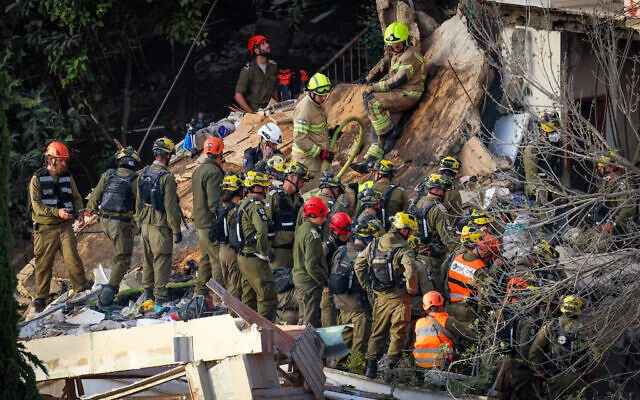
Four bodies recovered from destroyed apartment building in Haifa
Israeli rescue forces searched the site where a ballistic missile fired from Iran struck a building in Haifa.
06/04/2026 12:32
US–Israel airstrike kills 15 in Tehran, according to Tasnim
Iran’s semi-official Tasnim news agency reported that a U.S.–Israel airstrike targeting the Baharestan area in Tehran killed 15 people and injured many others.
Four homes were completely destroyed, while more than 40 others and several civilian vehicles suffered heavy damage.
06/04/2026 12:20
Iran calls U.S. 15-point plan “overly ambitious and unreasonable”
Iranian Foreign Ministry spokesman Esmail Baghaei said Tehran has finalized its demands but will reveal them at its discretion.
He noted that a U.S. 15-point plan was conveyed via intermediaries including Pakistan, describing it as “overly ambitious, unusual, and unreasonable.”
He stressed Iran has its own framework based on its interests and rejected the idea that mediation reflects weakness.
06/04/2026 12:16
Israeli military launches new wave of strikes on Hezbollah infrastructure in Beirut
The Israeli military announced a new wave of airstrikes targeting Hezbollah infrastructure in Beirut, following renewed evacuation warnings for the city’s southern suburbs, a Hezbollah stronghold.
The Middle East is once again at the center of global attention as escalating conflict between the United States, Israel, and Iran intensifies. Recent developments indicate both sides have received a two-phase ceasefire proposal, though Tehran has expressed strong resistance to temporary measures.
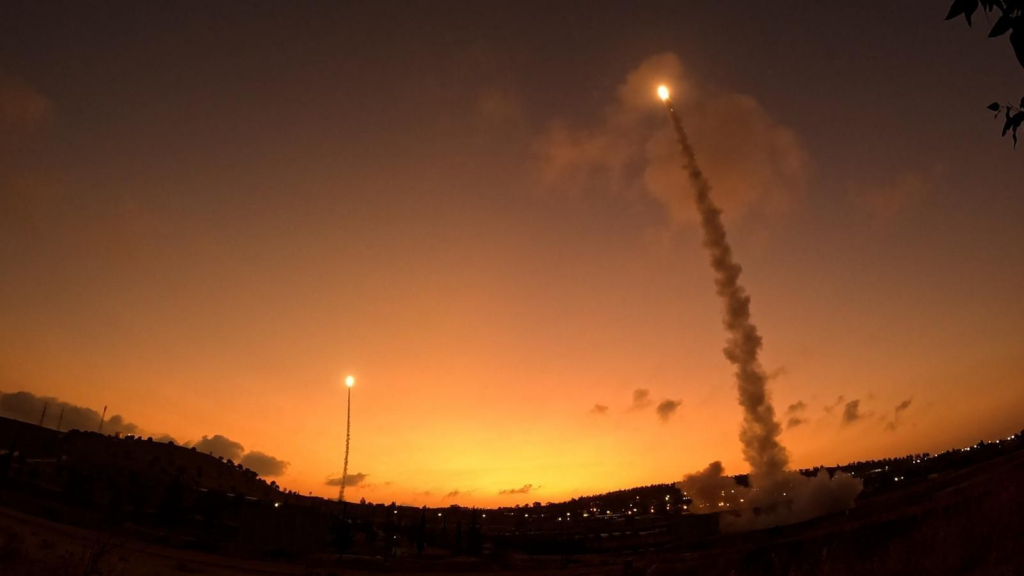
Two-Phase Ceasefire Proposal
According to Reuters, a plan aimed at immediately halting hostilities and eventually negotiating a comprehensive peace agreement has been circulated to both Washington and Tehran. The framework, reportedly brokered by Pakistan, envisions:
- An immediate ceasefire to halt ongoing attacks.
- A longer-term negotiation phase to reach a final agreement to end the conflict.
However, Iranian officials have made it clear that they will not reopen the strategically critical Strait of Hormuz in exchange for a temporary ceasefire. The Iranian Foreign Ministry stressed that Tehran sees America as unprepared for a permanent cessation of hostilities.
Military Strikes and Escalations
The conflict has already seen severe military action:
- Israeli Airstrikes: Overnight, Israel targeted three airports in Tehran used by the IRGC’s Quds Force, striking runways, control towers, and a UAV manufacturing facility.
- Casualties in Israel and Lebanon: Missile attacks on Haifa have killed two and injured several, while strikes in southern Lebanon’s Nabatiyeh region caused extensive building damage. In Beirut alone, at least ten people were killed in overnight attacks targeting Hezbollah-supported positions.
- Drone Attacks in the Gulf: Iranian-launched drones targeted the UAE, including a du Telecom building in Fujairah, leaving at least one person injured in Abu Dhabi.
Rising Economic and Geopolitical Stakes
The ongoing conflict is impacting global energy markets. Oil prices have surged past $115 per barrel following threats by U.S. President Donald Trump to strike Iran’s energy infrastructure. The Strait of Hormuz, a vital oil shipping lane, remains largely closed, restricting about 20% of global oil and gas flow.
Countries such as Japan, heavily dependent on Middle Eastern oil, are closely monitoring the situation. Prime Minister Sanae Takaichi has announced plans to engage directly with Iran to ensure maritime security for Japanese vessels.
Diplomatic Efforts Continue
Several regional actors are pushing for peaceful solutions:
- Qatar’s Prime Minister Sheikh Mohammed bin Abdulrahman Al Thani called for negotiation and rational dialogue to prevent further escalation.
- Pakistan has been facilitating ceasefire discussions, with its military coordinating with U.S. and Iranian officials.
- Oman has reportedly held talks with Iran to facilitate safer passage through the Strait of Hormuz, though Iran continues to consider imposing tolls on transiting ships.
Despite these efforts, Tehran has not formally responded to the ceasefire proposal, maintaining a firm stance against external pressure.
Political Implications in the U.S.
Domestically, the Trump administration is under scrutiny following the rescue of an American F-15 pilot in Iran, an operation that sources suggest has fueled internal political conflict. President Trump plans to address the media today regarding the pilot’s extraction, highlighting both the geopolitical and domestic dimensions of the crisis.
The situation remains highly volatile, with military operations, energy security concerns, and high-stakes diplomacy intersecting. The world watches as both immediate ceasefire proposals and broader peace talks unfold, amid warnings that further escalation could have devastating consequences across the Middle East and beyond.
Ask me anything
Explore related questions