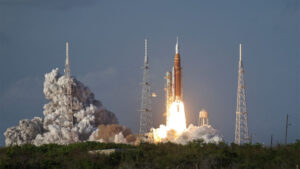
At the culmination of their ten-day journey around the Moon, the four astronauts of the “Artemis II” mission are simulating all the systems of the “Orion” space capsule and the data of their own deep space living in the conditions of future manned missions of the same program. According to NASA’s schedule, these are expected to begin landings in 2028, the first being “Artemis IV”.
The reason for speeding up NASA’s plans to return man to Earth’s natural satellite after a 54-year hiatus is obvious: to maintain its leading role, on behalf of the US of course, in developments specifically related to the Moon, catching up with its now fierce competitors in space, China and Russia, who have already announced their clear intention to acquire lunar bases. The reasons are many. But the main one is that a human presence on the Moon strengthens a country’s overall space power, which in turn affects its geopolitical footprint on “Mother Earth.”
Ask me anything
Explore related questions