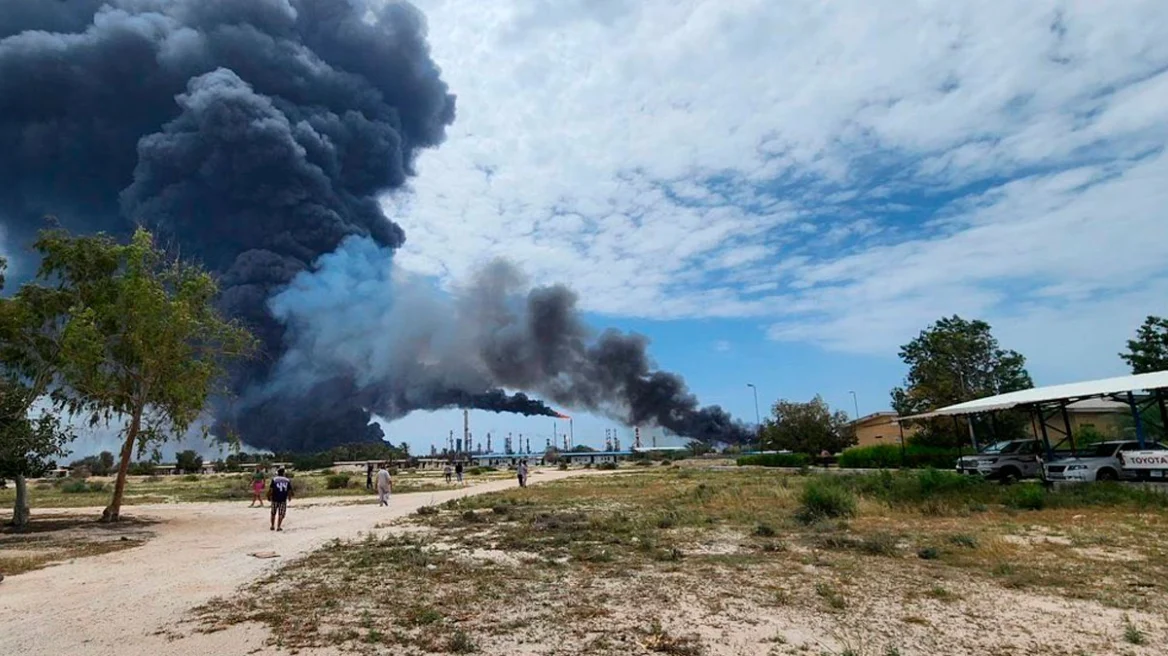
Tensions across the Middle East remain dangerously high as a fragile ceasefire between the United States and Iran struggles to hold. Despite the agreement, Kuwait and the United Arab Emirates reported drone attacks early in the morning, while explosions were recorded at an Iranian oil refinery—clear signs that stability is far from secured.
Washington has described the truce as “fragile,” with Vice President J.D. Vance warning that deep divisions within Iran’s leadership could undermine progress. At the same time, two vessels—including one Greek-owned—successfully passed through the Strait of Hormuz after Iran agreed to reopen the vital shipping route, offering a small but significant signal of de-escalation.
The two-week ceasefire, reached with the mediation of Pakistan’s leadership, has already triggered strong reactions worldwide. Global markets rallied, energy prices dropped, and world powers cautiously welcomed the pause in hostilities. However, Israel made it clear that the agreement does not extend to Lebanon, where military operations continue.
Meanwhile, former President Donald Trump заявил (stated) that the U.S. and Iran may cooperate on removing enriched nuclear material, even hinting at the possible use of B-2 bombers. At the same time, Iran’s Revolutionary Guards warned they remain “ready to pull the trigger,” signaling that the threat of renewed conflict remains immediate.
Across the region, reactions are sharply divided: some hail the ceasefire as a historic opportunity for peace, while others call it a strategic failure or merely a pause before further escalation. With ongoing strikes, political tensions, and uncertainty surrounding negotiations, the Middle East stands at a critical crossroads—balanced between diplomacy and renewed war.
“It’s a great day for world peace,” U.S. President Donald Trump wrote in a post shortly after a two-week ceasefire was agreed with Iran.
“The United States of America will help by increasing traffic in the Strait of Hormuz,” the US president noted in a celebratory tone in a post on Truth Social.
Donald Trump’s post in detail:
“A great day for world peace! Iran wants it to happen; they’ve had enough! So is everyone else! The United States of America will help by increasing traffic in the Straits of Hormuz. There will be many positive actions! A lot of money will be made. Iran can start the reconstruction process. We will load supplies of all kinds and just “wait” to make sure everything goes well. I’m sure it will. Just as we are experiencing in the US, this could be the Golden Age of the Middle East.”
Vessel movements resume in the Strait of Hormuz following ceasefire announcement
— MarineTraffic (@MarineTraffic) April 8, 2026
Early signs of vessel activity are emerging in the Strait of Hormuz following a ceasefire announcement, which includes a temporary reopening of the strategic waterway to allow for negotiations.… pic.twitter.com/CSy6PZlCJ4
“China pushed Iran to negotiate”
At the same time, US President Donald Trump told Agence France-Presse late Tuesday night (local time) that he believes China helped Iran come to the negotiating table and conclude the ceasefire deal announced by Washington and Tehran.
“That’s what I’m saying,” Trump said in brief telephone remarks to AFP when asked about Beijing’s possible contribution to the decision by Tehran, his ally, to negotiate a ceasefire.
Ask me anything
Explore related questions