





The continuation of discussions at the level of technical committees, in order to launch bilateral cooperation in the coming period in the fields of the defense industry and the Armed Forces, was the immediate outcome of the official visit of the Emir of Qatar to Athens earlier this week, reflecting the significantly upgraded image of Greece in the eyes of the Arab world.
At the same time, in an atmosphere of tension and uncertainty in the wider Gulf region, Prime Minister Kyriakos Mitsotakis is visiting the United Arab Emirates today, in a visit overshadowed by international tensions and heightened alert.
The Prime Minister’s visit is not only diplomatic but also symbolic, given the backdrop in which it takes place, as Abu Dhabi—with its large infrastructure projects and carefully structured, bustling avenues—has been under heightened alert in the past 24 hours. The Greek Prime Minister will meet the President of the UAE, Sheikh Mohamed bin Zayed Al Nahyan, at the presidential palace—a meeting expected to confirm the strategic nature of Greek-Emirati relations, with focus on cooperation in the defense and energy sectors.
The meeting originally scheduled for February was postponed due to the Emirati president’s illness and has since remained pending, despite geopolitical developments making it almost urgent.
The operational readiness of the Greek Ministry of Defence, in light of Cyprus’ defense support and, above all, the strong performance and effectiveness of Greek air defense in the wider Middle East, has been highly appreciated by powerful regional players, at a time when the Southeastern Mediterranean is entering a new phase.
Absences and disappointment
In this shifting and fluid environment, the common view among Arab officials and diplomats is that “Greece did more than anyone could have imagined in the crisis (referring to Iran), especially in air defense,” a perception that has reached all key decision-making centers in the region.
Greek defensive and interception capabilities are thus seen as a positive surprise for many Gulf countries, some of which are closely observing Athens even at a regional level.
In particular, Greece’s performance is being compared with other powers in the Eastern Mediterranean, some of which were notably absent—such as, according to some, Turkey—causing disappointment and concern among Arab states that came under heavy missile and drone attacks from Iran.
This is especially notable given Qatar and Turkey’s close defense cooperation, as Ankara maintains a military base in the country, alongside broader alignment on various issues in recent years.
Opportunities and OPEC
Against this backdrop, Greece’s rising profile in the Middle East creates new opportunities for its domestic defense industry, led by the anti-drone system “KENTAVROS,” which has repeatedly demonstrated its operational capability, as well as the Patriot battery deployed in Saudi Arabia. This added defense value constitutes intangible credibility for Greece among Arab states, which are currently showing a strong tendency toward fragmentation.
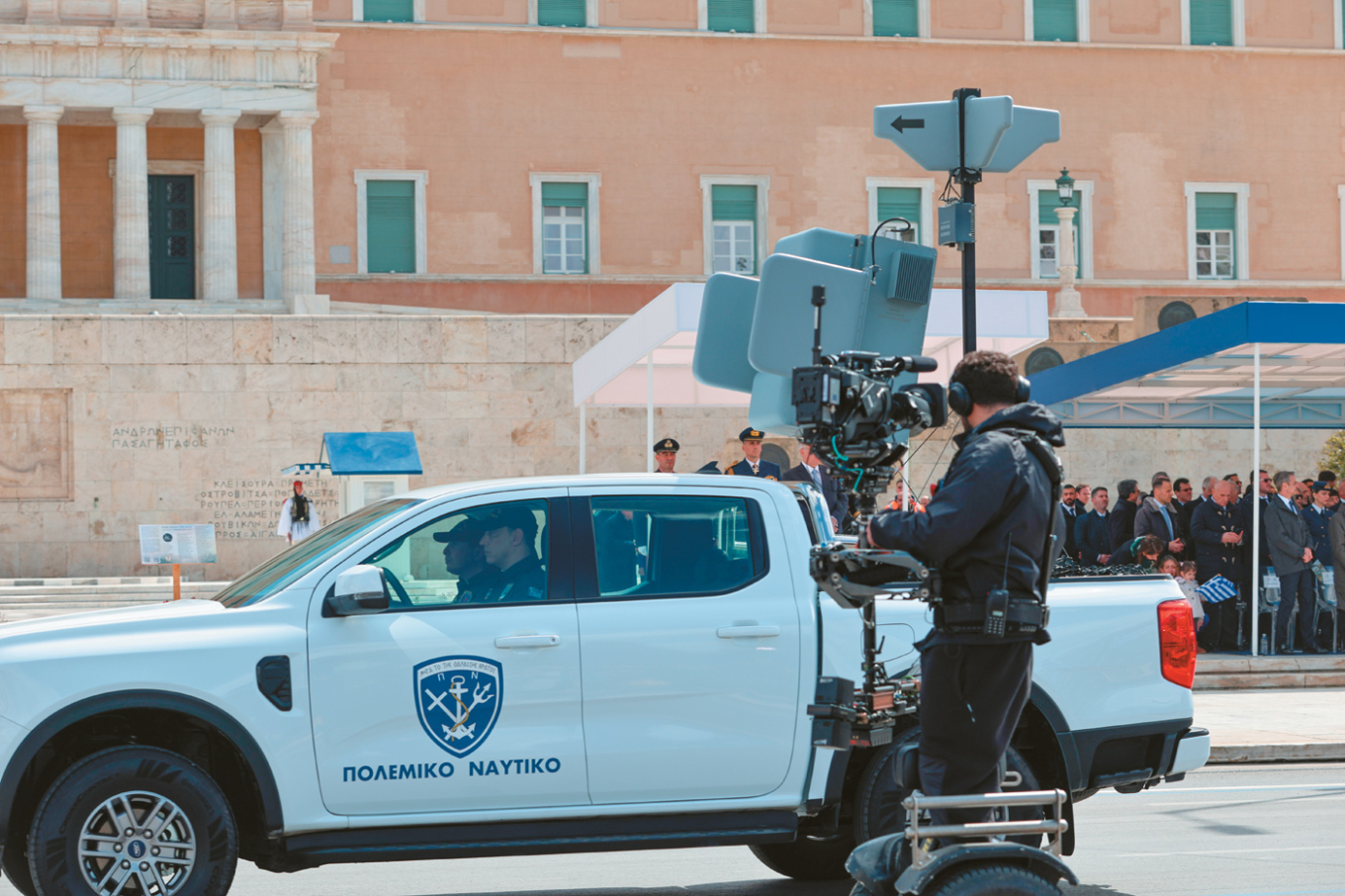
The system “KENTAVROS” is an anti-drone system capable of detecting and neutralizing hostile drones through electronic interference. It is the result of cooperation between the Hellenic Center for Defense Innovation and the Hellenic Aerospace Industry.
A key development was the distancing of the United Arab Emirates from OPEC, a historic move assessed as highly significant by Greek armed forces officials.
France also in the picture
The strengthening of bilateral relations between Greece and the UAE also carries a French dimension, as Paris already maintains three military bases in the country, which it defended from Iranian ballistic missile attacks.
At the same time, France’s activity in the Eastern Mediterranean, along with the coordinated approach of French President Emmanuel Macron and Greek Prime Minister Kyriakos Mitsotakis, adds further value for the Arab world regarding the role both countries are trying to play in the region following the Iran conflict.
France is expected to sign a defense agreement with Cyprus in June (Status of Forces Agreement – SOFA), further deepening bilateral defense cooperation. The agreement will provide for expanded military cooperation, joint exercises, and the presence of French forces in Cyprus for “humanitarian purposes,” reshaping regional power balances in the Eastern Mediterranean.
Ask me anything
Explore related questions




