





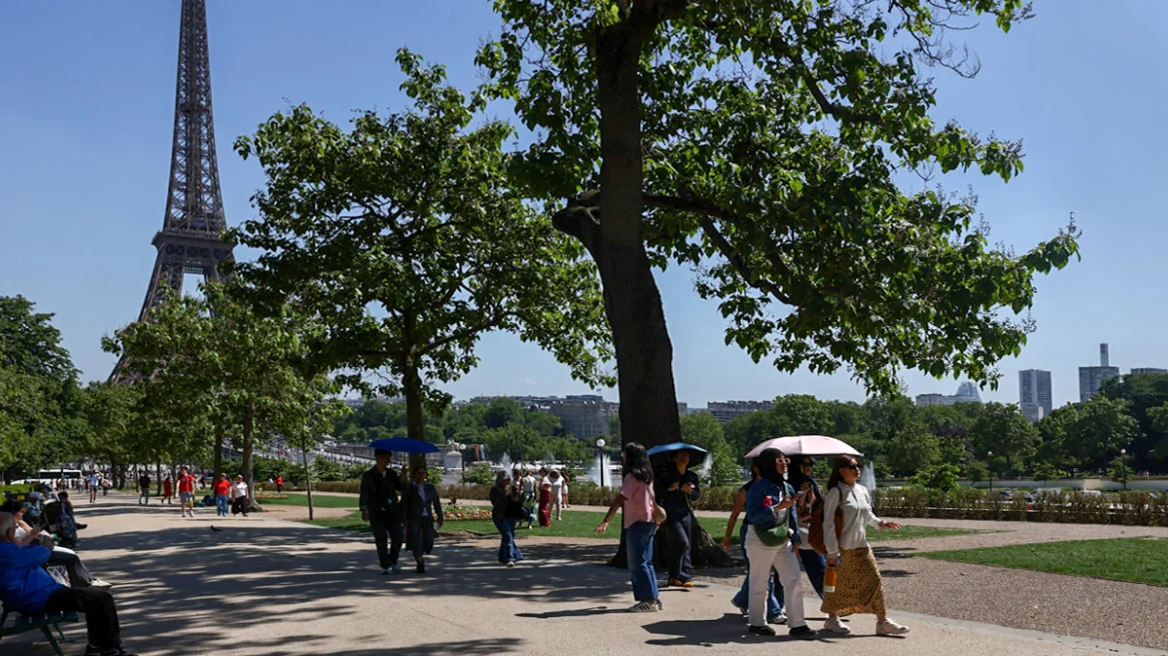
Almost all of Europe has been thrown into an oven-like state, with the “heat dome” phenomenon causing unprecedented heatwaves and extraordinary temperatures, especially in Great Britain and France. The two countries are mourning 11 deaths linked to the extreme heat of recent days, while another 10 people are hospitalized in critical condition. Scientists are recording all-time temperature records during this early heatwave, and the public is wondering: if we are already “roasting” now, what will happen in summer?
Experts say that Europe appears to have been “covered” by a giant “pot” of gases trapping hot air inside it. Other scientists explain that fossil fuel burning and extreme pollution have created an invisible “blanket” above us that traps heat on Earth. All of them warn that both citizens and infrastructure are unprepared for what is arriving far faster than expected.
In Great Britain — a country unaccustomed to severe heatwaves — the heat is so extreme that Peter Thorne, director of the Icarus Climate Research Centre at Ireland’s Maynooth University, describes it simply as “so crazy the mind can’t comprehend it.”
Temperatures reached 35.1°C in London. As if that were not enough, this was the highest temperature ever recorded during any May in the city’s history, exceeding the previous record by 2 degrees. London also experienced, for the first time, the phenomenon of tropical nights. For more than one night, temperatures did not fall below 21°C at any point during the 24-hour period.
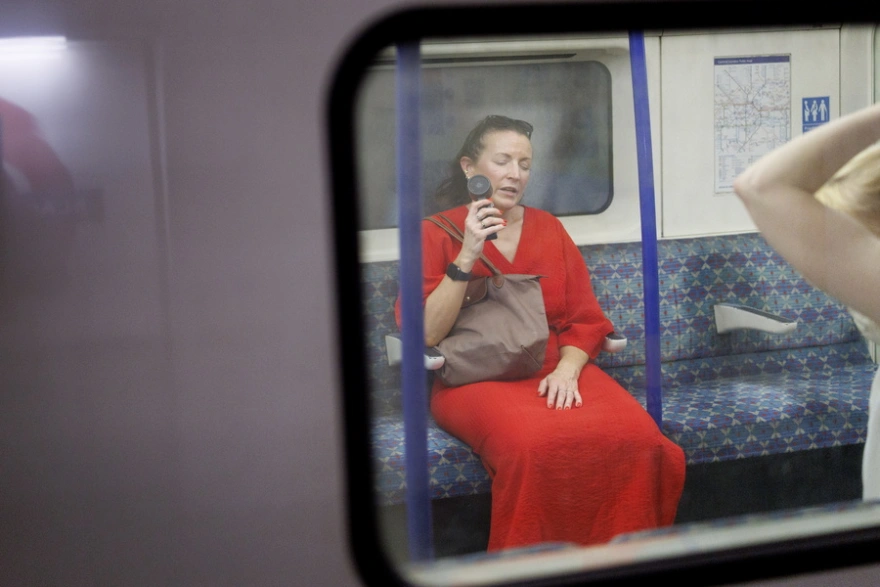
Both people and machines in London are already being pushed to their limits by temperatures that are extreme even for summer standards in the city. On average, London’s highest temperatures usually do not exceed 20°C. The 35 degrees being recorded in the city’s famous parks are considered “too much,” as they approach the UK’s all-time record of 36.7°C, first set in 1911 and most recently shattered by the 40.3°C recorded in 2022.
In the “Tube,” London’s famous underground system, there is no air conditioning in stations or train carriages, causing immense suffering for commuters. Delays have become more common due to “incidents” involving trains overheating and producing smoke.
Air conditioning is also absent from most homes, with estimates suggesting that only about 5% of London houses have AC units. Even fewer homes are properly insulated to keep heat out. “Our country was built for a climate that no longer exists,” says the United Kingdom’s Climate Change Committee.
Water demand has led to widespread supply interruptions in southeastern England, while a wildfire broke out at Arthur’s Seat near Edinburgh, Scotland, due to the high temperatures.
In Ireland, the national temperature record was broken by 1°C — something considered “normal” in scientific terms and seemingly insignificant compared to London’s increase of roughly 15 degrees (15.1°C, to be exact).
For Britons, these temperatures are causing despair because they are entirely unfamiliar and because people neither know how nor possess the means to protect themselves.
Not that the heatwave striking France and the extremely high temperatures in usually warm Paris are bearable either. Temperatures in the French capital reached 39°C, while across the country people are rushing almost frantically toward bodies of water in order to cool off, which in turn has caused a dramatic increase in drownings.
France has also recorded deaths linked to the heatwave — seven according to the government, either directly or indirectly related to the high temperatures. Five deaths were caused by drowning, while the remaining victims died from heat-related complications while exercising.
Spain is also facing “exceptionally high temperatures for the season,” according to the country’s meteorological agency AEMET, with temperatures in the south expected to reach 40°C (104°F) during the second half of the week. Heatwaves are also affecting Germany, Italy, and Switzerland.

Richard Betts, professor at the University of Exeter and head of climate research at the UK Met Office, says: “I’ve been in climate science for 33 years, and now we are more or less seeing the things we used to warn about. Only these temperature records are more extreme and are arriving sooner than we expected.”
Friederike Otto, professor of climate science at Imperial College London, emphasizes that “the climate we live in today simply is not the climate we grew up in, and our buildings and infrastructure are completely unprepared for what is coming.”
As for when this early heatwave will end, scientists are throwing up their hands in uncertainty.
The immediate “culprit” behind the heatwave is what scientists call a heat dome — a high-pressure area that has become “stuck” over Europe, trapping hot air beneath it.
Scientists believe that human activity, particularly the burning of fossil fuels, is responsible for intensifying these phenomena. They also warn that this year — and again in 2027, when the El Niño phenomenon is expected to return after the recent La Niña cycle, which brings humidity and cooler temperatures — conditions may become even more extreme.
Researchers suggest that the upcoming El Niño could appear in a form never seen before, powerful enough to be described as a “Super El Niño,” potentially bringing temperatures higher than anything humanity has previously experienced.
Ask me anything
Explore related questions




