





The new executive order on artificial intelligence signed late yesterday by the U.S. President is not merely a technology regulation framed in technical terms. It is the first serious indication that the White House is beginning to treat large AI models as an issue of national security, industrial power, and political oversight.
Washington is taking a step back from the doctrine of complete AI deregulation, and that step is significant not only for Silicon Valley but for the entire architecture of American power in the 21st century.
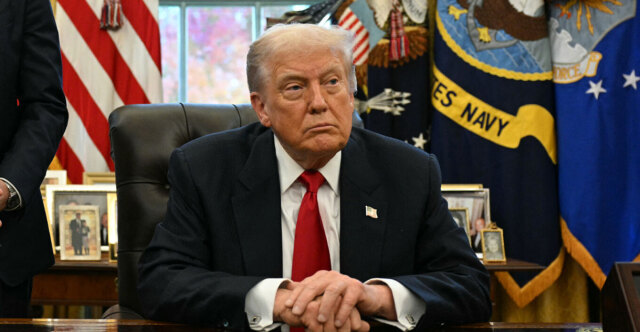
Donald Trump signed an executive order requesting that major technology companies provide the U.S. government, initially on a “voluntary” basis, with up to 30 days to review new artificial intelligence models before they are released to the public. This marks a clear shift from the White House’s previous approach, which prioritized speed, innovation, and competition with China while showing little appetite for government intervention.
The key word here is “voluntary.” The order does not formally impose mandatory reviews. Nor does it create, at least for now, a full licensing regime for large AI models. In practice, however, it opens the door to something much broader: a permanent framework of institutional oversight in which companies will be expected to consider the views of the White House, the Treasury Department, the Pentagon, and national security agencies before bringing the next generation of AI systems to market.
The End of Innocence…
Until recently, the dominant approach of the Trump administration was different: America must move faster than China. Artificial intelligence was viewed as an industrial weapon, a productivity driver, and a strategic advantage. The government’s role was to avoid standing in the way of technological competition. That is now changing, though not dramatically.
Concerns are no longer limited to the familiar issues surrounding AI—jobs, education, misinformation, mental health, or energy consumption. The focus is shifting toward cybersecurity and, above all, national security. The fear is that new models will not merely write better text or code. They could identify vulnerabilities in critical systems, accelerate cyberattacks, and provide hostile states or groups with capabilities that previously required highly specialized expertise.
The reference to Anthropic’s Mythos model is indicative. When the company announced a system capable of identifying software vulnerabilities, the discussion moved beyond market considerations. Government officials, banks, and security agencies began to see AI not only as an opportunity but also as a potential accelerator of crises.
The 30-Day Compromise
The final version of the order also reflects internal negotiations within the U.S. government.
According to the text, officials initially discussed a much stricter framework: up to 90 days of government review before new AI models could be publicly released. This proposal triggered opposition from the technology industry and from those who feared that even a few months of delay could cost America its lead over China.
The final 30-day limit represents a political compromise. It is short enough not to appear as a brake on innovation, yet institutional enough to allow the White House to argue that it is not allowing the world’s most powerful AI models to be released without any government visibility.
The role of David Sacks, the former AI czar in the Trump administration, was reportedly significant. He had opposed the stricter version but is said to have accepted the revised approach once the review period was reduced from 90 days to 30.
In other words, the White House is not abandoning its doctrine of technological superiority. It is attempting to wrap it in a basic framework of security safeguards.
Silicon Valley Between Acceptance and Fear
Initial reactions from major companies were cautiously positive.
Microsoft, OpenAI, and Google viewed the order as a framework that could balance safety and innovation. For these companies, participation in a government oversight process may also serve as a form of political protection. They can tell the public, investors, and Congress that they are working with the government rather than operating without constraints.
Beneath the diplomatic language, however, concerns remain.
The industry understands that any “voluntary” framework could eventually become mandatory. It also recognizes that the first form of oversight often establishes a lasting institutional precedent.
Today, it is a 30-day voluntary review period. Tomorrow, it could become mandatory certification. The day after, it could evolve into full government oversight for models deemed high risk.
This is the core of the conflict. Silicon Valley wants regulatory legitimacy without regulatory suffocation. The White House wants to demonstrate control over technology without being accused of handing the race to China.
Political Pressure from the Right
Trump’s move was not driven solely by technocratic concerns. It also came under political pressure from within his own camp.
Allies of the MAGA movement, including Steve Bannon, Amy Kremer, and dozens of pastors, had called for stricter oversight of AI models, arguing that major technology companies cannot be left to regulate themselves.
This carries particular significance. The American right no longer sees technology solely as a driver of economic growth. It increasingly views it as a center of power—a mechanism of influence where narratives, information, behavior, and potentially future national security threats are shaped.
For Trump, the order serves two purposes.
To technology companies, it signals that the era of complete autonomy is ending.
To his political base, it signals that he is not surrendering AI to technology giants.
He is attempting to position himself between two worlds that often clash: America’s need to maintain technological leadership and the demands of his supporters for greater oversight of major platforms.
The New Front in U.S.-China Competition
The broader picture remains China.
Every regulatory decision in Washington is now measured against a central question: does it strengthen or weaken America’s position in the technological competition with China?
The challenge for the United States is that AI is not just another industry. It is a foundation of power. It will affect defense, cybersecurity, manufacturing, energy, financial markets, education, information systems, and military operations.
Whoever controls the most advanced AI models will hold not only economic advantages but geopolitical ones as well.
For this reason, the Trump administration cannot ignore the risks. If companies remain completely unchecked and a major cybersecurity incident occurs, the political consequences could be severe. Yet if the government slows innovation too much, it risks being accused of undermining America’s key advantage over Beijing.
The 30-day review mechanism is an attempt to solve that dilemma—not through full regulation, but through supervised cooperation.
AI as a Matter of National Sovereignty
The most significant aspect of the executive order is not the number of days involved. It is the reasoning behind the decision.
The U.S. government is signaling that it no longer views large AI models simply as products developed by private companies. Instead, it sees them as systems with potential implications for national defense and critical infrastructure.
This resembles earlier technological turning points involving nuclear energy, satellite systems, cryptography, and supercomputers. In each case, the market initially drove development, but eventually the government stepped in—not always to restrict innovation, but often to integrate it into a broader strategic framework.
AI appears to be reaching that point.
The era in which AI models were presented primarily as impressive productivity tools is beginning to fade. The new era sees them as critical platforms of power.
What Is Really at Stake
Trump’s executive order does not end the debate over artificial intelligence—it opens a new chapter.
If companies comply, the “voluntary” model could become a de facto requirement. If some refuse or delay participation, pressure for formal legislation will likely increase. If a serious cybersecurity incident is linked to an advanced AI model, the conversation could quickly shift from light oversight to direct government intervention.
Washington is trying to get ahead of that possibility—to avoid falling behind the technology and to avoid regulating only after a crisis occurs.
At the same time, it does not want to undermine the advantage provided by its own technology companies.
This is the delicate balance at the heart of the issue.
America wants to remain the country that develops the world’s most powerful AI models. But it can no longer pretend that those models are merely commercial applications.
Trump’s order suggests that artificial intelligence is entering a new category: from a market product to a matter of state policy; from an innovation tool to national security infrastructure; and from a promise of economic growth to a new arena of competition among companies, governments, and global powers.
Ask me anything
Explore related questions




