





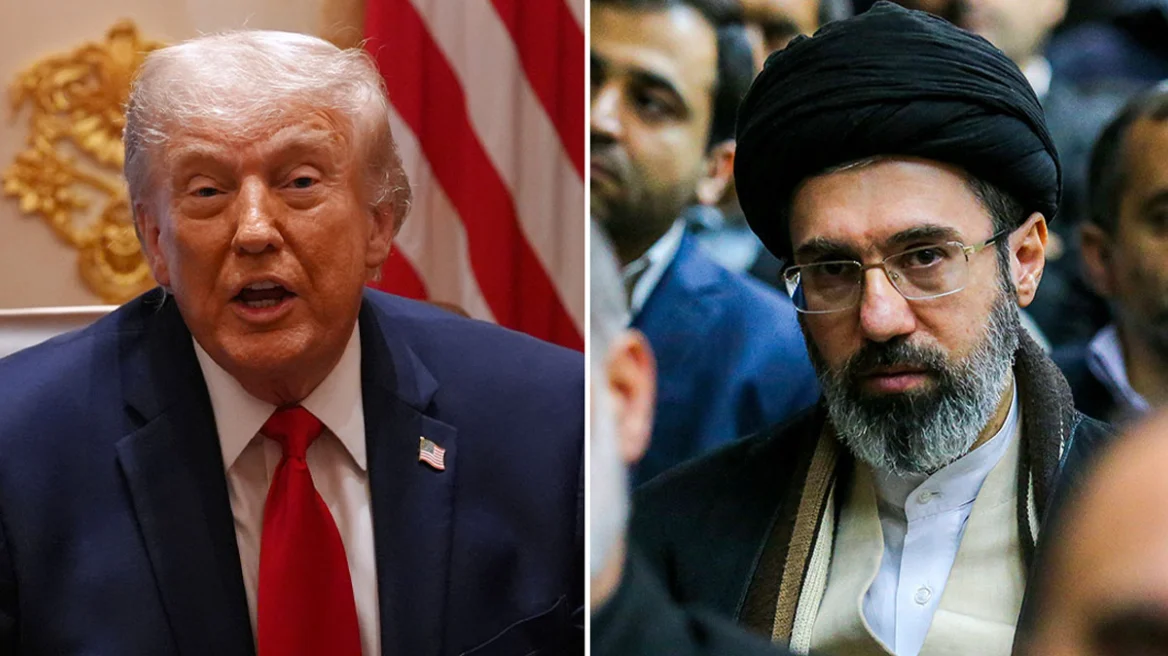
The possibility of reaching a peace agreement between the United States and Iran depends on the release of $24 billion in frozen Iranian assets, according to Mohsen Rezaei, a military adviser to Ayatollah Mojtaba Khamenei.
Speaking to CNN, the Iranian official warned that a resumption of U.S. military operations could lead to a broader regional conflict, while suggesting that Tehran is prepared to escalate its military actions beyond the Persian Gulf.
“The negotiations are at a deadlock, and Trump must break it,” Rezaei told the American network. “The ball is in Trump’s court,” he added, describing the current state of talks between Washington and Tehran.
According to information cited by CNN, Iran has requested the release of $12 billion immediately after the signing of an interim agreement with the United States, and another $12 billion at a later stage of the process.
For their part, U.S. officials have expressed concerns that releasing the funds at this stage could deprive Washington of a significant negotiating tool in dealing with Tehran.
In a rare public statement, Rezaei revealed aspects of the thinking prevailing in Tehran regarding the country’s post-war future, the role of the Strait of Hormuz, and how Iran might respond to any new attack.
$24 Billion as a “Test of Trust”
Rezaei described the release of the frozen assets as a confidence-building measure between the two countries.
“If Trump wants to reach an agreement with Iran, these $24 billion represent a test of trust that Iran wants to have with Trump. It is a test America must pass, and then the path will open,” he said, effectively placing the responsibility on the U.S. president.
He argued that the funds belong solely to Iran.
“This is our money, not American money,” he stated.
The Iranian official also issued a clear warning to Washington in the event it decides to resume military operations. He said Tehran is prepared to extend the conflict beyond the Persian Gulf, potentially expanding military operations from the Strait of Hormuz to the Indian Ocean, the Bab el-Mandeb Strait, the Red Sea, and the Mediterranean.
“We will give the war a new dimension by attacking additional American bases beyond those we have targeted so far,” he said, although he assessed that “the likelihood of war is small.”
When asked about Mojtaba Khamenei’s health and his role in decision-making, Rezaei declined to answer. However, he categorically dismissed the possibility of a meeting between Iran’s supreme leader and Donald Trump.
“That is not going to happen. We are still in the first stage of negotiations, and Mr. Trump has led the talks into a deadlock. It will not happen,” he said.
Rezaei reiterated Tehran’s position that Iran and Oman possess sovereign rights over the Strait of Hormuz and argued that the two countries would jointly manage the waterway. At the same time, he avoided describing any potential charges on ships passing through the strait as “tolls,” saying they would instead be “maintenance fees,” since Iran cannot bear the costs of managing the area on its own.
He also expressed doubts about the durability of any potential nuclear agreement with Donald Trump, citing the U.S. withdrawal from the 2015 agreement as well as what he described as Trump’s strategy of “ambiguity” in negotiations.
Should the talks fail, he claimed that Iran is prepared even for a possible American invasion.
“Then the world will understand Iran’s true capabilities, because our ground forces are many times stronger than our missile forces,” he argued.
Rezaei described the recent war as Iran’s first real victory against its adversaries in the 47-year history of the Islamic Republic.
“It is the first time Iran has emerged victorious from wars, whereas in previous wars it had always been defeated,” he claimed.
Ask me anything
Explore related questions




