





The way we knew football is preparing to change forever. From today, June 11, until July 19, the eyes of the entire planet will be turned toward North and Central America for the FIFA World Cup. A tournament that has already broken records even before the first whistle of kickoff is heard.
For the first time, three countries—the USA, Canada, and Mexico—join forces in a massive co-hosting arrangement, in which 48 teams will participate (roughly one quarter of FIFA’s active member associations).
From historic football “temples” such as the Azteca Stadium in Mexico, where today’s opening match Mexico – South Africa will take place, to the state-of-the-art stadiums of the USA and Canada, the geographical and cultural diversity of the tournament will be unprecedented, and for 40 days the entire planet will move to the rhythm of the beautiful game.
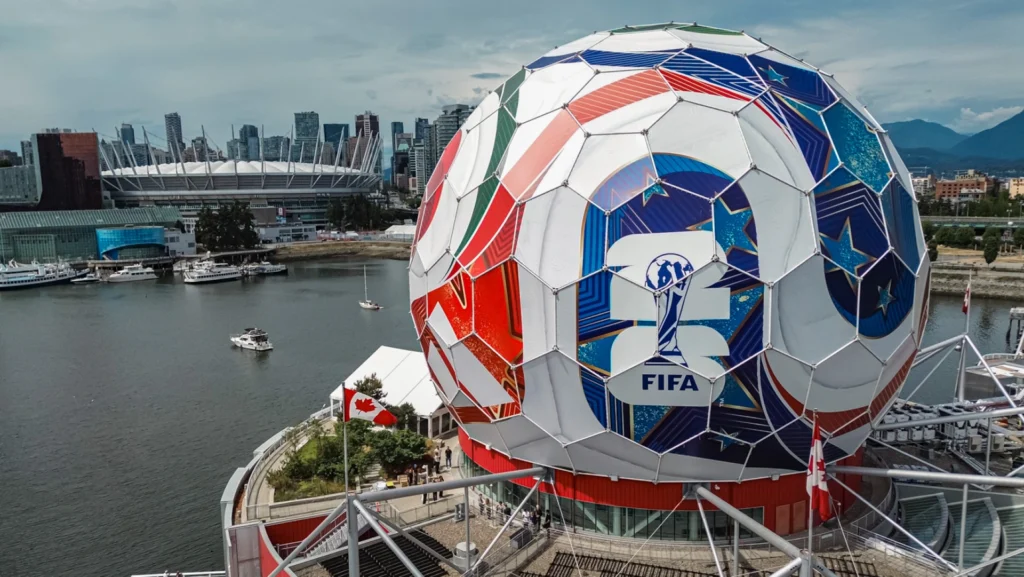
The World Cup, the planet’s greatest football celebration, returns to North America after 32 years. Where everything is… bigger, the tournament itself could not escape this rule. This assessment does not concern purely sporting matters, but the event itself, as a second consecutive edition of the World Cup is preparing to become one of the biggest milestones in the history of global football.
In 2022 in Qatar, we had the first country from the Arab Gulf to host the tournament, with kickoff taking place on November 20 and the final on December 18 in the first-ever winter World Cup…
Three and a half years later, the World Cup returns to its traditional dates, but 28 years after the “revolution” of increasing participating teams in the final stage from 24 to 32 (first time in 1998 in France), FIFA and its president Gianni Infantino have made a striking change, as this year’s edition will feature 48 teams! The second historic change is the fact that the 23rd World Cup is also the first to be co-hosted by three countries.
After 2002 and the “joint venture” of South Korea and Japan, FIFA awarded the World Cup to the USA, Mexico, and Canada, spreading the tournament across all of North America. In the autumn of 2022, one of the dominant issues on the road to the Qatar World Cup was whether that edition would mark the “farewell” of Lionel Messi and Cristiano Ronaldo from their national teams.
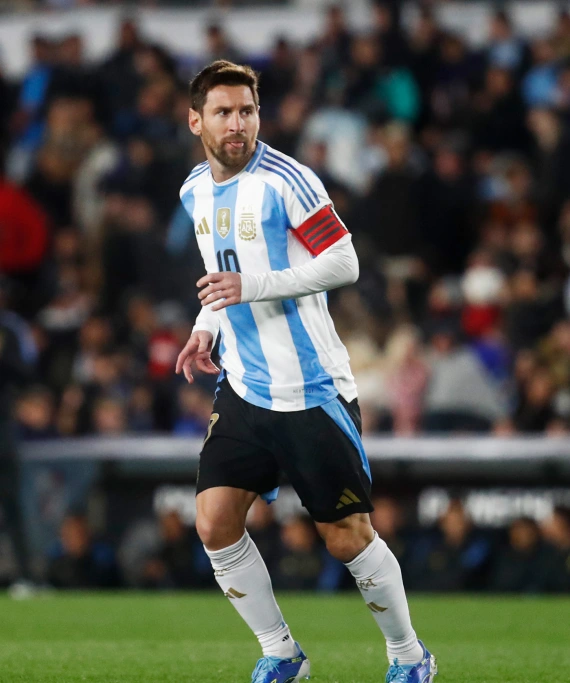
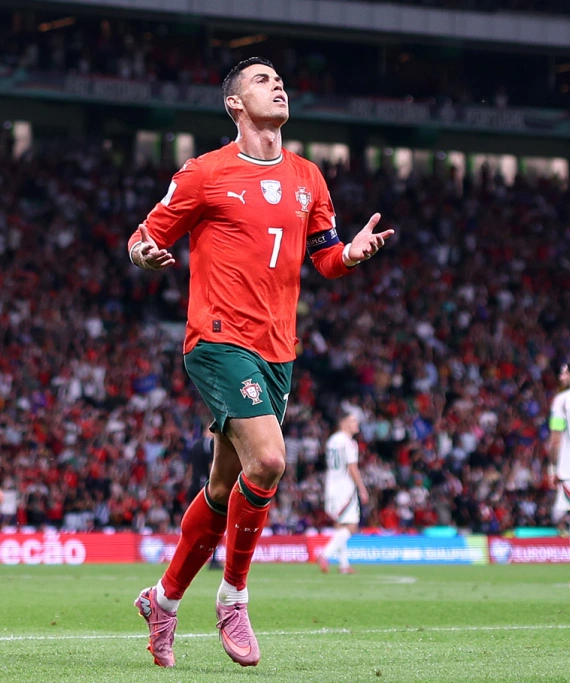
“I want to play in the Qatar World Cup and the 2024 European Championship,” CR7 said on 22/9/2022, while “this will definitely be my last,” said “La Pulga” on 6/10/2022. Four years later, the number 7 shirt of Portugal still has Ronaldo’s name on the back, and the number 10 shirt of Argentina still carries Messi’s name. The only difference? The latter will appear on the pitches of North America as the reigning world champion, having lifted the coveted trophy in Qatar, while his Portuguese “frenemy” dreams that in the New World he can also reach the only trophy missing from his collection.
Both will reach six (6) appearances in World Cup finals tournaments. However, the truth is that for the first time Ronaldo and Messi do not monopolize the spotlight.
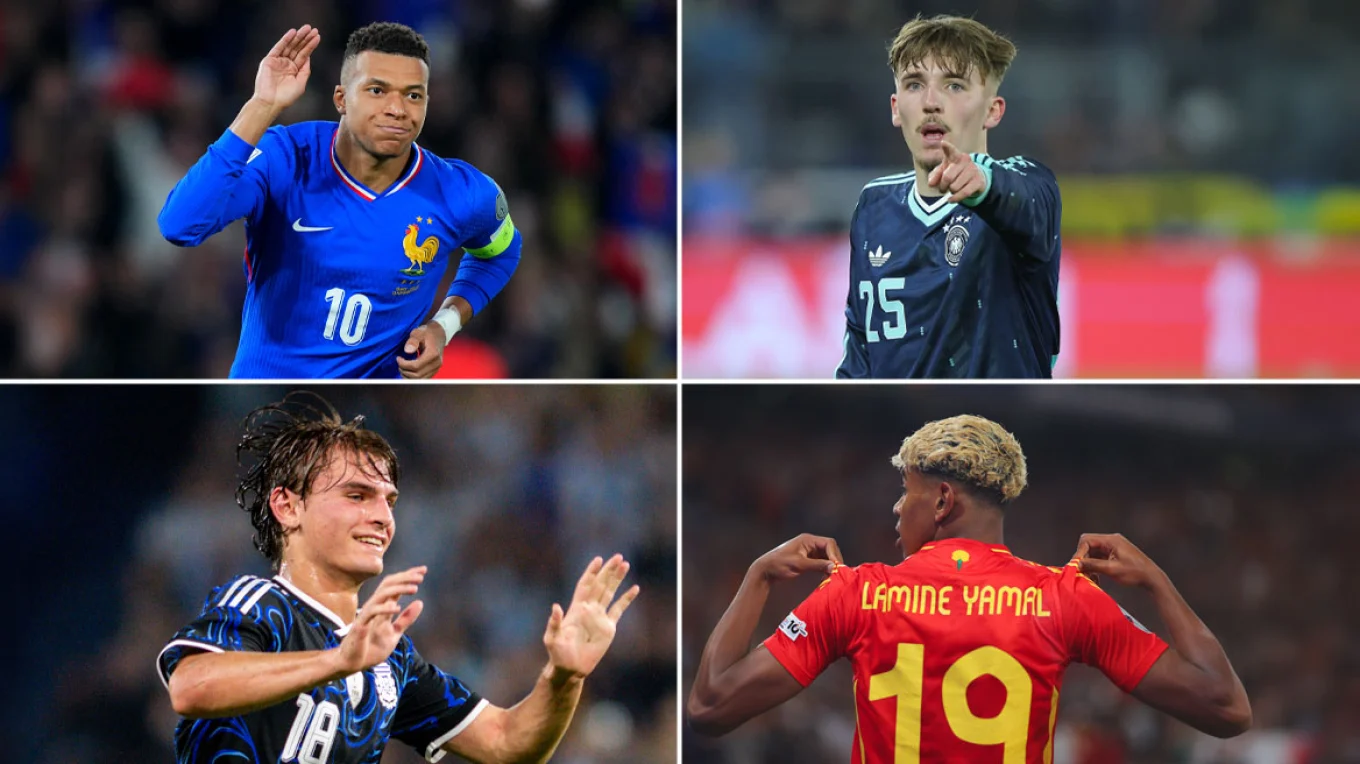
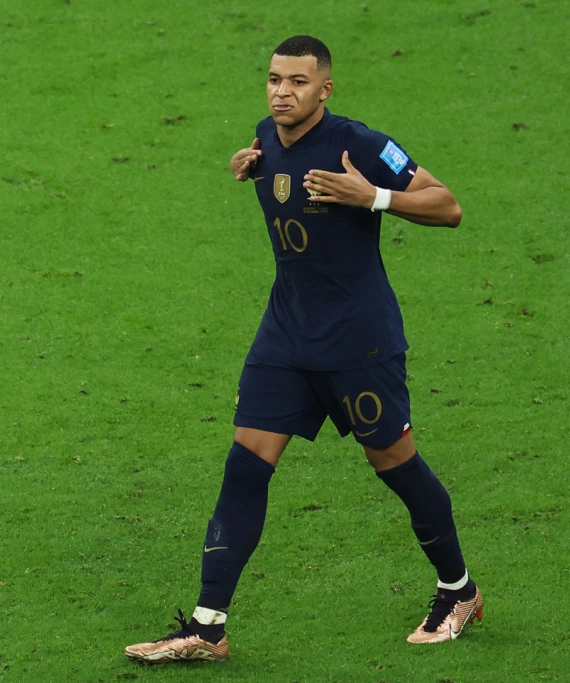
The baton passes to the new generation of protagonists, although many have already proven their worth. For example, Kylian Mbappé and Vinícius, who are seeking redemption at the World Cup after the disastrous season they experienced at Real Madrid, something reflected in the fact that the Spanish national team will, for the first time in history, go to a World Cup without a single Real Madrid player in its squad!

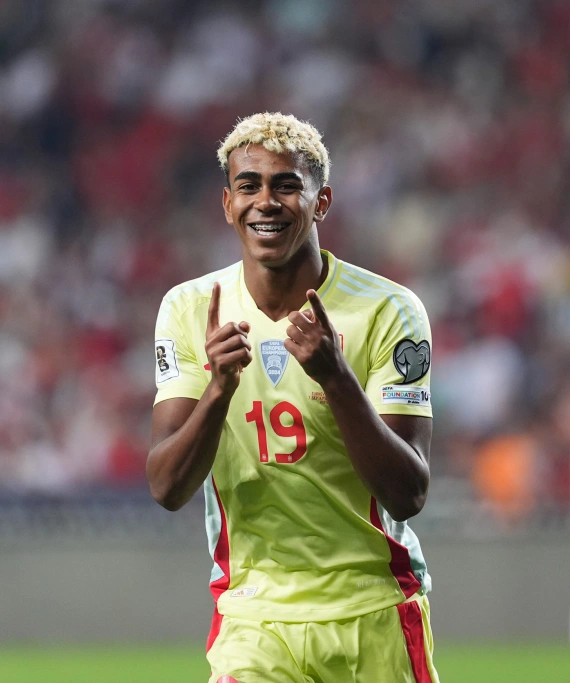
Standing out there is the name of Lamine Yamal, who in 2024 was crowned European champion with Spain and will now make his first appearance in a World Cup. In general, the tournament is the best showcase for the stars who will shine in the coming years on the global football stage.
Of course, this does not apply to players such as Erling Haaland (Norway) and Endrick (Brazil), who are included in the list simply because they will participate in a World Cup for the first time.

We are also eagerly waiting to see from football’s “nouvelle vague” Nico Paz (the Argentine magician of Como who, by all indications, will continue at Real Madrid), Kenan Yıldız (the Turkish midfielder of Juventus who is shining), the 18-year-old Lennart Karl (the Bayern Munich prodigy), the 20-year-old Kobbie Mainoo, and his peers Warren Zaïre-Emery and Désiré Doué (two consecutive European champions with Paris Saint-Germain).
In total, the 2026 World Cup will include 1,248 footballers (each squad has 26 players), competing for 449 clubs across 71 different countries! Manchester City has the largest representation, with 19 players set to feature for 12 different national teams, while the Premier League has the highest representation of any league, as 154 players from English top-flight clubs will take part in the World Cup.
To return to the original topic of the “veterans” Messi and Ronaldo, beyond reaching six World Cup appearances, it is considered certain that they will also break several other records.
Since 2022, Messi has been first in all-time World Cup appearances (26) and will extend that record, with Ronaldo on 22 and needing at least four matches to surpass German Lothar Matthäus in order to move into second place. Messi, furthermore, with two Argentina wins, will overtake Miroslav Klose in the relevant list (the former striker has 17 and the Argentine has 16).
Cristiano, if he scores, will become the second-oldest goalscorer in World Cup history, as he is 41 years and 5 months old, with Cameroon’s Roger Milla holding the record since 1994 (he scored against Russia at 42 years and 39 days). However, the moment he scores, he will also become the only player ever to have scored in six different World Cups.
Favorites – Underdogs
Both specialized data analysis companies and betting firms have already released their predictions.
France appears as the big favorite (offered at odds of 5.5), and after that, with odds ranging from 6.5 to 8, follow Brazil, Spain, England, and Argentina, with Germany quite a bit further behind (11). However, in the last two tournaments there were two major surprises, with Croatia in 2018 reaching the final and Morocco in 2022 reaching the semi-finals.
When FIFA introduced VAR (Video Assistant Referee) into our lives at the 2018 World Cup in Russia, many were skeptical about the use of technology in football. Many still hold the same reservations, but the reality is that eight years later the relationship between football and technology has moved not just to another level, but to a point where the upcoming World Cup is being described as the “first AI Football World Cup.”
Exaggerated? We don’t think so, and reading the following lines will make it clear why.
Until recently, World Cup balls were discussed mainly for their aesthetics and manufacturing materials. Now the focus has shifted to what they contain inside, with the Trionda being a new technological marvel. The ball’s name is a play on words, based on Spanish: “Tri” (three) refers to the three host nations, and “Onda” (wave) refers to the energy of the crowd. But in reality, the Trionda is yet another tool for referees.
Made from only four heat-bonded panels (older balls had between 20 and 32), giving it perfect aerodynamics, it contains inside a 500 Hz motion sensor, meaning the ball literally “charges” before the match! The sensor sends real-time data to VAR 500 times per second, detecting the exact millisecond a player touches the ball, eliminating errors in offside decisions.
Assistant referees will be alerted in real time if a player is offside by more than 10 centimeters (reducing the threshold from the previous 50 cm), allowing them to raise the flag immediately. However, technological innovations do not stop there, as for each of the 1,248 players in the tournament there will be a three-dimensional digital avatar created through special scanning chambers before matches begin. Using 16 tracking cameras in each stadium and a special chip inside the ball, the system creates a real-time three-dimensional digital representation (Digital Twin) of the match. This technology allows VAR to immediately review difficult decisions. Finally, there will be a much clearer view of what referees see during the match (referee view).
For the first time, cameras integrated into referees’ uniforms will use advanced image stabilization through Artificial Intelligence. Broadcasters will have access to this footage, allowing fans at home to see exactly what the referee sees during crucial decisions.
Old and new stars
- The new world champion will be crowned on the East Coast at MetLife Stadium in New Jersey (New York).
- The Spanish national team will, for the first time in its history, go to a World Cup without a single Real Madrid player in its squad.
- Lamine Yamal, who in 2024 was crowned European champion with Spain, will now make his first World Cup appearance.
- Since 2022, Messi leads in all-time World Cup appearances (26), with Ronaldo on 22 and needing at least four matches to surpass German Lothar Matthäus to move into second place.
- Both Messi and Ronaldo will reach six World Cup appearances.
- Messi, furthermore, with two Argentina wins will surpass Klose in the relevant list (the former striker has 17 and the Argentine has 16).
- If Ronaldo scores, he will become the second-oldest goalscorer. First is Roger Milla.
- If Ronaldo scores, he will also become the only player to score in six different World Cups.
- In total, 1,248 players will participate in the 2026 World Cup (26-man squads), playing across 449 clubs in 71 different countries!
- Manchester City has the largest representation, with 19 players set to feature for 12 different national teams.
- The Premier League has the highest representation of any league, with 154 players from English top-flight clubs participating.
- France is the big favorite (odds 5.5), followed by Brazil, Spain, England, Argentina (6.5–8), with Germany further behind (11).
Ask me anything
Explore related questions




