





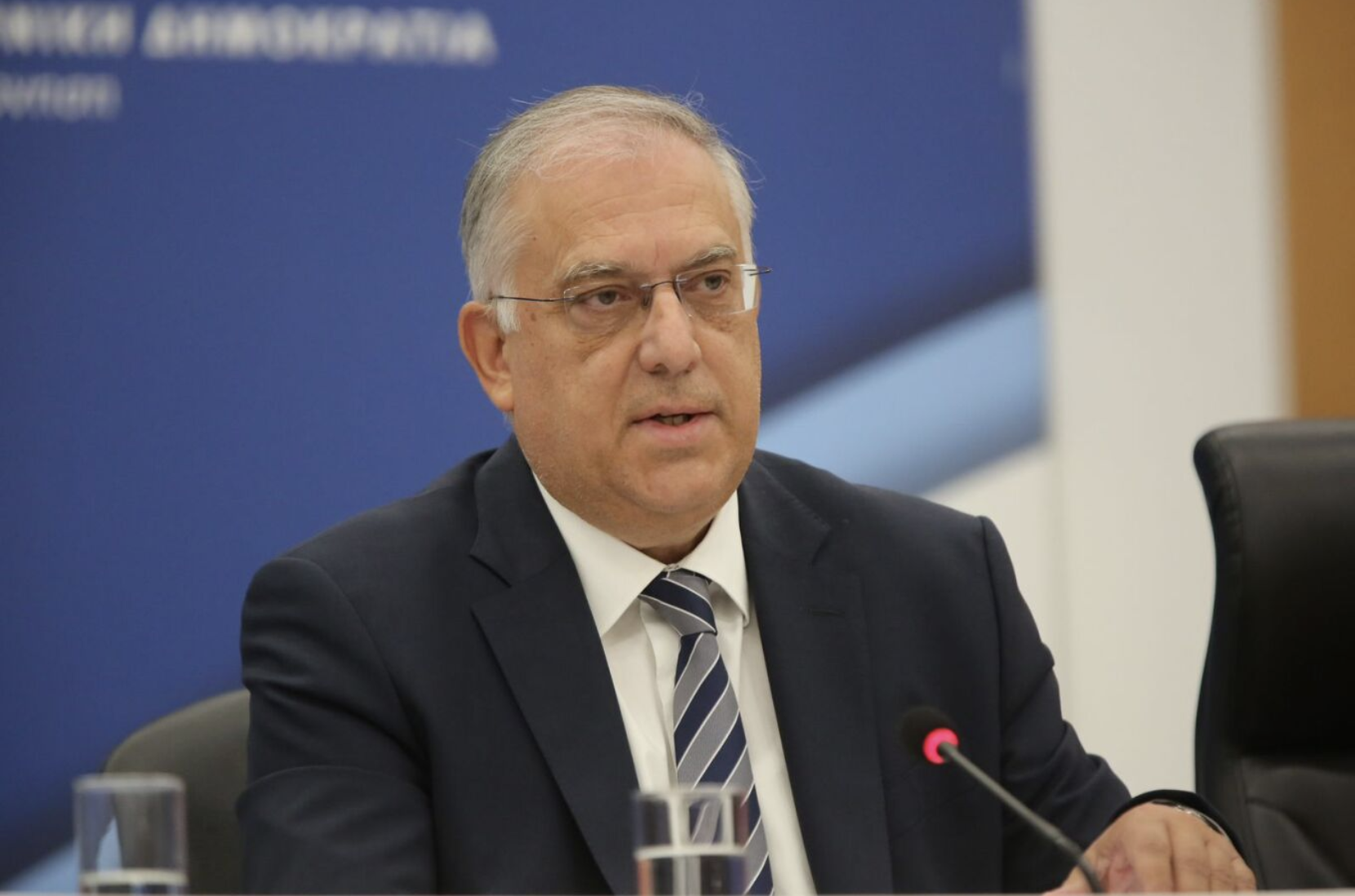
Development Minister Takis Theodorikakos said that the prices of around 2,000 products have fallen by an average of 6% thanks to the government’s profit cap measure, adding that prices will remain frozen throughout the two summer months.
Speaking to SKAI TV, Theodorikakos discussed the agreement reached with the food industry and supermarket chains to maintain stable prices during July and August, before implementing significant price reductions on essential goods from September 1.
“There is a shared understanding with the business community that for approximately 2,000 products, whose prices have already fallen by an average of 6% due to the price cap, prices will remain at the same level throughout the two summer months. There will be a freeze on prices for all products during this period,” he said.
The measure covers food products, soft drinks, and other basic consumer goods.
The minister also announced that, in cooperation with the newly established Independent Authority, businesses will create a basket of essential household products that will see substantial price cuts from September 1, lasting for the following three months.
“This is an important contribution to protecting and supporting consumers,” he said.
Businesses urged to reduce profit margins
Theodorikakos argued that businesses have a responsibility to lower their average profit margins for the benefit of households.
“In this way, citizens will see that we are making continuous interventions to tackle the cost-of-living crisis affecting many families,” he said.
Energy costs expected to fall
Referring to lower energy prices following the end of the conflict in the Middle East, the minister said the decline must soon be reflected throughout the market.
“There may be slight turbulence for a few days after the diesel subsidy ends, but within one to two weeks prices will return to the levels seen before the war began, because international oil prices have already fallen back to those levels,” he said.
More than €1 billion through the Development Law
Theodorikakos said that July will see a wave of new investment support schemes under Greece’s Development Law.
Three programs are already underway, with three more to be launched covering:
- agri-food,
- social entrepreneurship,
- and investments in the defense industry.
According to the minister, the schemes will provide more than €1 billion in financial support and create thousands of new jobs.
Raising incomes remains the priority
The minister said improving citizens’ incomes is a government-wide objective, stressing that attracting productive investment, creating jobs and boosting innovation will lead to higher wages and encourage young people to remain in Greece.
He also highlighted government measures including tax cuts and housing support for renters.
Theodorikakos noted that unemployment has fallen from 18% to 8% since 2019, with 560,000 people finding work during that period, while investment and exports have also increased.
“Higher wages are the only lasting solution”
“The only way to address the cost of living is through wage increases,” he said.
“Prices cannot be reduced through decrees or ministerial decisions. Those ideas remind us of the false promises made in 2015, which nearly pushed Greece out of the eurozone. That was the time when people claimed the bailout programs would be abolished with one law and one article, only to end up adding billions of euros in costs for the Greek people.”
Elections at the end of the government’s term
Theodorikakos reiterated that national elections will be held toward the end of the government’s four-year term, in line with Prime Minister Kyriakos Mitsotakis’s position.
“We remain present in society and close to citizens because we are a people’s party. We must serve the people, listen to criticism, improve, and continue implementing our plan for Greece in 2030,” he said.
He also argued that the prolonged pre-election period has created “a toxic climate that does not benefit the Greek economy,” adding that “a basic level of political stability is necessary.”
Polls will not reflect the final election result
Commenting on opinion polls, the minister said they are unlikely to accurately predict the election outcome.
“This is not a criticism of polling companies,” he said. “No one expected New Democracy to win an outright majority in 2023. When the time comes, citizens will be faced with the real choices about their future.”
He concluded by saying that New Democracy can achieve even more over the next four years because it has delivered on its promises, while accusing the opposition of lacking credibility.
Ask me anything
Explore related questions




