





Scientists and public health authorities in Greece are on heightened alert over West Nile virus infections, as, according to the European Centre for Disease Prevention and Control (ECDC), Greece and Italy are the two countries experiencing the widest spread of the virus in Europe.
Speaking to ERT, Professor of Epidemiology and Preventive Medicine Theodora Psaltopoulou noted that Greece has so far recorded nine deaths, “the same number we had at the end of October and the beginning of November in 2025, whereas we had never reached this figure in July.”
“Unfortunately, we will end up with considerably more deaths,” Psaltopoulou added.
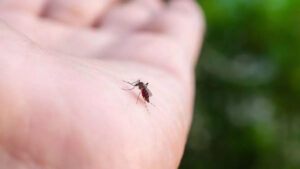
Asked why the virus is spreading, she explained that “mild winters and prolonged summers contribute to the spread of mosquitoes, including infected ones,” adding that “we are now seeing cases in Germany as well, which means mosquitoes have expanded beyond southern Europe into northern Europe.”
She also reminded viewers that “people aged 60 and over, especially those with underlying health conditions, are at greater risk. All of the deaths observed involved people over 65 because this meningoencephalitis mainly affects these individuals severely.”
Regarding symptoms, she explained: “If someone around us who is 70 years old develops a fever, confusion, loss of consciousness or, even worse, seizures, they should be taken to the hospital. There is no specific vaccine, there is no specific antiviral treatment, and the virus is not transmitted from person to person.”
According to Psaltopoulou, “between 1 in 100 and 1 in 150 people infected with West Nile virus develop severe complications, and of those, 5% die even if they receive hospital treatment.”
EODY: 45 new West Nile virus infections in the past week
A significant increase in West Nile virus infections has been recorded in Greece, with 45 new locally acquired cases reported over the past week, bringing the total number of cases to 110 since the start of the 2026 transmission season through August 12.
Of these, 81 patients developed severe central nervous system disease, while nine deaths have been recorded, all involving patients over the age of 65. This underscores the continued circulation of the virus and the need for heightened vigilance, particularly among vulnerable population groups.
According to the National Public Health Organization (EODY), West Nile virus infections have been recorded and investigated in 39 municipalities across 14 regional units in the regions of Attica, Thessaly, Central Macedonia and the Peloponnese, specifically in the regional units of:
- East Attica
- North Athens
- West Attica
- Central Athens
- South Athens
- Piraeus
- Karditsa
- Larissa
- Trikala
- Imathia
- Thessaloniki
- Pella
- Serres
- Laconia
Additional cases are expected in the coming weeks, both in these areas and in new locations. According to EODY, Attica is experiencing particularly intense virus circulation this year, with an elevated number of cases in specific municipalities and regional units.
Municipalities where human cases have been recorded
- Acharnes – 3
- Vari–Voula–Vouliagmeni – 7
- Koropi – 3
- Lavreotiki – 2
- Marathon – 2
- Markopoulo Mesogaias – 11
- Paiania – 1
- Pallini – 5
- Rafina–Pikermi – 2
- Saronikos – 1
- Spata–Artemida – 13
- Agia Paraskevi – 7
- Amarousio – 1
- Vrilissia – 1
- Lykovrysi–Pefki – 1
- Nea Ionia – 1
- Papagou–Cholargos – 1
- Penteli – 1
- Chalandri – 3
- Fyli – 1
- City of Athens – 3
- Ilioupoli – 1
- Alimos – 1
- Glyfada – 3
- Elliniko–Argyroupoli – 1
- Piraeus – 1
- Palamas – 1
- Sofades – 1
- Kileler – 2
- Larissa – 7
- Tempi – 2
- Trikala – 1
- Veria – 2
- Ampelokipoi–Menemeni – 1
- Chalkidona – 1
- Pella – 6
- Skydra – 2
- Nea Zichni – 1
- Evrotas – 1
- Under investigation – 5
Municipalities classified as “high risk”
In addition to the municipalities where human cases have already been recorded during the 2026 transmission season, EODY has designated the following municipalities as high risk, although no human infections have yet been confirmed there this year:
- Kifisia
- Iraklio
- Filothei–Psychiko
- Metamorfosi (North Athens Regional Unit)
- Kallithea
- Nea Smyrni (South Athens Regional Unit)
- Nea Philadelphia–Nea Chalkidona
- Dafni–Ymittos (Central Athens Regional Unit)
- Amphipolis (Serres Regional Unit)
- Heroic City of Naousa (Imathia Regional Unit)
- Delta Municipality (Thessaloniki Metropolitan Unit)
According to EODY, these municipalities have been designated high risk because they combine factors associated with a high likelihood of human transmission, including proximity to affected municipalities, geographical characteristics, and current and historical epidemiological data.
Because the epidemiology of West Nile virus is influenced by many factors, EODY stresses that it is not possible to predict with certainty which areas will experience virus circulation or human infections during any given transmission season. The agency recommends that people throughout Greece follow personal mosquito-protection measures for the entire mosquito season.
Ask me anything
Explore related questions




