





Monday night in Monaco. A bag is left outside a luxury residence near the French border. Moments later, it explodes.
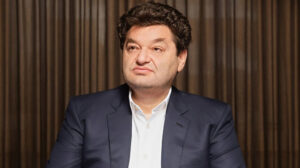
Three people are injured: Ukrainian-born businessman Vadym Iermolaiev, his 46-year-old partner Anna Nasobina and her 13-year-old son. Monaco authorities are treating the attack not as terrorism, but as attempted murder. The principality’s Minister of State, Christophe Mirmand, made clear that the working assumption is an assassination attempt.
The device had been placed to kill or seriously injure anyone near the entrance at the moment of the blast. The bag reportedly contained metal fragments that were propelled across the area when the explosive went off. Witnesses described the aftermath as resembling a war zone. Nasobina was seriously injured, while the man caught on camera leaving the bag and running from the scene is believed to have fled towards France. His identity has not been made public.
At first glance, this looked like a violent episode in Monaco’s normally protected world of money, discretion and high security. But the trail quickly widened: from Monaco to Cyprus, from Cyprus to Estonia, and from Estonia back to the murky business of fraudulent call centres that allegedly made tens of millions of euros.
The “Cypriot” millionaire
Vadym Iermolaiev is not an unknown businessman. A real-estate magnate from Dnipro, he rose to prominence in the years after the collapse of the Soviet Union and became one of Ukraine’s wealthiest entrepreneurs. He is the founder of the Alef Group, a business empire with interests in property, agriculture and alcohol production.
After Russia’s invasion of Ukraine, Iermolaiev renounced his Ukrainian citizenship and became a Cypriot citizen. He later explained the decision to Forbes Ukraine by saying he wanted “international protection”, arguing that Ukraine’s judicial and tax systems were flawed.
What remained less clear was what, exactly, he felt he needed protection from.
In 2023, Kyiv imposed sanctions on Iermolaiev over alleged business activity in Russian-occupied Crimea after the peninsula’s illegal annexation by Moscow in 2014. Ukrainian authorities accused him of continuing alcohol-related business in Crimea and of paying taxes to the Russian state. He has denied supporting Russia, insisting that he lost major assets in occupied territories, condemning the invasion and claiming to have supported the Ukrainian army financially.
For Cyprus, however, the question is different. How did a businessman with this level of exposure obtain a Cypriot passport through the island’s controversial citizenship-by-investment programme, and why was that status not later reassessed?
Cyprus as a gateway
Iermolaiev’s Cypriot passport gave him something extremely valuable: EU citizenship, free movement across Europe, easier access to bank accounts and the ability to structure companies inside the bloc.
At the Cyprus Registrar of Companies, a company named Vespano Ltd has been registered in Limassol since 2019, with Vadym Iermolaiev listed as a director. The company is one more detail in a wider Cypriot footprint that has drawn renewed attention since the Monaco bombing.
There is also a family dimension. Iermolaiev’s 21-year-old daughter Sofia, from his first marriage, reportedly divides her time between Limassol and London. Ukrainian media have reported that some assets were transferred to her as sanctions pressure increased.
But the more explosive Cypriot link concerns his son, Artur.
The arrest at Larnaca airport
On December 4, 2025, Cypriot authorities arrested Artur Iermolaiev, the 35-year-old son of Vadym Iermolaiev and a former president of the Ukrainian Esports Federation, as he was preparing to fly to Dubai from Larnaca airport.
The arrest was made on the basis of an Interpol warrant. Estonia wanted him extradited over a large-scale financial fraud case.
Artur was not merely the son of a wealthy businessman. According to the Estonian indictment, he was one of the organisers of a network of fraudulent call centres operating from Ukrainian cities, including Kyiv and Dnipro, from 2017 onwards. Together with three accomplices, he allegedly helped build a system that targeted people across Europe and beyond with fake investment opportunities.
The operation was presented under the name “Cosmo”. Its employees allegedly called victims pretending to be investment advisers or cryptocurrency specialists. They persuaded people to deposit savings into online platforms that showed fake profits. Once the victims believed they were making money, they were pressured to invest more. Eventually, the accounts were emptied and the callers disappeared.
The victims were citizens of Estonia, Finland, Germany, Austria, Sweden, Lithuania, Kazakhstan, Turkey and other countries. Between 2019 and 2022, the network allegedly generated nearly €100 million, of which €5.4 million came from Estonian residents.
The €8.5 million deal
On April 30, 2026, Harju County Court in Estonia found Artur Iermolaiev guilty, under a plea agreement, of establishing and leading a criminal organisation specialising in telephone fraud.
He received a five-year prison sentence. But he had already spent four months and 26 days in pre-trial detention, and the remainder of the sentence was suspended on the condition that he commit no further offence during a five-year probation period. He was released immediately.
The court also ordered his deportation from Estonia and imposed a ten-year ban on entering the country. The most controversial part of the agreement was the payment of €8.5 million to the Estonian state. Of that sum, €5.4 million was intended to compensate Estonian victims, with the remaining amount going to the state budget.
Estonian prosecutors defended the deal as a practical way to ensure victims were compensated rather than waiting through a long trial with no guarantee that stolen money would be recovered.
Yet the optics were stark. A man convicted of leading a multimillion-euro fraud operation was able to walk free after paying €8.5 million. For critics, the case looked less like punishment and more like an expensive exit ticket.
The buildings and the father’s business empire
The fraud case becomes even more sensitive because several buildings allegedly used by the call-centre network — including sites known as “Enigma”, “Prism”, “Bosphorus” and “Cascade Plaza” — have been linked in reports to the business portfolio of Alef Group, founded by Vadym Iermolaiev.
That does not prove the father’s involvement in the fraud network. Estonian authorities convicted Artur, not Vadym. But it does place the family’s business geography uncomfortably close to the alleged machinery of the scam.
And that is why the Monaco bombing has prompted renewed scrutiny of the family’s wider network.
The Estonian bank that lost its licence
The Iermolaiev family also has a banking history in Estonia.
Vadym Iermolaiev became chairman of the supervisory board of Versobank AS in 2017. His son Artur joined the same board in 2018. Versobank, a small Estonian bank with Ukrainian investors, lost its licence that same year after the European Central Bank, acting on a recommendation from Estonia’s financial supervisor, found serious and long-running breaches of anti-money-laundering and counter-terrorist financing rules.
That history adds another layer to the central question: how did Cyprus assess risk when granting citizenship, and was that assessment ever revisited as the family’s name appeared in banking, sanctions and fraud-related investigations?
From Larnaca to Monaco
No authority has confirmed that the Monaco bombing was linked to Artur Iermolaiev’s conviction in Estonia. The investigation remains open, and the perpetrator has not been publicly identified.
But investigators are expected to examine whether the younger Iermolaiev’s plea deal, the €8.5 million payment and any movement of family assets created enemies or financial disputes inside a wider network of fraud, intermediaries and organised crime.
In that world, money rarely disappears quietly. If millions are moved, frozen, paid to prosecutors or redirected to relatives, someone may decide that a message has to be sent.
That is the theory now hovering over the Monaco attack: that the bomb may have been less about politics than money, revenge and the collapse of trust inside a criminal economy.
Cyprus in the middle again
For Cyprus, this is not a distant story.
The island appears at several key points. It granted Vadym Iermolaiev citizenship. It was the place where his son was arrested before being extradited to Estonia. It is also part of the family’s corporate and personal geography, through companies, residences and asset structures.
The questions are therefore specific. What checks were carried out before Iermolaiev was granted Cypriot citizenship? Were his family’s business links in Estonia examined? Was there any reassessment after Ukraine imposed sanctions on him? And why has Cyprus repeatedly found itself connected to wealthy foreign nationals whose affairs later become the subject of international controversy?
Vadym Iermolaiev now lives as a Cypriot citizen. His son avoided further prison time in Estonia after paying €8.5 million. And Monaco is investigating a targeted bombing that has exposed, once again, the fragile line between high finance, offshore citizenship, sanctions, fraud and violence.
Cyprus is back in the spotlight — not for its beaches or sunshine, but as a junction point in a story that begins with call centres in Ukraine, passes through Larnaca airport and an Estonian courtroom, and ends, for now, with a bomb outside a luxury residence in Monaco.
Ask me anything
Explore related questions




