





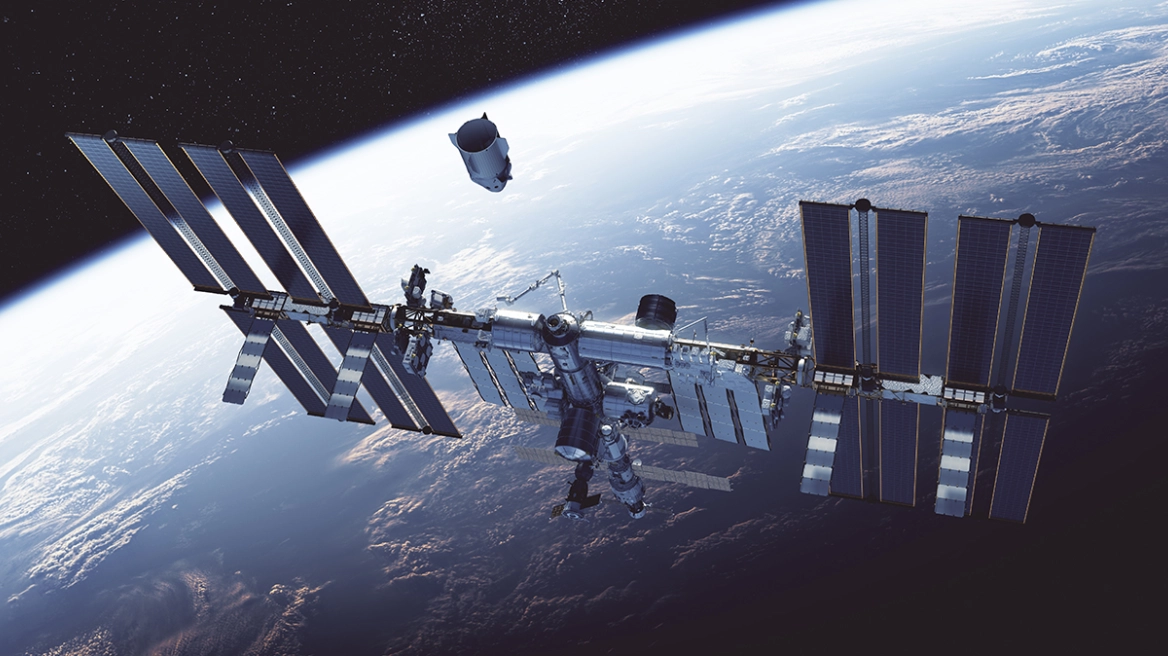
From weather forecasting and electronic banking to navigation, telecommunications, disaster response and environmental protection, satellites have become the invisible guardians of our everyday lives.
Although they orbit hundreds of kilometers above the Earth, their contribution is now essential to services we rely on every day—often without even realising it.
At a time when the climate crisis is increasing the need for fast and reliable information, and artificial intelligence is opening up new possibilities for processing vast amounts of data, space technologies are becoming indispensable tools for civil protection, the economy and national security.
At the same time, Greece is seeking to strengthen its position on Europe’s space map by investing in small satellites, new applications and scientific expertise.
But what does this new era of space technology actually mean for citizens, and what role could Greece play in it?
protothema.gr spoke to Dr Stavros Kolios, Assistant Professor of Satellite Remote Sensing at the Department of Aerospace Science and Technology of the National and Kapodistrian University of Athens (NKUA), who explains how satellites affect our daily lives, what would happen if they suddenly stopped working, and what the future holds for the partnership between space technologies and artificial intelligence.
“Today, satellites have evolved into the space guardians of our modern way of life. They play a vital role and serve as indispensable links in the chain of our everyday activities across the globe. To understand this, we can ask a number of key questions, the answers to which clearly demonstrate why they can be described as the modern guardians of the Earth,” he says.
The satellite technologies behind everyday life
Asked which everyday services depend on satellite technologies without most people realising it, Dr Kolios explains:
“The applications—and particularly the services—we use every day that rely on satellite technologies are literally countless. We make use of them from the moment we wake up until we go to bed, often without knowing it. These include satellite navigation (positioning and timing), satellite communications (the transmission of data, voice and images), satellite-based Earth observation (online applications and monitoring services for land cover, such as the national cadastre, forest maps and more), as well as weather services through apps and websites.”
He continues:
“For example, searching for a destination—such as locating a medical practice or a public authority building in an unfamiliar area—as well as many sporting and outdoor activities, including hiking and cycling, rely on satellite navigation systems such as GPS and Europe’s newer Galileo system.
“At the same time, every electronic banking transaction requires an extremely precise time stamp. That level of accuracy is made possible by the timing signals transmitted by navigation satellites such as GPS and Galileo.
“In addition, modern forms of communication—including satellite television, communications in remote areas, mobile telephony and data transmission via satellite links—depend heavily on satellite telecommunications infrastructure. A typical example is the live broadcast of major sporting events and significant news stories from every corner of the world.
“It is therefore clear that satellite systems quietly but continuously support a vast range of functions that underpin our daily lives.”
Turning to Earth observation, Dr Kolios says satellites have, for decades, provided increasingly high-quality observations, delivering highly accurate information for detecting active wildfires in near real time, precisely mapping burned areas, measuring ground movement—and therefore movement affecting critical infrastructure—with accuracy down to just a few centimetres, identifying areas affected by landslides or flooding, monitoring marine pollution and much more.
“On a secondary, but still immediate level, satellites are also used to map the extent of natural disasters and, consequently, to plan rescue operations and monitor recovery efforts.”
According to the NKUA academic, satellites also make an enormous contribution to monitoring changes in natural habitats, many of which continue to suffer significant degradation despite being protected by legislation and monitored by national and international authorities.
“They also play an important role in the primary sector, particularly agriculture.
“By using data from modern satellites, it is possible, for example, to assess vegetation health, vegetation density and distinguish between different plant species—observations that can be made several times a day with spatial accuracy of just a few square metres.
“It is also possible to estimate key biophysical variables, such as soil moisture and temperature, which directly affect agricultural production and crop yields.
“Satellite data can even be used to optimise the energy consumed during ploughing operations and estimate production levels. In fact, these capabilities can be accessed through software and automated applications without requiring farmers to possess specialist technical knowledge.”
“Shipping is also inextricably linked to telecommunications satellites through satellite navigation, positioning and satellite communications,” he adds.
“All of the activities and sectors mentioned above, where satellite data are continuously and consistently utilised, also depend on the information provided by meteorological satellites, which play a decisive role in protecting society from extreme weather events.
“Today more than ever, meteorological satellites provide exceptionally reliable, timely and irreplaceable weather information, making a significant contribution to protecting citizens, public services, infrastructure, trade and transport, working alongside other forecasting tools, including weather models, ground stations and meteorological radar systems.
“Just consider that the primary meteorological satellite covering Europe and much of Africa can update information every 150 seconds while providing spatial accuracy comparable to the most advanced weather forecasting models. This makes an unparalleled contribution to monitoring dangerous weather systems capable of producing intense rainfall, hailstorms and often lightning activity.
“It is therefore clear that constellations of satellites operating in different orbits and equipped with different instruments now provide information that—whether independently or in combination—quietly but significantly supports citizens’ everyday lives on many different levels.”
What would happen in Greece if satellites stopped working tomorrow?
Asked about the possibility of all satellites suddenly ceasing to operate, Dr Stavros Kolios explains that the consequences would be almost immediate and would affect the country’s critical infrastructure.
“The first effects would be felt almost immediately and would impact Greece’s critical infrastructure.
“Within the first few hours, problems would emerge in telecommunications, satellite navigation, air and maritime transport, weather forecasting, electronic banking transactions and civil protection services.
“Although the question concerns Greece, the same effects would occur almost simultaneously around the world because most satellite systems operate on a global scale.
“For example, if all telecommunications satellites stopped functioning, it would create chaos across almost every form of modern communication, both nationally and internationally.
“Likewise, if meteorological satellites stopped providing data, there would immediately be a dramatic decline in the accuracy of real-time weather monitoring, weather forecasting and warnings of extreme weather events, with direct consequences for the safety of shipping, aviation and other sectors.
“Finally, consider how many everyday applications would simply cease to function as we know them if the vast majority of modern satellite navigation systems stopped operating. The disruption to the transport of people and goods would also be enormous, because all modern navigation systems rely on connections to satellite networks.
“In other words, if every satellite currently in orbit were to cease operating, we would instantly return to a technological environment that, to a large extent, resembled the era before satellite systems came into widespread use during the second half of the 20th century.”
To avoid such situations, organisations and agencies that manage large satellite systems plan operational backups, such as spare satellites and alternative infrastructure, in order to ensure uninterrupted service delivery even in the event of failure or malfunction.
At the same time, many countries are systematically investing in the development of national space capabilities, aiming to reduce their dependence on infrastructure controlled by third countries, strengthen their technological autonomy, and provide specialised services tailored to the specific needs of their citizens and public institutions.
These investments focus primarily on critical sectors such as satellite telecommunications and Earth observation applications.
Within this framework, Greece—leveraging its participation in European space programmes and following the global trend towards national space infrastructure development—is gradually investing in strengthening its capabilities in satellite remote sensing.
This national strategy includes the development of modern small-satellite missions equipped with hyperspectral imaging sensors and synthetic aperture radar (SAR) systems, which can support, among other things, damage assessment following natural disasters, monitoring the vulnerability of forest ecosystems to wildfires, precision agriculture, environmental monitoring, the protection of critical infrastructure, and border surveillance.
The Copernicus European programme
Regarding the European Copernicus programme and what it practically means for an ordinary Greek citizen, Dr Kolios stresses that it is one of the most advanced digital ecosystems of services and data available today.
“The Copernicus programme is one of the most modern and comprehensive digital ecosystems of services, data and applications, with a very significant positive impact on citizens’ daily lives—far more than is generally realised. In simple terms, for a Greek and, by extension, a European citizen, Copernicus means better protection from natural disasters, more efficient management of natural resources, safer transport, and overall improved public services.
More specifically, through Copernicus, data and information from dozens of satellites—such as the Sentinel missions, which have been operating for over a decade to monitor the marine, land and atmospheric environment in high resolution—are combined with other European Space Agency (ESA) satellites. These systems collect vast volumes of data, which are automatically analysed to produce updates, warnings and maps of areas affected by natural disasters.
All this information is made freely available to citizens, contributing to improved safety through better wildfire and flood management, environmental protection via continuous monitoring of forests, seas and the atmosphere, more efficient agriculture through water savings and production optimisation, better public services thanks to reliable geospatial data, and economic opportunities for Greek companies and research institutions developing innovative applications based on open satellite data.
In simple terms, although the average citizen does not ‘see’ satellites, they benefit from the information they provide every day—from warnings about extreme weather and wildfire response to public health protection, environmental service quality and sustainable resource management,” he notes.
Satellites and Civil Protection
Regarding the role of satellites in Civil Protection following major wildfires and floods in recent years, the professor explains that they have now become a core operational tool.
“The role of satellites in Civil Protection after major wildfires and floods is crucial, as they provide an almost immediate and comprehensive picture of the disaster, accompanied by a wide range of detailed and accurate information (such as size, land use types and affected crops).
Unlike ground-based inspections, which are often delayed due to difficult access, damaged infrastructure or dangerous conditions, satellite data can cover large areas even in near real time and can directly support decision-making by competent authorities.
For example, unlike expensive and limited-range equipment such as drones, satellites after a wildfire can precisely identify burned areas, assess burn severity, detect areas where vegetation has been lost, and estimate the risk of secondary phenomena such as erosion, landslides and flash flooding.
In the case of floods, satellite observation enables the immediate mapping of inundated areas—particularly using satellite radar (SAR)—and therefore the identification of settlements, crops and infrastructure affected, as well as supporting evacuation, recovery and compensation operations.
The Copernicus Emergency Management Service (EMS) provides free mapping products for both natural and man-made disasters and can be activated by authorised Civil Protection authorities. Its importance is evident from its activation in Greece, including during the Thessaly floods in September 2023, as well as flooding events in Western Attica and the Evros basin. Similarly, for the Penteli wildfire in 2022, Copernicus mapping products were used primarily to support restoration planning by local authorities, forestry services, regional administrations and municipalities.
Therefore, satellites have now become a key operational tool in modern Civil Protection. They do not replace ground forces, field inspections or local expertise, but significantly enhance them. They provide a unified picture of the situation, help prioritise interventions, reduce uncertainty and enable more evidence-based decision-making. Especially in countries like Greece, where wildfires, heavy rainfall and flooding are increasingly linked to the climate crisis, the use of satellite data is not merely a technological capability but a necessary condition for effective prevention, rapid response and resilient recovery.”
Greece’s participation in European space programmes and future challenges
Regarding Greece’s participation in European space programmes and the main challenges ahead, Dr Kolios notes:
“The European Space Agency (ESA) is an independent intergovernmental organisation in which European states participate through joint scientific, technological and operational programmes. Member states contribute financially to both mandatory and optional programmes, helping to develop new space technologies and missions. Thanks to this cooperation, Europe has developed some of the most important space programmes globally. At the same time, much of the data generated by European space missions—such as the Copernicus satellites—is made freely available under the European Union’s open access policy, allowing its use for educational, research, operational and commercial purposes.
Within this framework, Greece is actively participating in the European space ecosystem, making use of both ESA infrastructure and European Union programmes. At the same time, it is systematically investing in the development of national space capabilities, aiming to reduce dependence on third-country infrastructure in critical sectors, strengthen its technological and strategic autonomy, and provide advanced services to citizens and public authorities.
The national space strategy is implemented through the relevant state bodies, in close cooperation with universities, research centres, public organisations and high-tech companies, while also making use of EU and ESA funding instruments.
In recent years, a highly dynamic ecosystem of companies and research teams has developed in Greece in the space sector. This includes start-ups, SMEs and international companies developing satellite subsystems, electronic instruments, satellite data processing software and integrated space applications.
At the same time, Greece is implementing a programme for small satellite missions equipped with hyperspectral imaging sensors and synthetic aperture radar (SAR) satellites, which are expected to significantly enhance the country’s Earth observation capabilities. Their applications cover a wide range of sectors, including disaster damage assessment, monitoring forest ecosystem vulnerability to wildfires, precision agriculture, natural resource management, environmental protection, and the security of critical infrastructure and border surveillance.
Greek state initiatives to exploit space technologies and develop a dynamic ecosystem of research, innovation and entrepreneurship have intensified significantly in recent years. In this context, the Department of Aerospace Science and Technology was established at the National and Kapodistrian University of Athens, aiming to train highly specialised scientists and strengthen Greece’s presence in one of the most modern and strategically important scientific and technological fields.
Its operation contributes substantially to creating a workforce capable of supporting both research and the development of innovative space applications. At the same time, Greece has implemented its first National Space Plan, marking an important milestone in the development of domestic space capabilities. A central pillar of this effort was the development and operational use of Greek-designed and -built nanosatellites, through collaboration between universities, research centres and high-tech companies, including the Aristotle University of Thessaloniki, Democritus University of Thrace and other academic and research institutions.
A particularly important milestone was the successful development and operation of three ERMIS nanosatellites, with a leading contribution from the Department of Aerospace Science and Technology (NKUA), both in infrastructure and human resources. These satellites demonstrated in practice the ability of the Greek research community and domestic industry to design, build and support advanced space missions.
Building on this experience, the Greek government announced the new national space programme HELLAS-SPACE 2.0, with a total budget of approximately €350 million, funded by the Recovery and Resilience Facility. Its central objective is to harness space technologies for the benefit of society, the economy and public administration. Key priorities include strengthening civil protection against wildfires, floods and other natural disasters, maritime surveillance and support for the Coast Guard, the development of precision agriculture applications, border protection and national security, and the provision of secure telecommunications services to island and remote regions. At the same time, the programme aims to enhance the competitiveness of the Greek aerospace industry, create new high-skilled jobs, and contribute to the transfer of know-how and innovation into the Greek economy.”
Artificial intelligence and satellites
Finally, when asked whether artificial intelligence and satellite technologies can work together and how this synergy could change the way we monitor the planet, Dr Kolios explains that this is one of the most significant developments in modern space science.
“In reality, the collaboration between artificial intelligence (AI) and satellite technologies is one of the most important developments in modern space science and Earth observation.
Modern satellites generate enormous volumes of data every day, which would be practically impossible for humans to process in a timely manner without AI algorithms. Conversely, AI requires large and reliable datasets in order to be trained and produce useful results—something satellites provide on a global scale.
Today, only the satellites of the European Copernicus programme produce tens of terabytes of data every day, while globally commercial and public satellites generate even larger volumes of information.
The AI–satellite synergy translates into tangible benefits such as faster warnings for wildfires and floods—especially with AI algorithms integrated directly on satellites—better protection of human life, more accurate weather forecasts, more efficient agriculture, protection of marine environments, improved natural resource management and smarter Civil Protection services.
In the coming years, a closer integration of artificial intelligence into space missions is expected. Satellites will no longer merely collect images but will act as intelligent sensors that automatically detect events, assess their severity and transmit the most critical information almost in real time to relevant authorities.
The convergence of satellite observation, artificial intelligence and cloud computing is expected to form the core of future environmental monitoring systems, disaster management frameworks and sustainable development strategies.”
Ask me anything
Explore related questions




