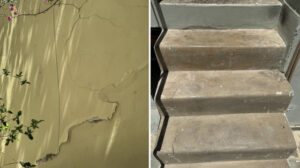
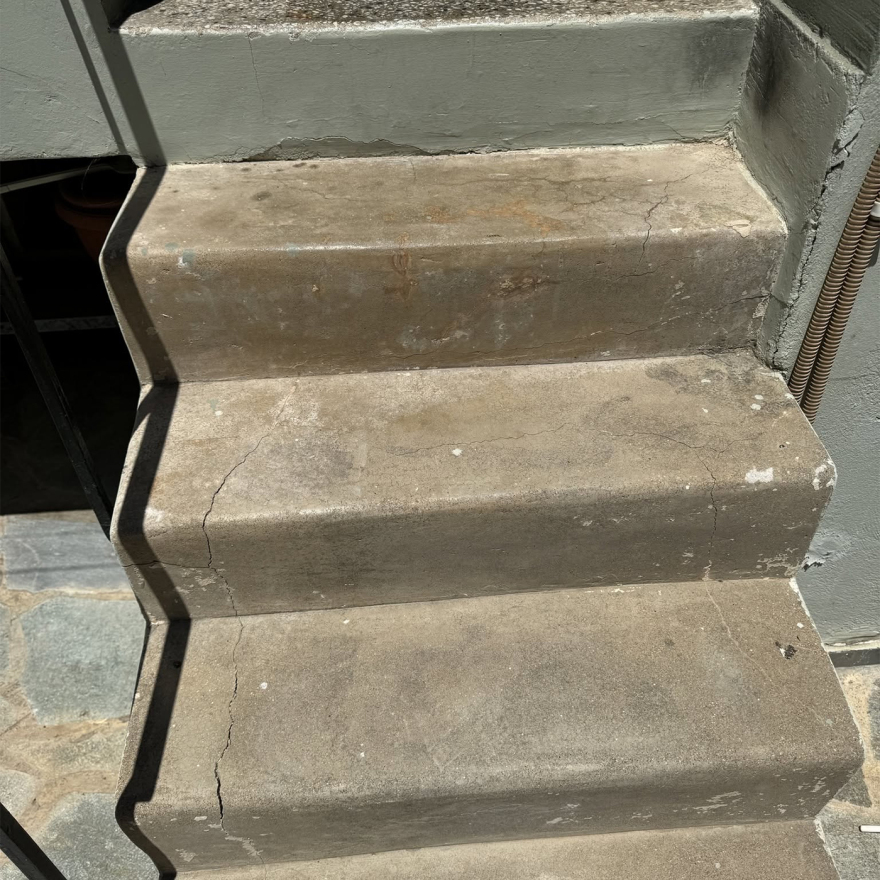
Around 200 homes damaged in Kypseli – “The problems started as soon as the tunnel boring machine began digging,” residents say
An NTUA professor of earthquake-resistant structures said the cracks may be superficial, but stressed that in-depth studies are needed to determine the severity of the problem
Newsroom
Δείτε περισσότερα άρθρα μας στα αποτελέσματα αναζήτησης
Fear and anxiety have gripped residents living around the construction site of Athens Metro Line 4 in Kypseli, after approximately 200 homes were affected by deep cracks in walls, beams, doors, windows and even floor tiles. Residents say some people abandoned their homes as soon as the first signs of damage appeared, while many also report feeling vibrations from the underground works.
The Residents’ Initiative says serious damage has already been recorded in more than 20 apartment buildings. According to the group, the problems began while the tunnel boring machine (TBM) was excavating between Kypseli Square Station and Evangelismos Court (Evangelismon/Evelpidon). The recent collapse of a building in Petralona has further heightened their fears.
“Ground subsidence began in the first week of excavation”
Speaking to the Orange Press Agency, Kypseli resident Alexandros Koutroularis described the situation:
“My home is about 100 metres from Kypseli Square, and since work began on the metro extension, major cracks have appeared throughout the building. Most of them are diagonal and start from the balcony doors and windows. This is mainly due to ground subsidence caused by the excavation.”
According to Koutroularis, the damage appeared almost immediately.
“It started right after the TBM passed underneath, probably in March or April. Within the first week the cracks appeared, and because we don’t know whether the subsidence is still ongoing, new cracks continue to emerge while the existing ones keep widening.”
Residents leaving their homes
The visible deterioration of the buildings has led many residents to move out.
“Some tenants left as soon as the cracks appeared. Every apartment has exactly the same type of damage, from the basement to the top floor. At the moment, around 200 apartments with damage have been officially recorded, stretching diagonally from Kypseli Square to Evias Street, where work has been suspended for the past one and a half to two months.”
“Nobody warned us”
Residents complain they received virtually no information about the underground excavation despite the works taking place just metres beneath their buildings.
According to Koutroularis, engineers inspected the buildings before construction began and installed monitoring sensors.
“Then, without warning us, one night the whole area started shaking. We went down to the second basement and could literally feel it beneath our feet. They must have been excavating around 10 metres deep, while our lowest basement is about eight metres underground. That means they were only two or three metres below us, and nobody even told us when the machine would pass underneath.”
Calls for help met with little response
After the cracks appeared, residents repeatedly contacted the project authorities.
“They came, carried out a quick visual inspection, and told us they could not guarantee the structural stability of the buildings and that we should hire private engineers.”
Residents say a full structural assessment costs around €30,000, making it unaffordable for most building owners.
They also claim project officials have refused to provide monitoring data on ground settlement.
“They say it’s proprietary company information. We asked the city’s planning authority for help, and they confirmed that cracks and damage do exist, but said we would still have to hire private engineers to assess the buildings’ structural safety.”
Financial burden
Residents argue that the cost of independent studies is impossible for many local families.
“Kypseli is home to many pensioners and low-income residents who already struggle to cover their building expenses. We don’t know what will happen even in a small earthquake of two or three magnitude. Right now, these buildings look as though they’ve already been through a major earthquake.”
He also accused the project consortium of refusing to carry out comprehensive geotechnical studies unless compelled to do so.
Damage extends beyond individual apartments
Residents say the shifting ground has affected entire buildings.
“Doors and windows became jammed. The whole ground has moved—you can see it’s uneven if you walk around. There is now separation between adjacent apartment buildings. They no longer fully touch each other.”
Nearby, an old cinema is scheduled for demolition and redevelopment into a commercial building, raising further concerns.
Residents insist that comprehensive studies must be carried out before any demolition or new construction proceeds.
“We are not against the Metro”
Residents stress they support the metro project but want guarantees that it will not endanger public safety.
They plan to present their demands to the Athens City Council, calling for:
Comprehensive geotechnical investigations;
Structural assessments of all affected buildings;
A review of the engineering plans before tunnelling resumes;
Proper scientific restoration of damaged buildings rather than superficial cosmetic repairs.
“We are absolutely not against the Metro. It’s a major public infrastructure project. But it must remain a project that benefits the public, not just one that delivers benefits while putting residents at risk.”
“They claim they didn’t know there were streams beneath Kypseli”
Koutroularis also criticised the project’s explanation that the geological conditions were unexpected.
“They told us they didn’t even know there were streams and old riverbeds beneath Kypseli. That’s simply not true. Everyone knows Fokionos Negri used to be a stream.”
He argued that responsibility should lie with Hellenic Metro, contractor AVAX, and the supervising state authorities.
NTUA professor: Detailed studies are essential
Speaking to STAR TV, Konstantinos Spyrakos, Professor of Earthquake-Resistant Structures at the National Technical University of Athens (NTUA), said the cracks could prove to be superficial but warned that thorough investigations are necessary.
“A simple visual inspection is not sufficient.”
He explained that metro authorities should have documented the condition of every nearby building before excavation began in order to compare pre- and post-construction conditions.
He also warned that even if a building remains standing, cracks may redistribute structural loads, reducing its resistance to future earthquakes.
“The building remembers these new load distributions. When an earthquake occurs, even a smaller one than originally anticipated could cause failure.”
Prosecutor launches investigation
The appearance of the cracks prompted intervention by the Athens Public Prosecutor’s Office.
Chief Prosecutor Aristeidis Koreas ordered an urgent preliminary investigation following media reports about damage to buildings.
The inquiry will examine whether any criminal offences may have been committed, whether the ongoing construction poses risks to nearby buildings, and whether residents are in danger.
What happened to the tunnel boring machine?
According to sources familiar with the project, the Line 4 tunnel boring machine has been idle for approximately 100 days, as engineers have yet to determine how to safely resume excavation.
The machine was halted after cracks appeared in nearby buildings while tunnelling beneath Kypseli.
Unconfirmed reports suggest that the maximum recorded ground settlement reached around three centimetres, exceeding the project’s allowable safety limits.
Initially, foreign experts recommended modifications to the TBM’s cutting head. After the changes were implemented, the machine briefly resumed operation, but further ground movement reportedly occurred, forcing it to stop again.
Authorities are now trying to determine when—and under what conditions—the TBM can safely resume work without causing further damage to surrounding buildings. Questions also remain over liability and who will ultimately pay for repairs.
Petralona building collapse
Separately, another meeting was held at the Athens First Instance Prosecutor’s Office regarding the recent apartment building collapse in Petralona, focusing on clearing the debris from the site.
The meeting was attended by Chief Prosecutor Aristeidis Koreas, Athens Mayor Haris Doukas, and Attica Regional Governor Nikos Hardalias.
Decisions taken
Following the 30-minute meeting, prosecutors ordered the Athens Municipality to begin removing the debris immediately.
If necessary, the Region of Attica will assist with the operation so that court-appointed experts can investigate the causes of the building collapse.
Mayor Doukas
In a social media post, Athens Mayor Haris Doukas said the municipality would use every legal means available to protect residents and their property.
He added that he had raised the issue with the competent prosecutor, who subsequently ordered the urgent preliminary investigation to determine whether anyone bears responsibility for the damage.