





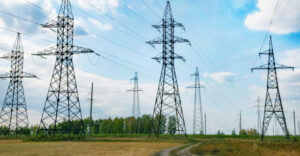
Greece’s electricity system is being tested for a third day running by extreme temperatures, with demand remaining exceptionally high due to widespread air conditioning use.
Despite the heavy strain on the network, the system continues to cope without serious disruption, thanks to strong output from renewable energy sources, the availability of conventional power units, and the contribution of international interconnections.
Shortly after 3pm, power outages were recorded in several areas, both in central Athens and across the rest of Attica, with crews from HEDNO (the Hellenic Electricity Distribution Network Operator, Greece’s grid operator) working to restore supply.
At 3pm on Wednesday, 22 July, demand reached 10,618 MW, one of the highest loads of the summer so far. At the same time, total generation reached 11,532 MW, creating a surplus.
Renewables covered 80.6 percent of electricity generation, contributing 9,292 MW to the grid, while natural gas plants accounted for 1,469 MW (12.7 percent), hydroelectric plants for 438 MW (3.8 percent), and lignite was limited to 333 MW (2.9 percent).
The high renewable output allowed Greece to record significant net electricity exports of 563 MW, with exports reaching 741 MW and imports 178 MW. The largest export flows went to Turkey (295 MW) and Italy (254 MW), with further exports to Bulgaria (145 MW) and Albania (46 MW).
The only import flow came from North Macedonia (177 MW). At the same time, part of the surplus output was absorbed by storage units, which were charging and drawing a combined 353 MW from the grid.
This pattern reflects the dominance of solar power during midday hours, when Greece not only meets rising domestic demand but also has surplus output to offer neighbouring markets.
High renewable participation in the energy mix is also expected to help curb upward pressure on wholesale prices tomorrow. According to data from the Hellenic Energy Exchange (HEnEx), renewables accounted for 52.54 percent of generation; combined with hydroelectric output, “green” electricity generation exceeded 60 percent, limiting the operation of more expensive natural gas plants, which accounted for 30.4 percent of generation in the system.
This trend is also reflected in HEnEx’s day ahead market. The average electricity price for Thursday, 23 July, stands at 111.72 euros per megawatt hour, down 3.6 percent on the previous day. This follows a sharp 18.5 percent fall recorded for today, 22 July, when the average price stood at 115.88 euros per MWh.
The pattern of recent days confirms that renewable energy sources remain the key stabilising factor for the electricity system during the summer’s peak demand hours.
However, as long as high temperatures persist and evening demand stays elevated after sunset, the system’s adequacy will continue to depend on the flexibility of natural gas plants, as well as further development of energy storage, which is expected to play an increasingly active role in balancing the electricity system in the years ahead.
Ask me anything
Explore related questions




