





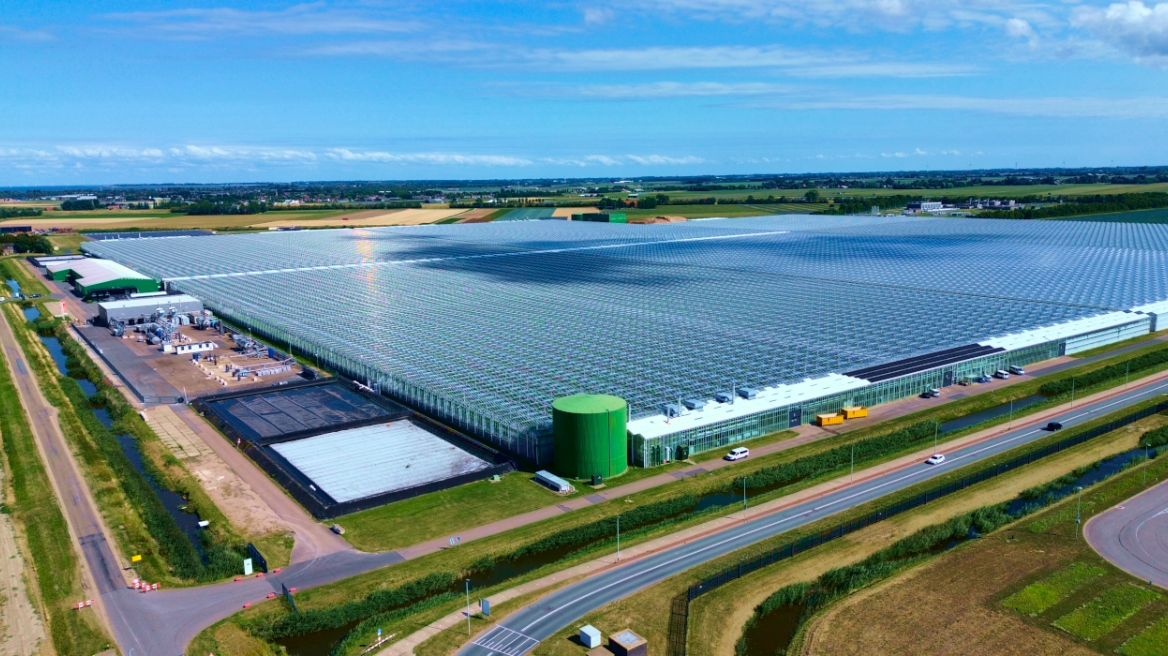
For decades, data centers were an almost invisible part of the United States’ digital infrastructure. They were built near fiber-optic networks and sources of electrical power, hosting everything from cloud services to the streaming platforms used daily by millions of people. The emergence of ChatGPT, however, and the race for dominance in artificial intelligence radically changed the scale of the phenomenon.
Major technology companies began rapidly searching for vast tracts of land, inexpensive electricity, and adequate water resources to build enormous facilities. Alongside the expansion of data centers, a wave of opposition emerged in local communities—one that today cuts across traditional political divides.
A report by Wired from Georgia seeks to map one of the most unusual political phenomena produced by the AI boom in the United States: environmentalists, local Democratic activists, conservative voters, and MAGA figures may disagree on almost everything, yet in many areas they find themselves on the same side in opposing the construction of new data centers.
From ChatGPT to the Data Center Boom
The turning point came with the acceleration of the race for artificial intelligence. Training and operating the latest AI models requires enormous computing power, and technology companies argue that this demands the rapid, large-scale construction of new facilities.
The Trump administration supported this acceleration, reducing environmental obstacles in order to facilitate investment. At the same time, however, concerns began to emerge within local communities regarding electricity and water consumption, environmental impacts, and possible increases in electricity bills.
The backlash quickly took on political dimensions. According to a Gallup poll cited in the article, 70% of Americans say they would be somewhat or strongly opposed to the construction of a data center in their local area.
Meanwhile, proposals for temporary moratoriums on new data centers have appeared in at least twelve states, while cities and counties have imposed restrictions of their own. Opposition has emerged even in deeply conservative regions such as Texas, and demonstrators have been removed or arrested during public meetings in states including New Jersey, California, Wisconsin, and Indiana.
MAGA Discovers a New Enemy
One of the most interesting aspects of the issue is that the political right recognized public dissatisfaction relatively early.
Marjorie Taylor Greene and Thomas Massie were among the first national politicians to openly express concerns about the expansion of data centers, particularly regarding the possibility of using eminent domain to acquire private property for the construction of the necessary energy infrastructure.
Steve Bannon went even further. Through his War Room program, he began systematically linking data centers with the broader debate over artificial intelligence. By the end of 2025, a coalition of MAGA figures, in which Bannon played a leading role, helped block a new effort to limit state-level regulation of AI.
A central figure in this campaign was Joe Allen, who became known through War Room as one of the movement’s most outspoken opponents of technological progress and artificial intelligence.
Allen, a former concert and touring technician with a master’s degree in theology, entered Bannon’s circle after the COVID-19 pandemic and developed into an unconventional “prophet” of the anti-technology right. In his public appearances, he combines political populism with dystopian predictions of a future in which AI and robots gradually replace human beings.
“Humans First” and the Fear That Human Beings Will Become Obsolete
In 2025, the Center for AI Safety enlisted Allen as an adviser in a bipartisan AI safety initiative under the slogan “Humans First.”
The initiative aimed to move the discussion about AI risks beyond the narrow circle of researchers and technologists and encourage ordinary citizens to demand political safeguards and regulatory protections.
In his speeches, Allen employs highly charged language, portraying artificial intelligence as a potential threat to human existence itself.
“Even if they created machines smarter than you, even if they created machines more powerful than you, you should still continue fighting,” he said at an event in Georgia, concluding with the message that in an “age of machines,” human beings must come first.
His rhetoric frequently approaches conspiracy theories. He has compared data centers to the “neurons of the Antichrist,” while in his book Dark Aeon: Transhumanism and the War Against Humanity, he portrays technology as part of a much broader threat to human autonomy.
When Environmentalists Meet the Right
Despite the extreme rhetoric of some individuals, much of the opposition to data centers begins with far more concrete concerns.
In Troup County, Georgia, for example, environmental activist Gage Bailey began investigating a proposed data center after discovering that very little public information existed regarding its projected electricity and water consumption. He gathered documentation, filed public records requests, and eventually created a Facebook group that grew to thousands of members.
One distinctive feature of these movements is that political identity often becomes secondary. Democrats, Republicans, environmentalists, and conservative residents appear together in local campaigns, united by the demand for greater public input into decisions regarding these facilities.
The scale of the mobilization is striking. According to figures cited by Wired, membership in American Facebook groups opposing data centers grew from fewer than 100,000 in December to more than 500,000 by July.
Their common ground is not always limited to environmental concerns. Many opponents of these projects are also skeptical of artificial intelligence itself. As a result, fears about higher electricity bills, increased water consumption, and changes to local landscapes intersect with concerns over job losses, mass surveillance, and the growing power of major technology companies.
The Shadow of the Unabomber in Today’s Anti-Technology Debate
The article also examines a much darker aspect of anti-technology culture: the renewed references to Ted Kaczynski, the Unabomber.
Allen has stated that reading Kaczynski’s manifesto in the late 1990s was a defining moment in shaping his thinking. Wired, however, explicitly notes that Kaczynski, who carried out deadly bombing attacks, is not someone to be emulated.
The significance lies in the fact that some of Kaczynski’s criticisms of the relationship between technology and human autonomy have re-entered public debate, even beyond extremist political circles.
Opposition to unchecked technological development is not exclusively a right-wing phenomenon. Researchers such as Timnit Gebru and Émile Torres approach AI criticism from the political left, arguing that its development may reinforce existing inequalities and further concentrate power in the hands of those who are already powerful.
At the same time, criticism has taken on religious dimensions as well, with public discussion increasingly revolving around the idea that technology should remain in the service of humanity.
The Opposition Has Now Reached National Politics
The issue of data centers is no longer confined to local protests. Recently, prominent conservative figures such as Tucker Carlson and Matt Walsh have released videos criticizing specific projects.
Nancy Mace, a candidate for governor of South Carolina, has called for a one-year moratorium, while Florida Governor Ron DeSantis signed legislation that, among other provisions, guarantees the authority of local governments to reject data center development within their jurisdictions.
Even the Humans First movement itself did not escape political polarization. Following a public conflict with members of the pro-AI faction aligned with the White House, the organization split along partisan lines. The conservative faction retained the name, while Joe Allen departed.
“Data Center Alley” Illustrates the Scale of the Transformation
Perhaps the clearest example is found in Northern Virginia, in the so-called “Data Center Alley,” the largest concentration of data centers in the world.
Wired describes a region where enormous buildings stretch one after another, new construction sites appear everywhere, and the constant noise generated by the facilities is noticeable even in nearby residential neighborhoods. The scale of development illustrates how rapidly the digital economy is being transformed into tangible physical infrastructure embedded within cities and suburbs.
Months later, Humans First was planning a nationwide day of demonstrations against data centers, with events scheduled across nearly 150 counties and 42 states, indicating that the opposition has expanded far beyond isolated local protests.
The question now emerging in the United States is not simply how many data centers the AI revolution requires. Rather, it is who will decide where they are built, who will bear their energy and environmental costs, and to what extent communities are willing to devote land and resources to a technology that many citizens still view with profound suspicion.
In a country where nearly every major political issue ultimately divides Democrats and Republicans, data centers appear—for the moment—to be accomplishing something unusual: creating opponents of the same investment at opposite ends of the political spectrum.
Ask me anything
Explore related questions




