





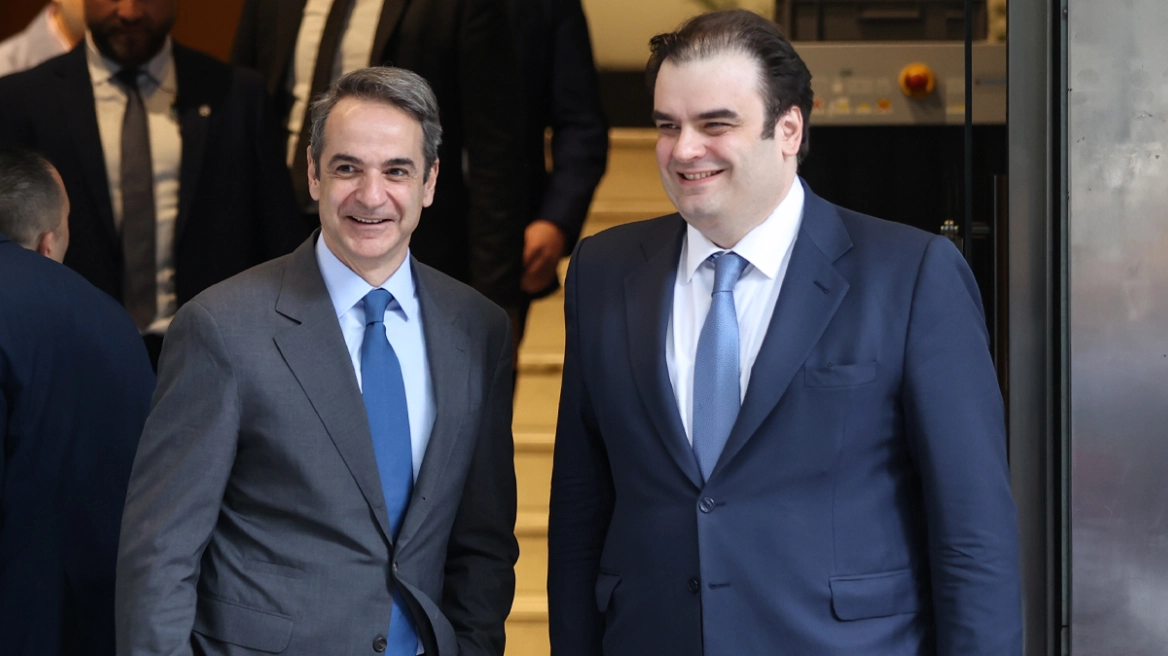
Prime Minister Kyriakos Mitsotakis is set to use his address at the 90th Thessaloniki International Fair (TIF) this September to present a vision extending through to 2030, rather than focusing solely on commitments for the coming year.
He will unveil the government’s comprehensive policy agenda for the entire 2027–2030 term, aiming to ensure that every business, every household and every citizen can identify with the measures to be announced and, above all, understand how they will shape their financial future year by year.
Unlike last year’s speech, which focused on specific social groups such as households, families with children and young people up to the age of 30, this year’s address will outline all the changes planned between 2027 and 2030.
The plan will combine higher wages, stronger support for production and increased investment. According to the government’s economic team, this is the strategy chosen to permanently strengthen purchasing power while ensuring that “the progress of the economy becomes progress for everyone.”
To achieve these objectives, the government is seeking additional fiscal headroom that could expand its ability to support both citizens and the economy. The request submitted by Finance Minister Kyriakos Pierrakakis to the European Commission provides for extending the National Escape Clause to cover energy resilience investments worth more than €1 billion through to 2028.
These funds would be excluded from the EU ceiling on the growth of net primary expenditure. This would create greater flexibility for government intervention while financing energy storage projects, energy-saving initiatives, building energy upgrades and critical infrastructure.
Where the Funding Will Come From
The full package of measures will be finalised after the August holiday period. However, the main interventions have already been outlined for each category of beneficiary. The measures have been selected not only for their economic impact but also for the political and social message they convey, with the aim of fostering a sense of security, confidence, fairness and optimism among businesses and the public.
This year, the main emphasis will be on businesses, self-employed professionals and farmers. That does not mean employees and pensioners will be left out. Permanent tax reductions will also feature prominently in the Prime Minister’s TIF announcements, as they are regarded as the most sustainable way of increasing disposable income.
For 2027 in particular, the fiscal cost of the measures is expected to exceed last year’s package, potentially reaching €1.8-1.9 billion compared with €1.7 billion announced at last year’s TIF. Their overall and cumulative financial benefit for recipients, however, is expected to be significantly greater.
The available fiscal space stems from a reserve of approximately €1.4 billion, generated by the economy’s sustained outperformance from 2025 onwards, together with additional savings.
A further €400 million in spending could be made above the EU’s fiscal expenditure limits following Athens’ request to activate the energy escape clause. These funds will primarily be directed towards investments that permanently reduce electricity costs for businesses and households, including battery storage, electricity grid connections for the islands, heat pumps for homes and similar projects.
New Measures: What Tax Relief Is Coming?
All measures announced will be fully costed and accompanied by a detailed implementation timetable. They will be presented as a continuation of policies announced at previous Thessaloniki International Fairs, implemented despite exceptional circumstances and successive crises, and ultimately established as permanent measures, reinforcing the government’s message of delivering on its commitments.
At the same time, the package will leave room for additional measures or improvements in subsequent years, provided economic conditions and available fiscal space allow. Whenever permanent revenue sources result in fiscal surpluses above target—as has repeatedly occurred in recent years, particularly each April—equivalent fiscal space will become available for further permanent tax reductions or support measures, subject to verification of the data and approval by the European Commission, in line with EU rules and procedures.
The announcements will focus on six major groups of beneficiaries, divided into four main categories:
1. Pensions: Annual Increases and Cuts to the Solidarity Contribution
For pensioners, who have the greatest need for certainty, support and protection, the government is planning measures with tangible results.
The first step has already been taken by removing years of uncertainty. Neither the double National Pension will ultimately be abolished, nor will survivors’ pensions be reduced by 50% after three years, as had been stipulated under the Katrougalos law.
The Prime Minister will not announce the restoration of a 13th monthly pension payment.
However, he will outline the annual pension increases that, under existing legislation, pensioners are expected to continue receiving each year, provided the economy maintains strong growth.
An increase in the €300 annual support payment—up from €250 last year—has also not been ruled out. The payment is now made on a permanent statutory basis every 30 November.
2. Businesses, SMEs and the Self-Employed: Major Changes to Presumptive Taxation, Lower Tax Prepayments and Extended Loss Carry-Forward
With Greece’s VAT gap now having fallen below the European Union average, the government believes the time has come for tax-compliant businesses to see tangible benefits from the fight against tax evasion. At the same time, companies that invest, innovate and create more and better-paid jobs are also expected to be rewarded.
Against this backdrop, the Prime Minister is expected to announce the following:
I. Looser Presumptive Taxation Rules for Professionals and the Self-Employed
The presumptive taxation system will remain in place in the coming years, as the government argues it prevents habitual tax evaders—or even entire professional sectors, particularly those providing services outside fixed business premises, such as in private homes—from declaring poverty-level incomes while benefiting from welfare support and other state assistance.
However, from 1 January 2027, key elements used to calculate the final tax liability will change. These reforms are expected to take effect immediately rather than being phased in over the four-year term.
Among the proposals under consideration are:
a. Presumptive tax liabilities could be reduced for specific sectors or sole proprietorships that fully comply with all tax obligations—including myDATA, POS systems, digital delivery notes and payment arrangements—provided the tax authorities determine they have complete oversight of their income and expenditure.
b. Criteria that currently result in disproportionately high tax burdens for sole traders and self-employed professionals will be scaled back. These include cases where businesses report turnover above the sector average (based on their business activity code) or pay relatively high wages to employees. The government believes the current system penalises, rather than rewards, businesses that declare all their income, increase wages or hire additional staff.
c. Tax liabilities will be linked to the taxpayer’s ownership share in the business, depending on the nature of the activity—for example, professional drivers who own only half of an operating licence.
II. Five Key Measures for Businesses
Five measures are currently considered the most likely to be announced for businesses:
a. The Business Tax (Business Levy) will be permanently abolished for legal entities. The levy currently ranges from €400 to €1,000 per business each year, with up to €600 for every branch office.
b. A substantial reduction in advance tax payments. The current advance payment rate of 80% could be reduced to 55%-60%, with the prospect of further gradual reductions during the government’s four-year term. The measure would improve liquidity for tax-compliant businesses while reducing incentives for tax evasion.
c. Businesses would be allowed to carry forward tax losses for 10 years, instead of the current five-year limit. Although the business community has long sought this change, rising investment costs for machinery and equipment in recent years have prompted the government’s economic team to reconsider the proposal.
d. Preferential low-interest loans worth up to €5 billion for small and medium-sized enterprises through the Hellenic Development Bank, both after—and potentially alongside—the expiry of the Recovery Fund.
e. A further reduction in social security contributions. A 0.5 percentage point cut has already been confirmed, while the government is also exploring scope for an additional 1 percentage point reduction.
In this context, proposals are also being examined to decouple wage increases from social security contributions—at least above certain salary thresholds or for specific categories of employment—so that businesses are not effectively penalised through higher contributions when they reward employees with pay rises.
3. Wages: Higher Pay, Lower Deductions, Collective Agreements and an Enhanced Meal Card
The planned reduction in social security contributions is expected to increase employees’ net earnings, alongside the annual increases already scheduled for the statutory minimum wage.
The challenge for private sector employees, however, is that—apart from the minimum wage—their salaries are not directly determined by the state. For many workers, wages have remained largely stagnant for the past 15 years. Public sector employees, meanwhile, receive the annual increase linked to the minimum wage, but overall pay levels remain under pressure.
Although the restoration of the 13th and 14th monthly salaries in the public sector has been ruled out, the Prime Minister is expected to announce targeted measures at the Thessaloniki International Fair aimed at easing pressure on workers.
Measures Planned for Private Sector Employees
a. Annual increases in the minimum and average wage
The target set by the Prime Minister in 2023 for the minimum wage to reach €950 by 2027 is expected to be fully achieved. Meanwhile, the target of an average full-time salary of €1,500 was already surpassed in 2025.
Building on that performance, the Prime Minister is expected to set a new objective of raising the minimum wage to around €1,350-1,400 per month by 2030, while targeting an average monthly salary of around €2,000.
b. Encouraging collective bargaining agreements
The government plans to promote the conclusion of collective labour agreements and extend wage increases across more sectors of the economy, allowing higher pay to spread more evenly and more quickly among workers.
c. Meal vouchers and meal cards
The government is considering increasing the daily value of meal vouchers and meal cards from €6 to €10.
Although the proposal has remained dormant for around 20 years, it has now become a universal demand from both employers and employees. It was jointly submitted to the government ahead of the Thessaloniki International Fair by the Greek General Confederation of Labour (GSEE), the Hellenic Federation of Enterprises (SEV), the Hellenic Confederation of Professionals, Craftsmen and Merchants (GSEVEE), the Hellenic Confederation of Commerce and Entrepreneurship (ESEE), the Greek Tourism Confederation (SETE) and the Association of Industries of Greece (SVE).
The measure would immediately boost employees’ net income by up to €300 per month, particularly at a time of persistently high food prices, while also improving the competitiveness of businesses seeking to attract staff without significantly increasing non-wage labour costs through higher social security contributions.
In addition to wage increases and lower deductions, the government may also announce a surprise measure for families with children, such as repeating the €150 one-off payment per child that was granted in July.
4. Farmers: Loans, Faster Payments and Additional Support Measures
This year, the government is also placing farmers and those who sustain rural communities at the centre of its announcements. Planned measures are expected to include:
- A new payment system featuring regular disbursements and faster subsidy payments for farmers who submit their Single Payment Application ahead of the official deadline.
- New measures to tackle rising production costs.
- Debt relief for farmers and livestock breeders affected by the economic crisis.
- A new Agricultural Entrepreneurship Fund for the primary sector, to be established through the Hellenic Development Bank (HDB). The fund will provide loans to farmers, as well as grants for those who prepare business plans relating to their agricultural activities.
More Measures on the Horizon
Further announcements are also expected on housing policy, with the most likely scenario being the launch of a new “My Home III” programme through the Hellenic Development Bank.
Following the Bank’s recent Pillar Assessment certification by the European Commission, the HDB will gain direct access to funding from European financial instruments. The Prime Minister is expected to present its expanded economic and social role in detail.
The Bank will now be able to support not only SMEs and farmers but also households. It is expected to offer low-interest bank loans similar to those previously available through the Recovery Fund.
Unlike the Recovery and Resilience Facility—which expires on 31 August—the new scheme could become a permanent financing tool rather than a temporary programme.
As for further tax changes and additional reductions in taxation on residential rental income, much will depend on this year’s tax return data, as well as on how quickly and effectively the Property Ownership and Management Registry (MIDA) becomes operational, enabling previously undeclared or under-declared rental income to be identified.
Ask me anything
Explore related questions




