





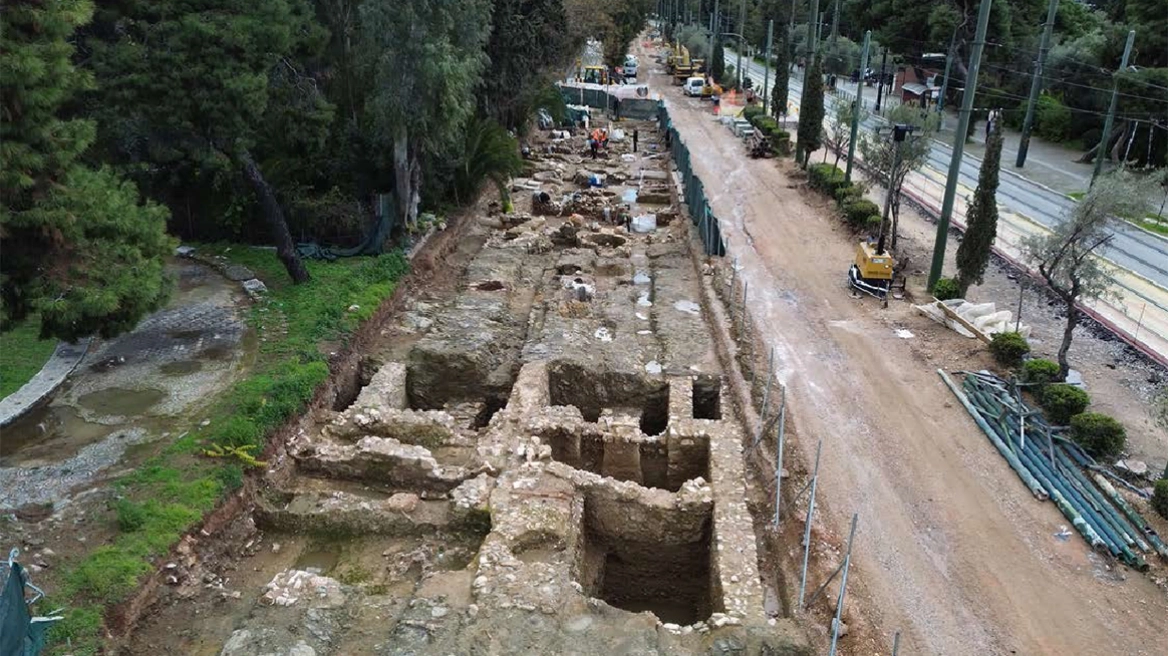
The Ministry of Culture is returning to Athens a unique part of its historical memory: the Roman monumental complex and the archaeological remains uncovered during the redevelopment works on Vasilissis Olgas Street.
As stated in a relevant announcement, “the excavation on Vasilissis Olgas revealed a magnificent Roman building complex, with a semicircular courtyard, colonnades, organized spaces and an extensive network of drainage channels, which underwent successive construction phases from the 3rd to the 5th century AD.”
The area north of the Olympieion, in close proximity to the Ilissos River, constitutes one of the most important historical cores of Athens, with uninterrupted human presence from prehistoric times through the early Byzantine period.
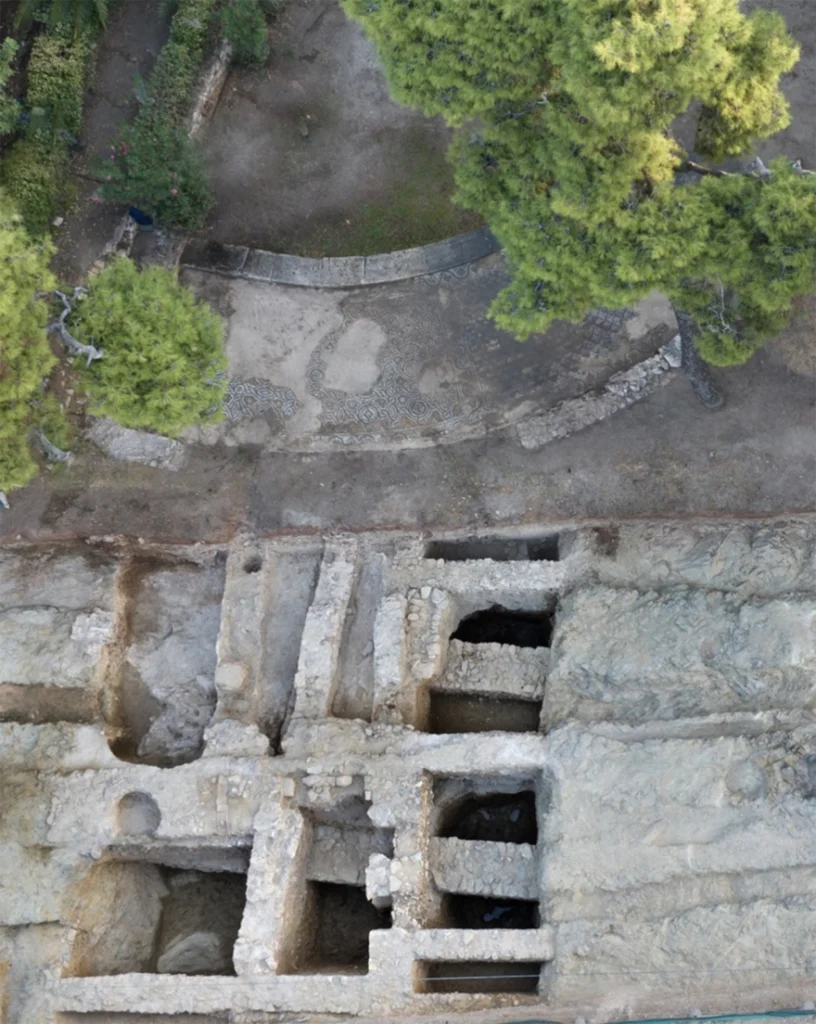
Initially, it developed as a place of worship and habitation outside the walls of the ancient city, hosting important sanctuaries, while during the Roman period, particularly under Hadrian, it was incorporated into the urban fabric and evolved into one of the wealthiest districts of Athens, with monumental public and private buildings.
Despite the destruction of the late Roman period, the area experienced a new period of prosperity during the 4th and 5th centuries AD, before the gradual contraction of habitation in the 6th century marked the transition to the Byzantine era.”
Minister of Culture Lina Mendoni stated:
“Following the reopening of Vasilissis Olgas Street to Athenians at the end of April, marking the completion of an emblematic project that had remained pending for years, the restoration, protection and enhancement of the important monumental complex uncovered during the redevelopment works on the street constitute the next substantive step, linked to the Ministry of Culture’s ongoing effort to preserve and showcase the history of Ancient Athens. The archaeological remains brought to light constitute an exceptionally important testimony to the area’s development through the ages, north of the Olympieion, from the Classical period through Byzantine times.
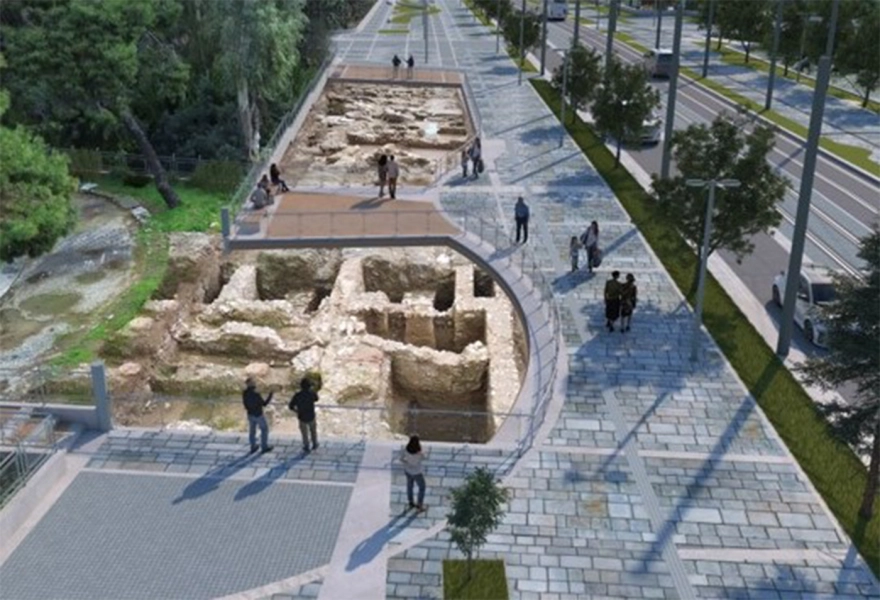
The discovery of part of the Themistoclean Wall’s ditch, the extensive Roman building complex with its semicircular courtyard, colonnades, residential spaces and drainage networks, as well as the later Byzantine remains, confirms the area’s enduring significance and substantially enriches our knowledge of the city’s history in antiquity. Particular attention is being given to the functional and aesthetic integration of the antiquities, so that the unity of the archaeological complex can be showcased in the best possible way and the conditions can be ensured for the safe protection and long-term preservation and presentation of the very important finds uncovered in recent years in the historic center of the capital.
The restoration of the monumental complex highlights a particularly interesting section of the city’s ancient topography, offering Athens’ residents and visitors the opportunity to discover another important chapter in its long history. The protection and enhancement of monuments is not merely an obligation we have toward the past, but also a conscious investment in our collective memory, our cultural identity and the quality of public space.”
Among the most significant remains uncovered is the ditch of the Themistoclean Wall, cut into the natural rock. It is the oldest surviving element of the excavation and confirms the alignment of the ancient fortifications.
The excavation showed that the building underwent two major construction phases—the first from the late 3rd century AD to the beginning of the 4th century AD, and the second at the beginning of the 5th century AD—as well as smaller-scale alterations and extensions, reflecting its continued use during the late Roman period.
The study of the remains also revealed the different construction techniques used during each period, ranging from the carefully executed stone masonry of the Classical period to the characteristic Roman wall-building systems, demonstrating the monumental complex’s considerable historical and architectural value.
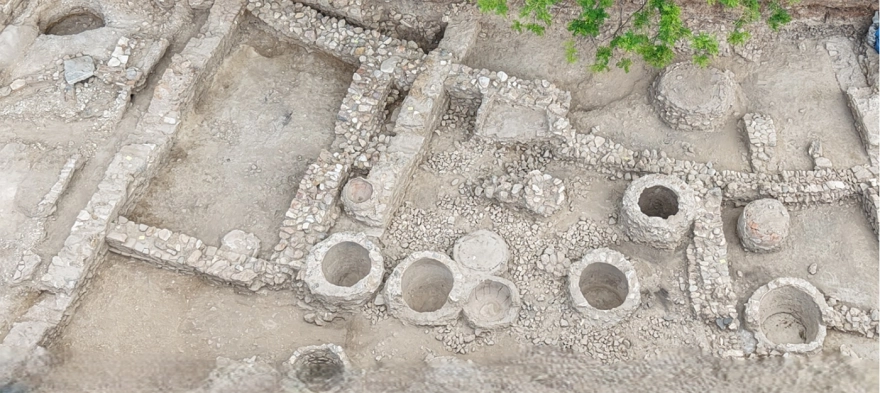
The final phase of the site’s use dates to the Byzantine period and is represented mainly by more rudimentary masonry, underground built storage pits and storage jars. These elements indicate a substantial change in the character of the area and a shift toward productive and storage activities, as is also documented by archaeological evidence from the wider area.
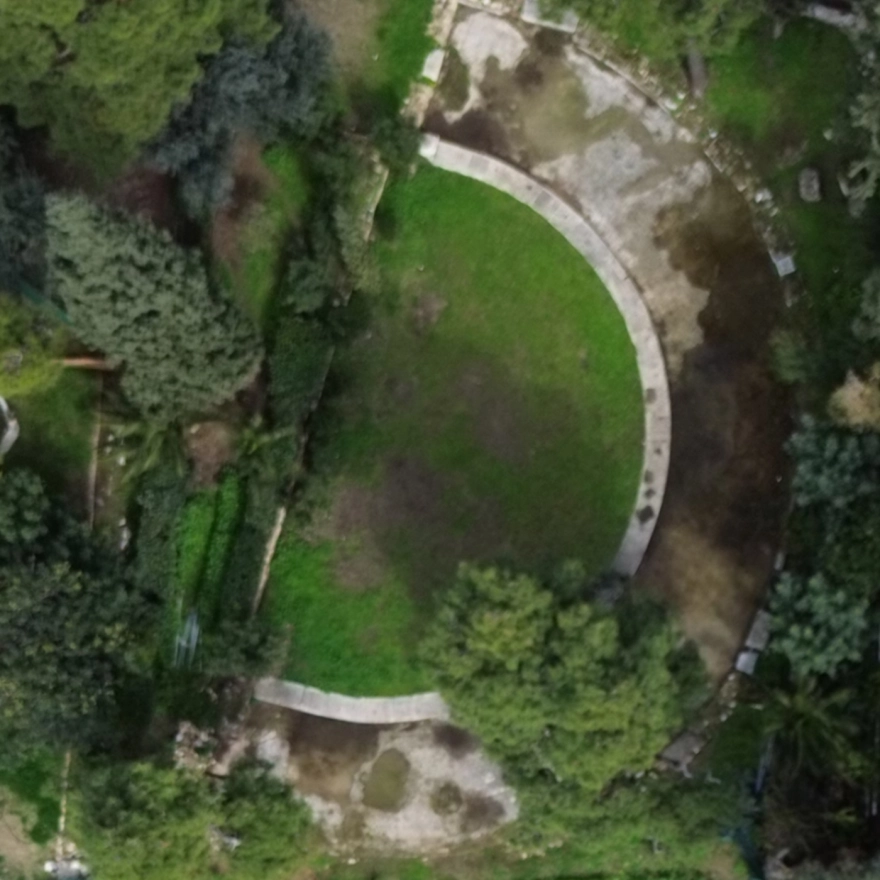
The works include the conservation and restoration of the masonry, mosaic floor and architectural elements; vegetation management; removal of more recent incompatible interventions; improvement of the site’s legibility; restoration of historical levels; and comprehensive rainwater management to protect the monuments.
The restoration and enhancement proposals were developed with the aim of addressing conservation problems and restoring the legibility of the monumental complex.
The interventions were designed in accordance with internationally accepted principles for the protection of architectural heritage, with respect for the authenticity of the monument and its structural materials, and with the primary objective of enhancing the legibility of the monumental complex.
Ask me anything
Explore related questions




