





From New York and Boston to Texas, and from Miami to Los Angeles and San Francisco, a wave of young Americans is embracing Orthodox Christianity, leaving behind the Protestant and Catholic denominations that overwhelmingly dominate Christian life in the United States.
Orthodox churches, historically the preserve of immigrants from Greece, Ukraine and other countries with large Orthodox populations, are welcoming growing numbers of young, American-born converts being baptised into the faith.
The trend is backed by hard numbers. Reports in the New York Post and the Telegraph in late 2024 found that American Orthodox parishes recorded conversions rising by almost 80% in 2022 compared with pre-pandemic levels. Since then, further reports and studies have pointed in the same direction.
It is worth noting that Orthodox Christianity remains by far the smallest and least familiar of the three main Christian traditions in the United States, accounting for roughly 1% of the population, compared with about 40% who are Protestant and 20% who are Catholic.
Many analysts, among them Marc Bonomelli of the Los Angeles Daily News, believe the trend could well grow further over time, potentially even crossing the Atlantic. In his report, Bonomelli profiles Andrew Brodsky, a 21-year-old who last year posted a YouTube video filmed in the plain, modest room of his home in West Virginia.
Behind him hung an Orthodox liturgical banner decorated with a cross and Greek inscriptions. He sat before a small altar crowned with Orthodox icons. “The senses play an essential role in Orthodoxy,” he said. “You see the icon, you smell the incense, you hear the old chants.” He went on to explain how he discovered his connection to the faith one sleepless night: “It was an evening when I couldn’t sleep. I was listening to a playlist, and suddenly Orthodox chants came on. I had never heard anything like it before.” He added: “When I walked into the church for my first liturgy, I felt exactly the same way. It was as if I were exactly where I was meant to be.”
The ‘digital bridge’
Brodsky’s story reflects a trend that has been steadily growing in the United States in recent years. He found his new religious identity after a spiritual search that began on YouTube.
Others join Orthodoxy directly through churches, but this “digital bridge” is a defining feature of the new movement. Many believers drawn to Orthodoxy have their first contact with the faith, regardless of which church (Greek Orthodox, Russian Orthodox and so on), through the internet and social media.
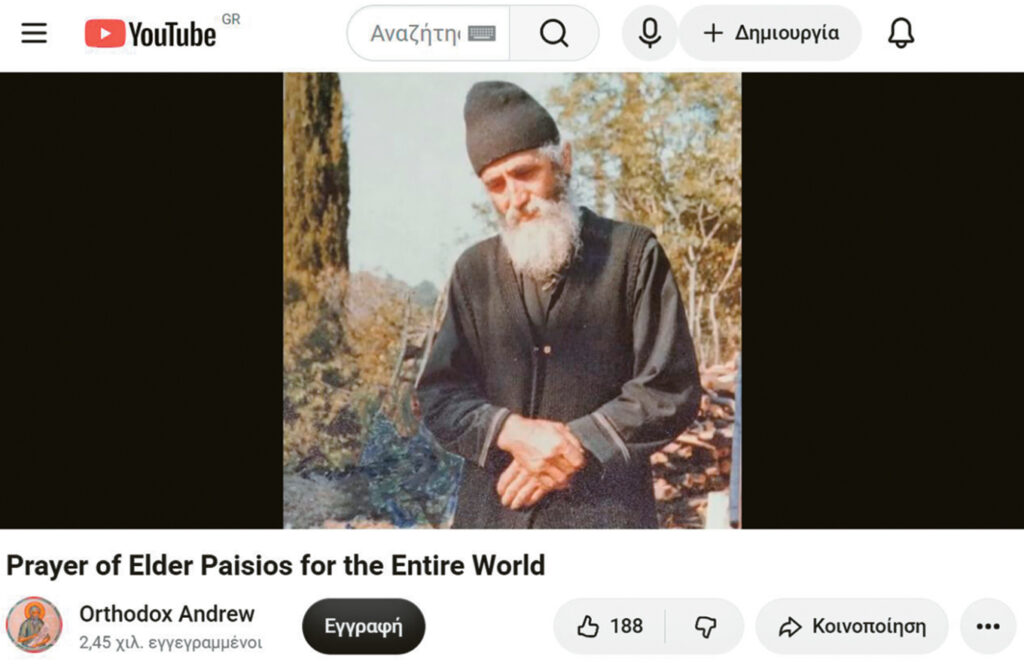
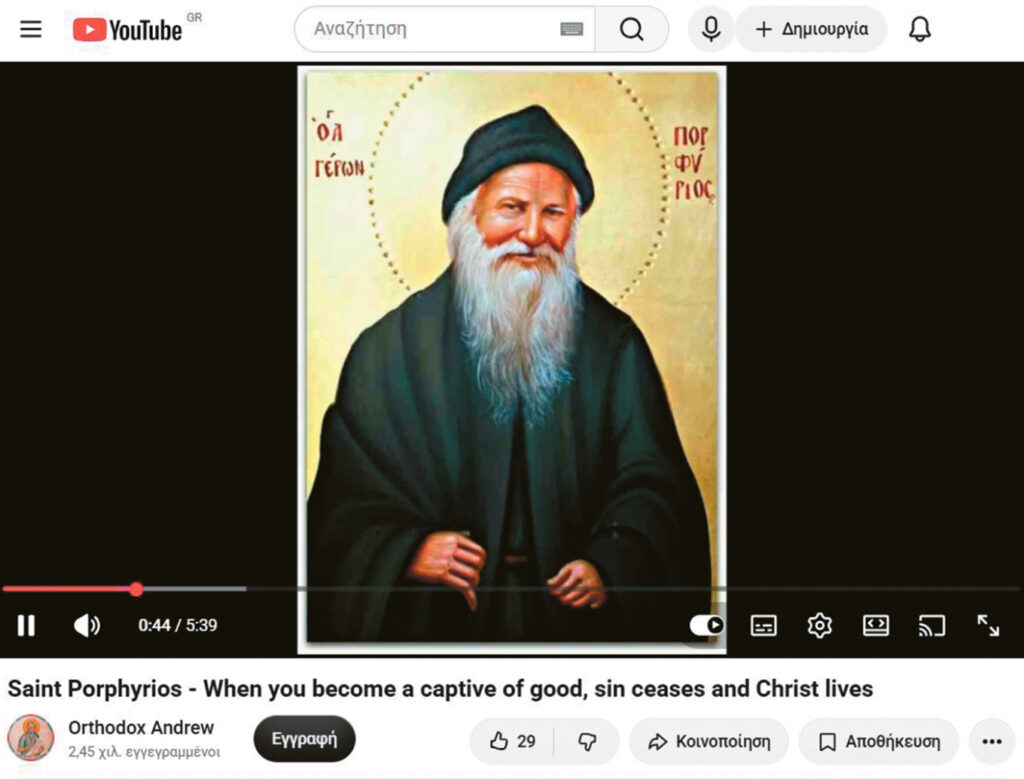
Social media, blogs and online communities make it easier for interested people to take part in discussions about Orthodoxy, removing the barrier of distance. On numerous YouTube channels, priests and theologians weigh in on religious, cultural and even political issues, despite the obvious risk of controversy.
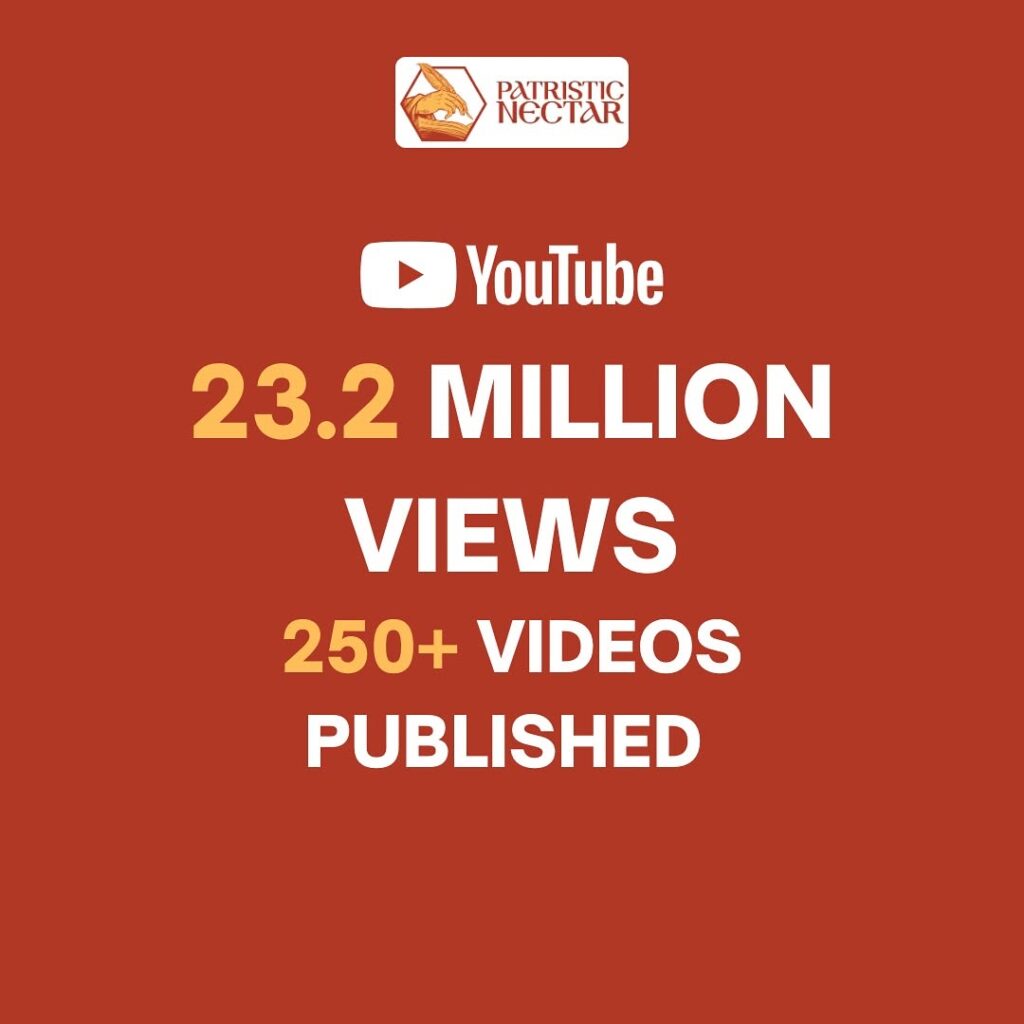
Channels such as Patristic Nectar, Orthodox Ethos and Ancient Faith Radio act as a gateway into the Orthodox tradition for hundreds of thousands of subscribers, a digital phenomenon that forms part of a wider search for religious, and specifically Orthodox Christian, authenticity. This online exposure is, in turn, driving higher attendance at Orthodox churches in nearly every American state, particularly Florida, Texas and Utah.
What they believe
Brodsky, a psychology and theology student of conservative views who is unmarried, shares many traits with other Orthodox converts: many are young men in search of a more traditional, more masculine-patriarchal form of Christianity. His own path has been a long one. Baptised Catholic, then Protestant, he eventually found his way to Orthodoxy.
Some of these new believers are known as “Orthobros” (Orthodox Brothers). The “Ortho” reflects the fact that they are leaving Protestantism, Catholicism or atheism to be baptised Orthodox; the “bros”, from the informal address “bro”, reflects a demographic pattern strongly associated with the phenomenon: young and male.
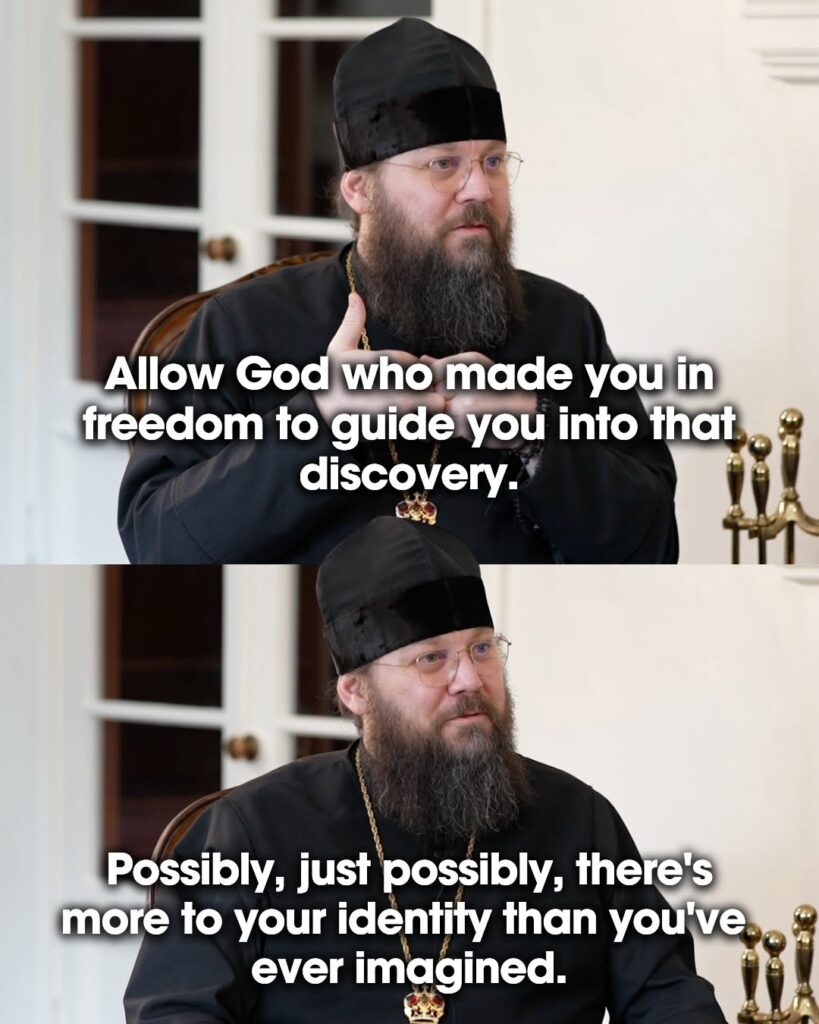
It sounds like an innocent enough coinage, but it probably is not. The word “bro” points to another, thornier debate about whether, and how, Orthodoxy has become entangled with the so-called, and negatively charged, “bro culture”: the attitudes and behaviour of a group of young men reacting against what they see as a prevailing “woke” ideology in American society, and seeking an outlet through the self-affirmation of masculinity.
A broader phenomenon
What is certain is that Americans’ turn towards Orthodoxy is not confined to this group of conservative young men. On the contrary, according to available data and research, it extends to other groups too: women, married couples with and without children, essentially everyone. Framing the story around a single group does the wider picture a disservice and does not reflect the full reality.
The Orthobros are the noisiest side of the conversion movement, but the sight of packed Orthodox churches full of young worshippers across almost the whole of America goes well beyond whatever influence this group has on the overall trend.
Testimony from Church representatives in leading American newspapers, along with research backed by hard data, bears this out. According to Matthew Namee, executive director of the Orthodox Studies Institute, the rise of Orthodoxy in the United States has broader characteristics and has come in two waves.
The first emerged during and immediately after the Covid pandemic, while the second has unfolded over the past 18 months. The first wave was indeed concentrated mainly among single young men, but the new wave now mostly consists of married men and women, young families, and people from a range of religious and ethnic backgrounds.
Namee himself says he is far from certain that the narrative around masculinity reflects reality. He believes that, broadly speaking, many Americans are searching for something stable and traditional amid such rapid, disorienting change, citing the LGBTQ+ movement as one obvious example.
But his sense is that most of these people come to Orthodoxy because they are seeking truth, tradition and a stable foundation in an uncertain world, wanting to encounter the fullness of Christianity.
The New York Times
A New York Times report last November, headlined “Orthodox Church Pews Are Overflowing With Converts”, was telling of the mood around what is happening beneath the surface of this conversion trend.
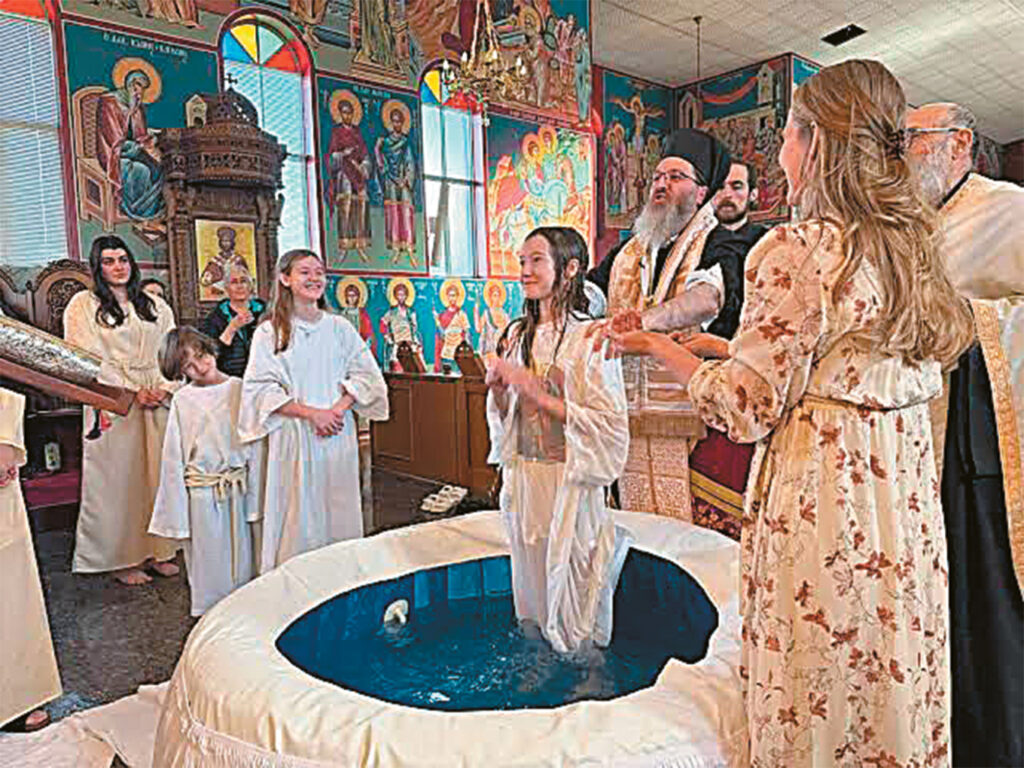
Journalist Ruth Graham described something shifting within an otherwise quiet corner of American Christianity, one usually proud of how little it changes. She noted priests swapping stories of record attendance, long-standing members adjusting, or struggling to adjust, to the influx of newcomers, and parishes now having to plan for more prospective converts than their clergy can realistically absorb.
The same report found that, across the country, Orthodox Christianity is attracting energetic new believers, particularly conservative young men, who are drawn to what they describe as a more demanding, even difficult, form of Christianity that offers hard truths and affirms their masculinity.
Some converts, the piece noted, say approvingly that Orthodoxy feels more masculine than other traditions: priests, who must be male and are permitted to marry, often have large beards and big families. Orthodoxy calls on believers to make sacrifices such as fasting, while the online influencers many young men credit with introducing them to the faith tend to speak far more directly about politics and culture than parish priests usually do. Many share an unshakeable social conservatism, with a strong focus on the “traditional family” and what they see as threats from feminism, homosexuality and transgender identities; most are also broadly opposed to the state of Israel.
Elder Ephraim of Arizona
Around the same time, Peli Galiti-Kyrvasili, a researcher in the Department of Educational Psychology at the University of Wisconsin-Madison and author of the book “What I Was Looking For: Stories of Orthodox Conversion in America”, confirmed that her own parish is now packed for services beyond anything she could have imagined. Young families with small children are attending from Matins right through the Divine Liturgy with real devotion.
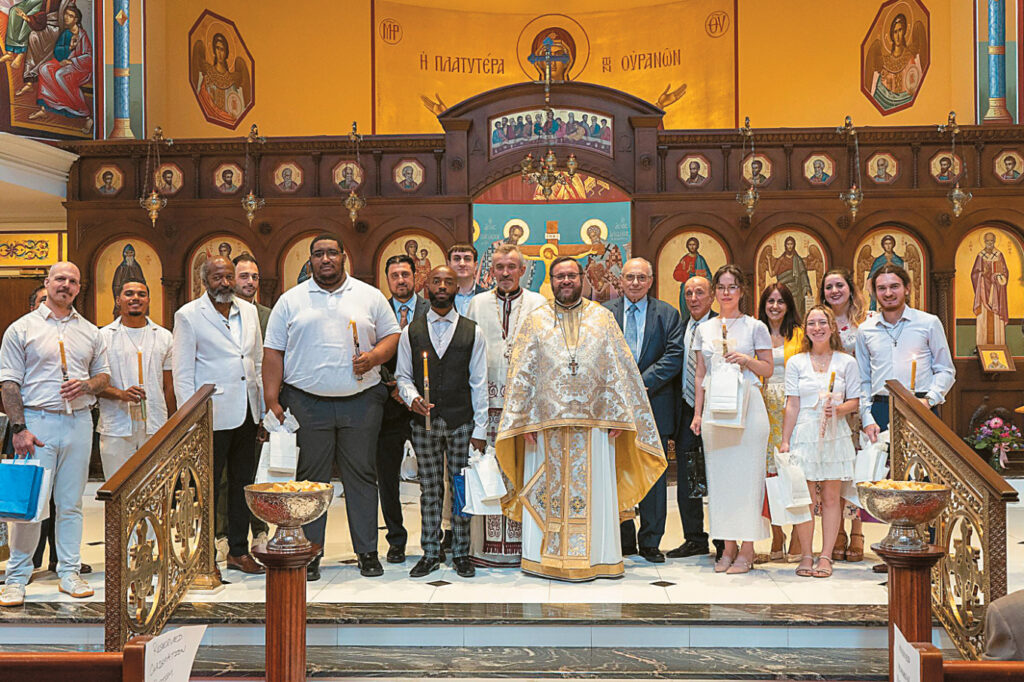
The parish priest has announced he will cut back several church activities, such as trips and other outings, in order to spend more time with the parish’s catechumens, whose numbers have grown significantly. Similar accounts have come from neighbouring parishes in Chicago and Milwaukee.
According to Galiti-Kyrvasili, the reasons behind this modern wave of conversion include the accessibility of knowledge and information via the internet, the secularisation of the major Christian denominations more broadly, and the presence in the West of significant Orthodox priests, theologians and thinkers, such as the revered Elder Ephraim of Arizona, who founded 17 monasteries in the United States and Canada, among others.
In an article, she recalls the approach of Stephen Matthews, a priest at the Greek Orthodox Church of the Saviour in Bluff City, Tennessee, who replaces the terms “male” and “female”, and the connotations they bring to the Church, with the language of “fatherhood” and “motherhood”:
“I wouldn’t say the Orthodox Church is so much ‘masculine’ as it is fatherly. Like a good father, the Orthodox Church sets an example for me, teaches me, challenges me, corrects me, even holds me accountable. It gives me spiritual struggles to work through and learn from. It doesn’t let me make excuses for myself, but picks me back up and calls me to keep going. It reveals to me an inner strength I didn’t know I had, the energy of Christ within me.
It prepares me for the difficult and dangerous world I live in. It shapes me and grows me into the person I need to become. And at the same time, I love that the Orthodox Church is feminine, or more accurately, motherly. Like a good mother, the Orthodox Church feeds me through Holy Communion, washes me through Baptism and forgiveness, clothes me through baptismal garments and priestly vestments, gives me a home in the church and a family in my brothers and sisters.
It holds me through my pain, tends my wounds, reassures me when I am afraid, comforts me. It doesn’t tell me to suppress my emotions, but gives them voice in prayers and hymns. It lets me weep, whether from sorrow or joy. And through the voice of both father and mother, the Church tells me how much it loves me. We need the Church to be both. And, thank God, it is.”
Testimonies
An even more recent report by the Associated Press confirmed all of the above: that young people and families across the United States are discovering Orthodoxy through video and social media, while churches adapt to meet their needs. The report cited St Sophia Cathedral in Los Angeles as an example, noting that it fills every Sunday with worshippers of all ages who follow the Divine Liturgy with deep devotion.
It concluded, based on testimonies such as that of Abbie Ayli, 28, who discovered Orthodoxy online and was baptised in April 2024, that behind these traditional images a new trend is taking shape in the United States: Orthodoxy is growing steadily more popular, and that growth is closely tied to the internet, and social media in particular. For many, first contact with the faith no longer happens in church but through videos, posts and conversations on social networks.
“I cried for an hour and a half”
A telling example is Justin Braxton, a Los Angeles firefighter who became an Orthodox Christian a year and a half ago. He described his first experience in church in striking terms: the liturgy was half in Greek, half in English, yet he could not stop crying. He wept through the entire hour and a half.
He now takes part in young adults’ gatherings, viewing Orthodoxy as both a spiritual challenge and a source of deep joy. His experience, like that of thousands of others, suggests that the internet is a channel into Orthodoxy, not a substitute for it. It has significantly widened the faith’s reach, but it cannot replace personal participation.
The Moscow factor
According to analyst Alexandros Skouras, formerly president of the Centre for Liberal Studies, a Greek think tank, the Orthobros “are looking for a religion that hasn’t ‘given in’ to the cultural pressures of the modern age and that offers clear moral guidance. But they are more active in online communities than in traditional church ones.”
Orthodoxy presents itself as the authentic expression of Christianity, largely unchanged since the Great Schism of 1054, preserving its sacred tradition and practice intact.
By contrast, the sweeping changes many Western churches have adopted in recent years, such as the acceptance of same-sex marriage by some Protestant denominations and the ordination of women, up to and including Sarah Mullally’s confirmation as the first woman to serve as Archbishop of Canterbury, the traditional leader of the Church of England and the wider Anglican Communion, have disappointed many believers and pushed them to seek the stability of tradition they find in Orthodoxy.
The differences between the Orthobros and other Christian denominations are hard to disguise. The Orthobros are firmly opposed to any openness or dialogue with other Christian denominations, regarding them as heretical. Jay Dyer, who has 116,000 YouTube subscribers and wields particular influence in online Orthodoxy, produces content that blends religion and geopolitics, going after anyone who disagrees with him.
This has created a gap between the Orthodoxy experienced online and that practised in parishes. Even within the online world, disputes between Orthobros can be fierce. For many new believers, a good number of Orthobros are building a parallel Orthodox culture defined not only by rigid conservatism but also, it seems, by the geopolitical interests of Moscow, particularly since Russia’s invasion of Ukraine, interests which the Russian Patriarchate follows closely and has invested heavily in promoting through online platforms as part of its campaign against the Phanar, the Istanbul district that is the seat of the Ecumenical Patriarchate.
The rivalry between Moscow and the Ecumenical Patriarchate of Constantinople, regarded as the spiritual leader of Orthodox Christians worldwide, for primacy within Orthodoxy is also reflected in the story of these conversions. No small number of Orthobros identify with the traditional values championed by the Russian Orthodox Church. Many others, however, remain loyal to the Greek Orthodox Church, which takes a more tolerant approach.
Sarah Riccardi-Swartz, assistant professor of religion and anthropology at Northeastern University, notes that many Orthobros are drawn to Russia by an attraction to hierarchical political models. “They admire the Russian Orthodox Church’s past, when there were saints who were also monarchs. Anything resembling a hierarchical political structure appeals to them strongly. And their spiritual search is bound up with their geopolitical admiration for Putin.”
2.5 million in the US
The Greek Orthodox Archdiocese of America, the US branch of the Greek Orthodox Church under the Ecumenical Patriarchate of Constantinople, was founded in 1921 and is headquartered in New York. It has been led since 2019 by Archbishop Elpidophoros.
It comprises nine Metropolises, 560 parishes and 19 monasteries. The Orthodox Church in America (OCA) is recognised as autocephalous, or self-governing, only in part, by the Russian Orthodox Church and four others. It comprises more than 700 parishes, missions, communities, monasteries and institutions across the United States, Canada and Mexico, and is led by Metropolitan Tikhon (Mollard).
While Namee puts the total number of Orthodox Christians in the United States at 1.64 million, other estimates put the figure above 2.5 million. Either way, that is under 1% of the roughly 260 million Orthodox Christians worldwide, according to the Pew Research Center, though more than double the figure of a century ago.
Despite this growth in absolute numbers, Orthodox Christians are shrinking as a share of the wider Christian, and global, population, as Protestants, Catholics and non-Christians grow faster. Today, just 12% of Christians worldwide are Orthodox, down from 20% a century ago.
Overall, the global Christian population reached 2.7 billion in 2025 and continues to rise steadily. It is projected to reach 3.4 billion by 2050, when Christians would make up 34.4% of the world’s population.
Ask me anything
Explore related questions




