





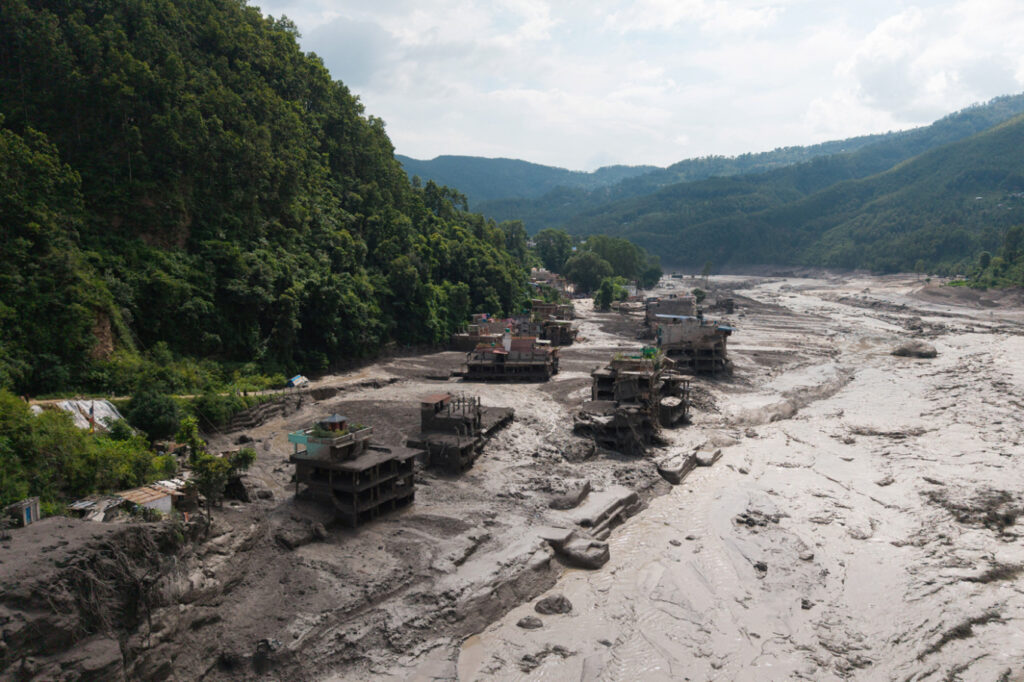
The death toll from Wednesday’s catastrophic flash flood on the Nepal–China border has risen to at least 270, while the number of people reported missing has surged past 1,300, authorities said on Thursday, as rescue teams struggled to reach some of the worst-hit villages in the mountainous Rasuwa district.
Nepalese authorities said at least 826 people were missing on their side of the border, while Chinese officials reported 558 people missing after a mudslide struck a border crossing in Tibet’s Gyirong county, where three people have been confirmed dead and two rescued. It was not immediately clear whether the two countries’ figures overlapped.
Nepal’deki sel felaketinin nasıl meydana geldiğini gösteren bir simülasyon:
— Odak TV (@OdakTV1) August 26, 2026
Himalayalar’da bir buzul kütlesinin koparak vadiye düşmesiyle buz, kaya ve toprak nehir yatağına sürüklendi. Oluşan devasa su ve moloz dalgası, kısa sürede nehir yatağı boyunca ilerleyerek önüne çıkan… pic.twitter.com/UtVuJvonR3
Nepal’s Tourism Board said more than 500 foreign nationals from 32 countries were among the missing, including 65 Americans, 178 Indians, 53 Ukrainians, 51 Malaysians, 35 Australians, 33 Britons and 25 Canadians. A further 127 Nepali travellers were also unaccounted for. Officials said severe damage to communication networks and power supplies across the region had made it difficult to confirm the whereabouts of many of those reported missing.
Among those unaccounted for is a group of 26 foreign tourists and five Nepali guides travelling with the Kathmandu-based operator Kailash Journeys, who were en route to the Rasuwagadhi border crossing when the flood struck. The group included eight Americans, seven Britons, six Australians and travellers from New Zealand, Canada, South Africa and Malaysia, according to the company. Ukraine’s foreign ministry separately said it had lost contact with a group of 46 Ukrainian tourists in the disaster zone.
Of all the videos of the Nepal flooding that I have seen so far, this one might be the worst.
— Brick Suit (@Brick_Suit) August 26, 2026
These people had no chance.
🙏🙏🙏 pic.twitter.com/XIhUFNESDb
The United States Geological Survey (USGS) has confirmed that a glacial collapse, not an earthquake, triggered the disaster. The agency said a seismic event initially recorded as a magnitude 4.4 earthquake near the Nepal-China border was later found, after further analysis of seismic stations and satellite imagery, to have been caused by a large mass of ice and rock collapsing from a glacier and crashing into the Lhende river, generating the equivalent of a magnitude 5.2 seismic signal. Nepal’s Foreign Minister Shishir Khanal had initially suggested an earthquake triggered the landslide, but the USGS said on Thursday that no earthquake had occurred.
Geologist Daniel Shugar of the University of Calgary, who examined satellite images from Planet Labs, said the lower section of a glacier appeared to have broken away cleanly at an altitude of around 5,200 metres before crashing onto the valley floor some 1,200 metres below. The debris picked up waterlogged sediment as it fell, amid the ongoing monsoon season, before surging downstream as a flood wave.
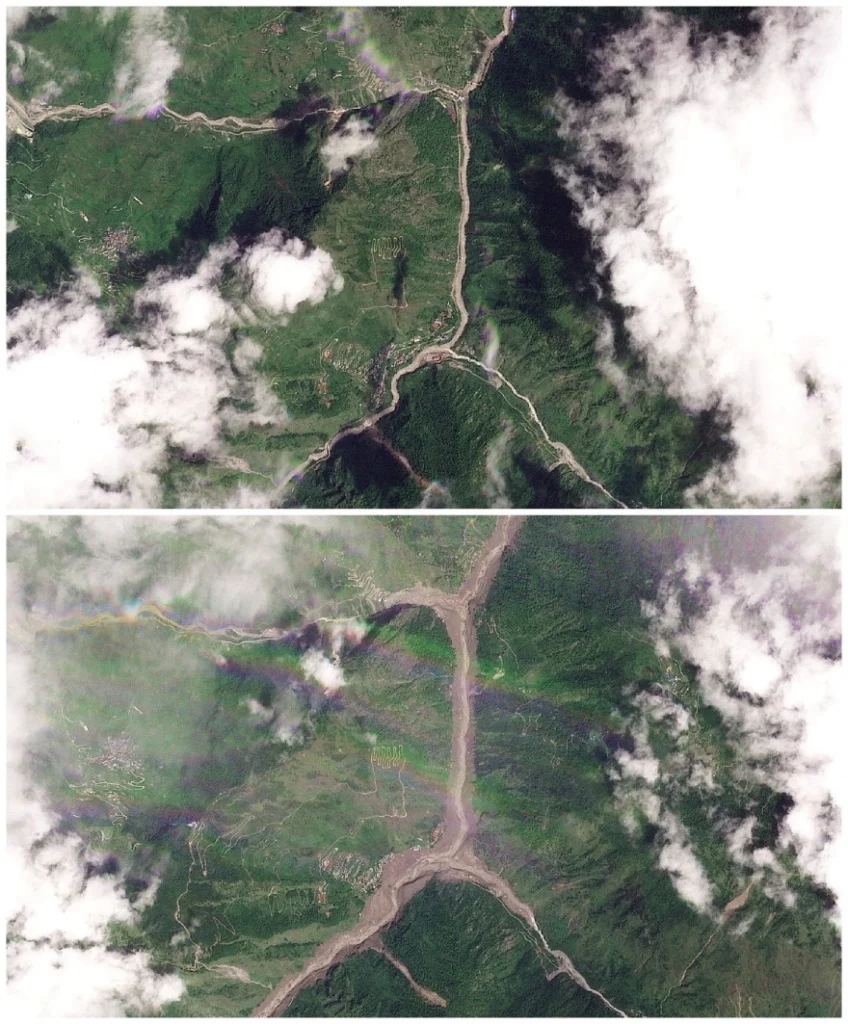
The Nepal Electricity Authority said the flood had damaged about 430 megawatts of generating capacity, more than 12% of the country’s total hydroelectric output of roughly 3.2 gigawatts, along with transmission and distribution infrastructure. Several highways have also been closed, and flooding has spread downstream to Nepal’s Nuwakot district, where the Trishuli river burst its banks.
GRAPHIC WARNING: This video contains sensitive footage that may disturb some viewers. A massive flash flood in the Himalayan border areas of Nepal and China's Tibet washed away villages while damaging roads, bridges and power projects in a region bordering Tibet, authorities… pic.twitter.com/risp0biV2w
— Reuters (@Reuters) August 26, 2026
Nepal’s Prime Minister Balendra Shah has urged the country to stay united. Instructions have been given to move people living in low-lying areas to safer ground, he said, urging those along the riverbanks to remain especially vigilant and stay on alert. “I ask for your patience. The government has taken full responsibility for the rescue operations, medical care, and your housing and food. In the face of such a disaster, we must all stand together,” Shah said.
More than 3,000 police officers have been mobilised for the search and rescue effort, alongside army helicopters and disaster response personnel, though floodwaters were initially too high for aircraft to land in the worst-hit settlements of Syabrubesi and Timure. Dozens of survivors are being treated in hospitals in Kathmandu and Rasuwa, police said.
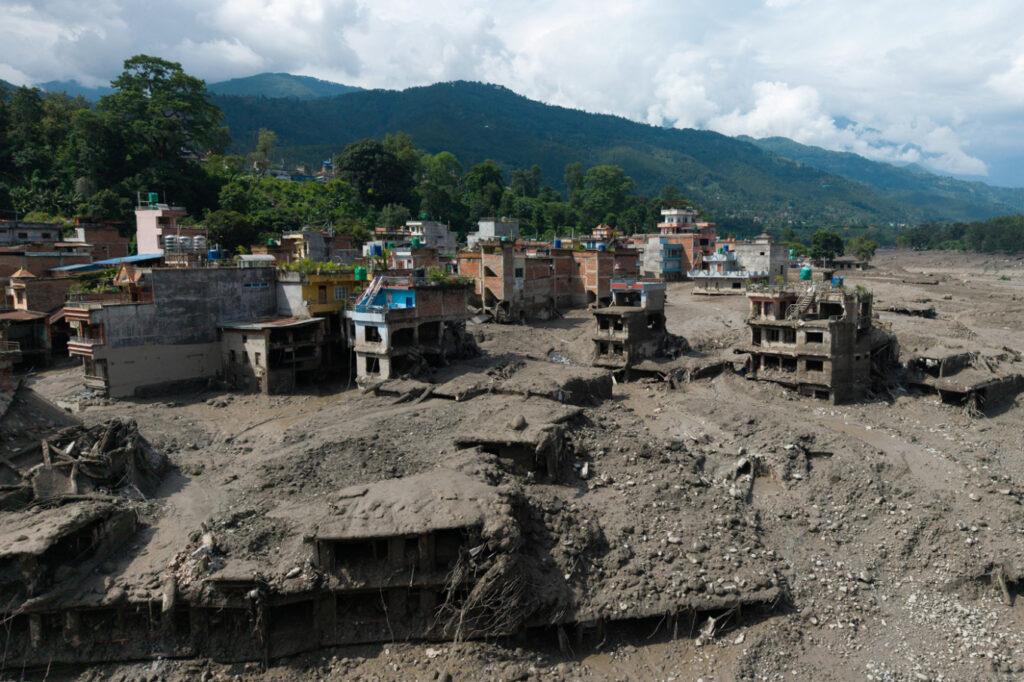
China’s President Xi Jinping called for an all-out search for the missing and for stronger early-warning systems to prevent further disasters. Chinese emergency responders reached Gyirong Port roughly 22 hours after the flood struck, hampered by mudslides blocking access roads. State broadcaster CCTV warned of a risk of further landslides and flash floods in the county this week, with more rain forecast and the ground already destabilised.
The Red Cross said it was deploying an emergency team and sending humanitarian aid to the affected areas of Rasuwa. Nepal’s Red Cross said it had activated its emergency response units, mobilised volunteers and deployed a team with essential relief supplies, while the International Federation of Red Cross and Red Crescent Societies said it stood ready to assist.
A horrific scene of severe flooding at the Rasuwagadhi border point on the Nepal-Tibet border.
— Ravi Pandey🇮🇳 (@ravipandey2643) August 26, 2026
The strong currents wreaked havoc across the area, leaving 400 pilgrims and 105 Indian tourists also missing in the Nepal floods.#NepalFloods #Nepal #Rasuwa #FlashFlood #Floods pic.twitter.com/dwAX12Gj7l
The European Union has activated Copernicus, its satellite-based Earth observation programme, to help map the disaster zone and support relief efforts. “Copernicus has been activated to help map the affected areas in Nepal and support relief operations on the ground,” European Commission President Ursula von der Leyen said on X. “We stand ready to provide further European assistance,” she added.
In Nepal's flood 🇳🇵 Houses, buildings, and dams were all washed away, yet the statue of Lord Buddha stands firm ❤️🙏 pic.twitter.com/nbfdj3MPQS
— Sahil Patel (@SahilpatelCA) August 26, 2026
The Dalai Lama offered prayers on Thursday for those killed in the disaster, pointing to climate change as a possible underlying cause.
Footage filmed by a worker shows floodwaters sweeping into Mailung in Nepal’s Rasuwa district, sending workers scrambling for safety.
— Al Jazeera English (@AJEnglish) August 27, 2026
The worker was later rescued by helicopter, alongside more than 100 others, after floods damaged roads and bridges. pic.twitter.com/1X1HwCDr5x
A smaller flood on the same Bhote Koshi river last year killed nine people and swept away the Friendship Bridge linking Nepal and China. Scientists say climate change is making glacier collapses and flash floods more frequent and more severe across the Himalayas.
Ask me anything
Explore related questions




